Fed Faces Rare Internal Revolt Over Rate Cuts
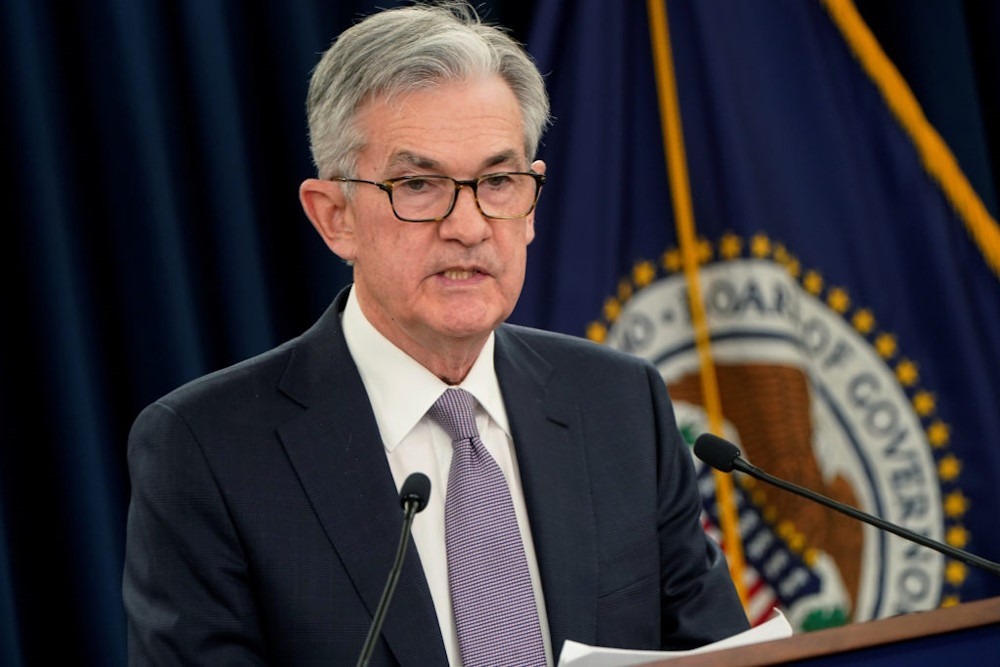
Federal Reserve policymakers find themselves divided on the question of whether to persist with interest rate cuts, marking a departure from the consensus that has characterized Chair Jerome Powell’s tenure at the helm of the central bank. The Fed’s recent choice to reduce interest rates by a quarter point in late October faced opposition from two policymakers: one official advocated for maintaining rates, while another called for a more substantial rate cut. Since 2019, a pair of opposing dissents had not been observed. Earlier this year, for the first time in over three decades, more than one Fed governor cast a dissenting vote. The increasing rift among Fed officials has recently become evident in public speeches, posing a challenge for Powell as he strives to maintain consensus among his colleagues. The division stems directly from the uncertainty surrounding the US economy and the concerns regarding the effects of President Donald Trump’s assertive trade policy. The uncertain economic outlook has created a rift within the rate-setting committee, which is charged by Congress with maintaining the stability of the labor market and controlling inflation.
Some Fed officials express a desire to maintain their focus on controlling rising prices, holding the belief that tariffs could exacerbate inflation. Other policymakers assert that it is time to focus on a declining labor market. Economists indicate that the potential implications of a divided Fed present a mixed bag, yet they undeniably signify an extraordinary shift in the politics of the world’s most powerful central bank. “If these intellectual disagreements aren’t able to be reconciled, then that could affect the Fed’s effectiveness and credibility,” stated Derek Tang. “In the next decade or so, the Fed could become like the Supreme Court, with people voting along party lines,” he said. As the head of America’s central bank and chair of its significant rate-setting committee, Powell faces considerable challenges ahead, yet the results may lie outside his influence. In recent decades, the Fed chair has taken on a pivotal role in guiding the central bank’s policy decisions through meticulous consensus-building efforts.
The role of the Fed chair in pursuing unanimous agreement notably commenced under the leadership of former Fed Chair Ben Bernanke, as stated by Jon Hilsenrath. It entails consistent gatherings with the members of the Fed’s seven-person Board of Governors and the 12 regional Fed bank presidents. “Powell built on what Bernanke and (former Fed Chair Janet) Yellen did,” Hilsenrath stated. “However, this type of disintegration in agreement transcends Jay Powell or his guidance.” During a conference, Powell remarked that there were “strongly differing views” among officials regarding the path ahead. He had previously described the division as simply a “healthy debate.” Dissents from Fed officials are anticipated to continue through the concluding meetings of Powell’s tenure as chair, which wraps up in May. This may pose challenges for market in anticipating the Fed’s actions: The likelihood of a rate cut in December stands at a 50/50 chance, as indicated by futures. The Fed’s policymaking has certainly become significantly more intricate in recent times: In the wake of the recession triggered by the pandemic in 2020, it became evident that the Fed had to take decisive action by significantly reducing borrowing costs and maintaining rates at exceptionally low levels to support a struggling economy. In 2022, it became clear that the Fed had to raise rates significantly to address the fastest inflation seen in four decades. Simultaneously, a more divided Fed may enhance its credibility.
“The market might also come to a conclusion that they’re not going to make extreme choices or lock themselves in to decisions that could lead the economy and the financial system in the wrong direction,” Hilsenrath stated. “If there’s more disagreement, then that kind of moderates the Fed’s behavior.” Evaluating the economy grew increasingly challenging amid the government shutdown, the longest in American history, which halted the dissemination of weeks of economic data. During their October meeting, Fed officials found themselves lacking essential data on inflation and employment, crucial indicators for policymakers as they contemplate their dual mandate. With the government now reopened, an impending influx of data could readily sway the balance in either direction. Three of the four regional presidents who have a vote on policy this year support maintaining steady rates to control inflation. Kansas City Fed President Jeffrey Schmid, who dissented in October and preferred no rate cut, explained in a statement that his decision stemmed partly from the “widespread concern over continued cost increases and inflation” expressed by people in his district. Alberto Musalem, president of the St. Louis Fed and a voter this year, remarked this week: “We need to proceed and tread with caution, because I think there’s limited room for further easing without monetary policy becoming overly accommodative,” during a Thursday event in Evansville, Indiana. On Wednesday, Boston Fed President Susan Collins expressed that she would be “hesitant to ease policy further,” noting that it would “likely be appropriate to keep policy rates at the current level for some time to balance the inflation and employment risks in this highly uncertain environment.”
Meanwhile, the opposing camp comprises officials who argue that the Fed should persist in lowering rates, mainly because they do not anticipate tariffs to have a lasting effect on inflation. There is a prevailing concern that the labor market may face a significant downturn if interest rates are not reduced promptly. Fed Governor Stephen Miran, who has taken leave from his role as head of Trump’s Council of Economic Advisers to fill a temporarily vacant seat on the central bank’s Board of Governors, dissented on the Fed’s decision last month to lower rates by a quarter point, instead backing a larger, half-point cut. In his latest remarks, he contended that borrowing costs are placing greater pressure on the economy than many realize and that inflation is destined to decelerate “substantially” regardless. Miran is accompanied by Fed governors Michelle Bowman and Christopher Waller, both appointed by Trump, who have advocated for rate cuts beginning in July. They assert that with inflation nearing the Fed’s target rate of 2%, the main issue at hand should be the weakening labor market. “If you keep policy this tight for a long period of time, then you run the risk that monetary policy itself is inducing a recession,” Miran told in an interview. “I don’t see a reason to run that risk if I’m not concerned about inflation on the upside.”