Fed Cuts Rates but Can’t See Where the Economy Is Headed
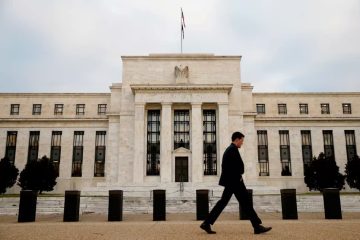
The Federal Reserve on Wednesday cut interest rates for the first time since December to bolster America’s struggling labor market. The central bank’s leader indicates that the economy’s path forward appears uncertain. The Fed reduced its benchmark lending rate by a quarter point, setting a new range of 4% to 4.25%. It marks the first rate cut of President Donald Trump’s second term, after a nine-month hiatus due to uncertainty over the administration’s significant policy changes. “But the economy’s future remains up in the air,” Fed Chair Jerome Powell told reporters. “It’s not incredibly obvious what to do,” he stated.
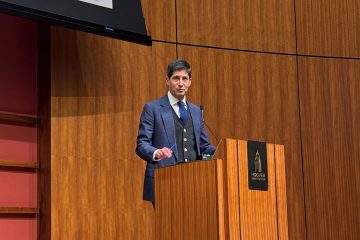
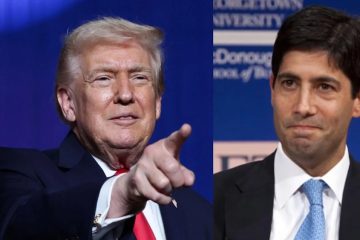
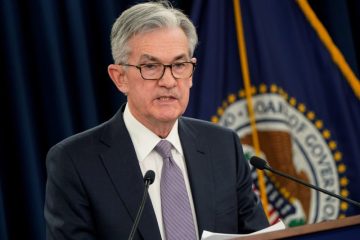
The Fed proceeded with a “risk management cut,” as Powell described, since central bankers cannot indefinitely await the clarity of Trump’s policies’ effects. “We have to live life looking through the windshield rather than the rearview mirror,” Powell stated. The Fed’s latest decision was not unanimous. Fed Governor Stephen Miran, a Trump appointee who was sworn in just before the Fed’s meeting on Tuesday, dissented, advocating for a larger, half-point rate cut. Federal Reserve Chairman Jerome Powell addresses the media during a news conference after the Federal Open Market Committee meeting on Wednesday, Sept. 17, 2025, at the Federal Reserve Board Building in Washington. Fed announces first rate cut in nine months, indicating further reductions ahead.
Fed officials indicated an additional rate cut later in the year in their updated economic projections, revising their earlier estimate of two cuts in 2025 from June. The Fed could implement another quarter-point cut at its October meeting, followed by another in December. However, their projections for unemployment and inflation this year remained unchanged from their June estimates. Powell emphasized that increasing risks to the labor market were a primary factor in the Fed’s decision to lower rates, despite concerns that Trump’s tariffs could lead to higher prices. The Fed chief described the labor market as having “low hiring and low firing.” Powell highlighted the high unemployment rate among young people as a result of the current low hiring climate. The Fed stated in its policy statement that “downside risks to employment have risen. The concern is that if you start to see layoffs, there won’t be a lot of hiring going on,” Powell said. America’s central bankers face a challenging situation, as both aspects of their dual mandate — stable prices and maximum employment — are at risk. Inflation for goods subject to tariffs, including furniture and appliances, has started to rise in recent months. Powell stated that the impact of tariffs on prices has not had a “very large effect at this point,” but the full extent of those effects is yet to be determined.
Ultimately, the future of the labor market was the primary concern for Fed officials. “There really is meaningful downside risk” to the labor market, Powell said. “But let’s remember there’s a 4.3% unemployment rate and the economy is growing at 1.5%, so it’s not a bad economy.” Powell indicated that the Fed is not lagging, as Wednesday’s decision serves as an insurance policy to guard against potential future weakness in the labor market. Powell discusses Miran and the independence of the Federal Reserve. The Fed’s latest decision was pivotal; however, Trump’s aggressive efforts to reshape the central bank’s top ranks loomed large. The first question posed to Powell concerned Miran’s arrival at the Fed, particularly whether his dual role as a Fed governor and White House employee impacts Fed independence. “So, we did welcome a new committee member today and, as we always do, the committee remains united in pursuing our dual mandate goals,” Powell stated. “We’re strongly committed to maintaining our independence and beyond that, I really don’t have anything to share.” As Fed officials navigate a complex economic landscape, the central bank’s influential Board has experienced some remarkable changes in recent months. Fed Governor Lisa Cook’s future is uncertain as she contests Trump’s effort to dismiss her in court. In late August, Trump stated he fired her, referencing unproven allegations of mortgage fraud, which the Justice Department is currently investigating.
Meanwhile, Miran emerges as a new voice at the Fed, advocating for more aggressive rate cuts. The Fed’s dot plot, which illustrates officials’ projections for the benchmark lending rate, revealed one estimate significantly lower than the others, suggesting support for aggressive rate cuts in 2025. Democrats have expressed concerns regarding Miran’s close relationship with the president, noting that he remains technically an employee of the White House, as he is on unpaid leave while serving as Fed governor for a vacated term that concludes in late January. Miran has stated he will form independent opinions about the economy.