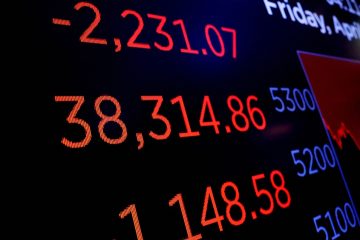
US Futures Dip, Asian Markets Slide, Oil Prices Surge Amid Iran Crisis
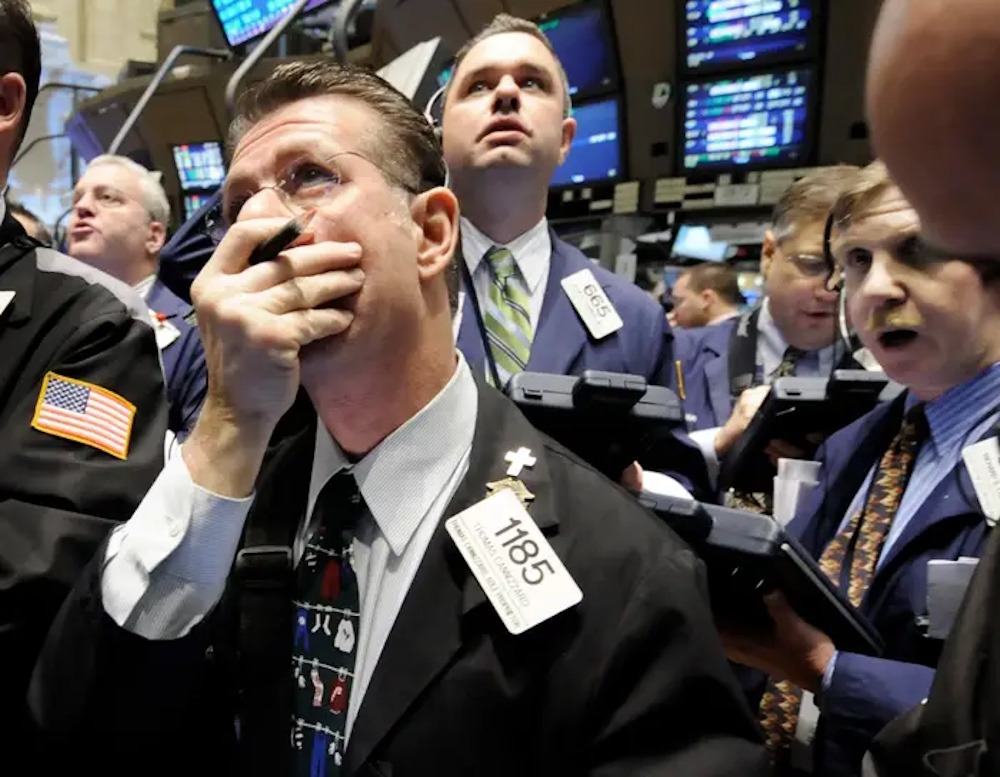
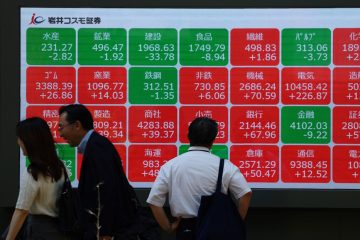
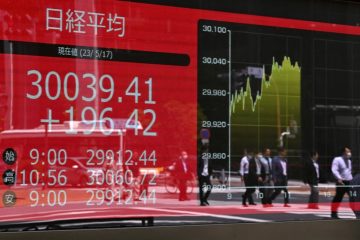
The US and Israeli attacks on Iran unsettled global markets on Monday, with US futures initially declining by over 1 percent and oil prices surging, although both trends eased as trading progressed. The futures for the S&P 500 and Dow Jones Industrial Average were down approximately 0.8 percent by mid-morning in Bangkok. Asian shares commenced the trading day on a downward trajectory. Japan’s Nikkei 225 index experienced an initial decline of over 2 per cent; however, by midday Tokyo time, it had decreased by 1.5 per cent, settling at 57,981.54. In Hong Kong, the Hang Seng declined by 1.6 per cent, settling at 26,215.91, while the Shanghai Composite index remained unchanged at 4,163.01. Taiwan’s benchmark declined by 0.6 per cent, while Singapore’s fell by 1.9 per cent. In Bangkok, the SET experienced a decline of 2.1 per cent.
Australia’s S&P/ASX 200 declined by 0.3 per cent, settling at 9,173.50. In South Korea, markets were closed in observance of a holiday. The price of gold, often regarded as a secure investment during uncertain times, increased by 2.4 per cent to approximately $5,371 per ounce. Traders were wagering that the supply of oil from Iran and other regions in the Middle East would either slow down or come to a complete standstill. Attacks across the region, notably on two vessels navigating the Strait of Hormuz, the narrow entrance to the Persian Gulf, have hindered nations’ capacity to export oil globally. Approximately 20% of the world’s oil and LNG (liquefied natural gas) shipments pass through the Strait of Hormuz. This is not a little-known canal. “It is the aorta of the global energy system,” said Stephen Innes. The price of a barrel of US benchmark crude oil initially surged approximately 8 percent. It subsequently traded 5.9 percent higher at $71.00 per barrel. Brent crude surged 6.2 percent to $77.38 per barrel.
A prolonged war would likely lead to increased prices for various fuels and gasoline, potentially triggering a ripple effect throughout the global economy and elevating overall production costs. Similarly, extended disruptions to oil flows in the Middle East would have “huge implications for oil and LNG and every market everywhere if it occurs. Energy is an input to ALL production,” as stated in a report. Iran exports approximately 1.6 million barrels of oil daily, primarily to China. If Iran’s exports are disrupted, it may need to seek alternative sources for supply, a development that could further elevate energy prices. “But China has ample oil reserves of up to 1.5 billion barrels, and it can offset a decline in oil from Iran by increasing imports from Russia,” said Michael Langham. The attacks were foreseen, given the substantial deployment of US forces in the Middle East, prompting traders to modify their positions in response to that risk. The conflict has redirected focus, at least temporarily, from the concerns regarding artificial intelligence that have been prevalent in the markets in recent months.
On Friday, the S&P 500 declined by 0.4 percent, marking only its second losing month in the past 10. The Dow industrials experienced a decline of 1.1 per cent, while the Nasdaq composite saw a decrease of 0.9 per cent. Treasury yields declined in the bond market as investors looked for more secure options for their funds. When markets are vulnerable, they do not require a decisive strike. “They just need another weight on the bar,” Innes stated. Additionally impacting the overall market was a report released on Friday indicating that inflation at the US wholesale level reached 2.9 percent last month, significantly surpassing the 1.6 percent anticipated by economists. This may compel the Federal Reserve to delay its reductions in interest rates for an extended period. Reducing rates could provide a lift to the economy and enhance investment prices; however, this action carries the potential to exacerbate inflation concurrently. In other dealings early Monday, the US dollar increased to 156.34 Japanese yen from 156.27 late Friday. The euro declined to $1.1789 from $1.1762.