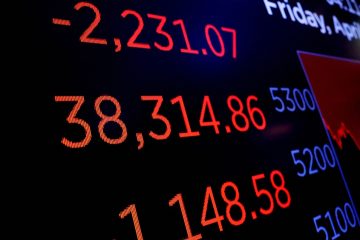
Asian stocks steady as oil prices rise
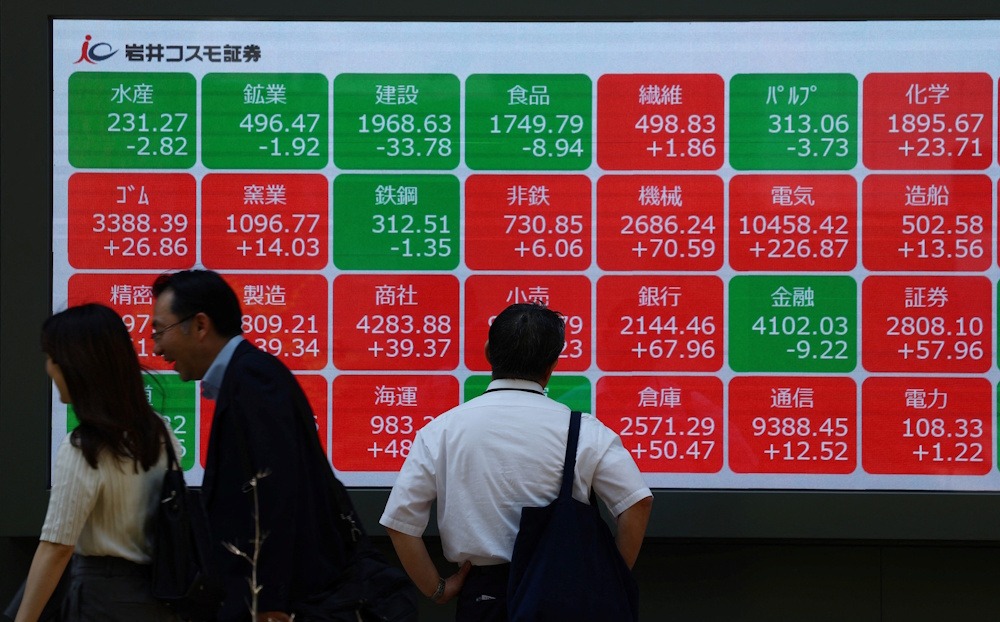
Asian share markets exhibited a cautious demeanor on Thursday as signs of strain emerged in the tenuous Gulf truce, prompting a rise in oil prices and serving as a reminder to investors that the repercussions of inflation would endure for an extended period. Importantly, there was little indication that the Strait of Hormuz was accessible in any significant manner, as Iran asserted its dominance over this critical oil route and insisted on tolls for secure transit. President Donald Trump took to social media to declare that US forces would remain in the Gulf until a deal was reached and complied with; otherwise, “the shooting would begin again.” Meanwhile, Israel conducted its most intense bombardments on Lebanon since the onset of its conflict with the Iran-backed Hezbollah militia last month, resulting in the deaths of over 250 individuals on Wednesday. “You have a fifth of the world’s oil supply moving through a corridor that is still effectively under the influence of one of the parties to the conflict,” said Nigel Green.
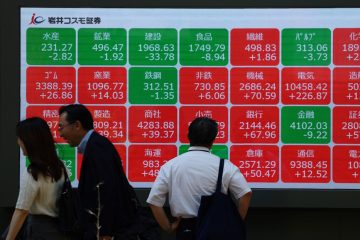
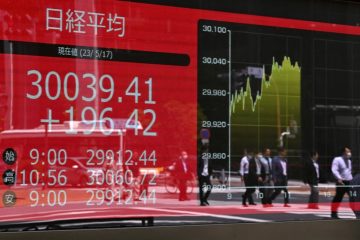
“That is not stability. You don’t need a full blockade to move oil markets sharply higher again,” he added. “Missiles continue to be launched in the Gulf, Israel remains involved on another front, and yet markets are acting as if the region has normalized.” Consequently, prices for US crude futures increased by 3.1 percent to $97.33 a barrel, while Brent saw a rise of 2.1 percent to $96.86. Japan’s Nikkei fluctuated around the flat line, following a notable increase of 5.4 percent in the previous session. South Korea experienced a decline of 0.4 per cent, subsequent to a significant increase of 6.8 per cent. Chinese blue chips declined by 0.6 percent, while MSCI’s broadest index of Asia-Pacific shares outside Japan fell by 0.7 percent. On Wall Street, S&P 500 futures and Nasdaq futures experienced a decline of 0.2 percent as Wednesday’s surge began to fade.
In a mixed performance across Europe, EUROSTOXX 50 futures decreased by 0.1 percent, DAX futures declined by 0.5 percent, while FTSE futures increased by 0.4 percent. With oil prices remaining approximately 40 percent higher than their levels before the conflict, an inflationary spike is poised to manifest in the hard data worldwide. Figures on US core prices for February, due later Thursday, are anticipated to reveal a substantial 0.4 percent increase for a second consecutive month, and this is prior to the spike in energy costs. Minutes from the Federal Reserve’s last policy meeting revealed that an increasing number of members believed a rate hike could be necessary to contain inflation, although many still anticipated that the next action would be a cut. The rally in Treasuries was tempered, showing modest gains in contrast to the significant increases observed in European debt markets. Yields on US 10-year notes stood at 4.296 per cent, in contrast to 3.96 per cent prior to the attack on Iran.
Fed fund futures indicate merely 6 basis points of easing for the remainder of this year, having relinquished expectations of 50 basis points of cuts since the conclusion of February. “The committee broadly agreed that it was too early to act, suggesting the Fed will likely remain on hold this year, in line with our view,” said analysts. They also observed that the risks have shifted to only one rate hike from the European Central Bank this year, instead of two. The changing perspective on rates led the dollar to recover some of its initial losses, while the euro remained steady at $1.1669, down from a peak of $1.1721. The dollar stabilized at 158.68 yen, after dipping to as low as 157.89 at one point on Wednesday. In commodity markets, gold showed slight strength at $4,721 an ounce, having reached a peak of $4,777 overnight.