Asian Stocks Rise as Investors Watch Iran Conflict and Oil Prices

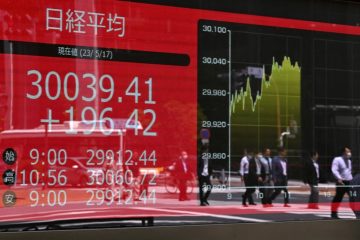
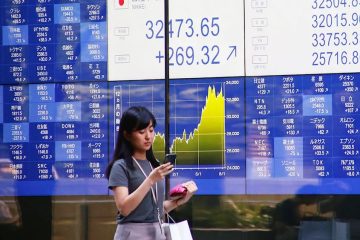
Asian shares experienced an uptick on Tuesday as US stocks remained stable, with investors keenly anticipating indications regarding the potential conclusion of the conflict with Iran. US futures and oil prices saw a slight increase. Tokyo’s Nikkei 225 rose by 2.1% to reach 55,387.75, while South Korea’s Kospi experienced a significant increase of 3.5%, climbing to 5,724.30. In Hong Kong, the Hang Seng rose by 0.3% to reach 26,039.23, while the Shanghai Composite index saw a slight increase of 0.1%, settling at 4,127.34. Australia’s S&P/ASX 200 increased by 0.5% to $8,738.50. Taiwan’s benchmark surged by 3.9%. On Tuesday, the S&P 500 experienced a decline of 0.2%, closing at 6,781.48, following the previous day’s volatile fluctuations driven by significant shifts in the oil market. The Dow Jones Industrial Average decreased by 34 points, or 0.1%, settling at 47,706.51, while the Nasdaq composite saw a slight increase of less than 0.1%, reaching 22,697.10.
Oil prices continue to stay significantly below the highs reached on Monday. Such spikes have been impacting financial markets globally due to concerns that the war might disrupt the global supply of oil and natural gas for an extended period. On early Wednesday, the price for a barrel of Brent crude, recognized as the international standard, increased by 9 cents to reach $85.36. The figure reflects an 11% decrease from its settlement price the previous day. US benchmark crude oil increased by 36 cents, reaching $83.81 per barrel. Oil prices fell sharply Monday afternoon from a peak of nearly $120 per barrel, marking its highest level since 2022, following President Donald Trump’s statement to CBS News that he believes “the war is very complete, pretty much.” That raised hopes that the war may conclude relatively soon, potentially enabling oil to flow freely once more from the Middle East to customers across the globe.
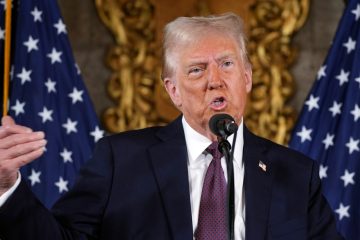
Nevertheless, both parties have intensified their rhetoric as the conflict reaches its 11th day. US Defence Secretary Pete Hegseth pledged the most intense strikes to date, as the Pentagon outlined the extensive toll of injuries incurred by US troops. The US reported that it eliminated over a dozen Iranian vessels involved in minelaying on Tuesday, while the Islamic Republic pledged to obstruct oil exports from the region, asserting it would not permit “even a single liter” to be transported to its adversaries. One point where President Donald Trump has consistently expressed his stance is his commitment to keeping the Strait of Hormuz open. The conflict has effectively obstructed the waterway off Iran’s coast, where a fifth of the world’s oil transits on a typical day. “If Iran does anything that stops the flow of Oil within the Strait of Hormuz, they will be hit by the United States of America TWENTY TIMES HARDER than they have been hit thus far,” Trump said in a posting on his social media network late Monday.
Historically, stock markets tend to recover swiftly from military conflicts, provided that oil prices do not remain elevated for an extended period. Uncertainty regarding the possibility of that occurring this time has resulted in remarkable fluctuations in global markets, frequently shifting from hour to hour. If oil prices remain elevated for an extended period, household budgets that are already strained by significant inflation may buckle under the strain. Businesses would experience a significant increase in their expenses for fuel and for replenishing inventory on their store shelves or in their data warehouses. It all raises the possibility of a worst-case scenario for the global economy: “stagflation,” where growth stagnates and inflation remains high. In other dealings early Wednesday, the dollar increased to 158.26 Japanese yen from 158.23 yen. The euro increased to $1.1625, up from $1.1610.