Asian stocks plummet after US Market’s strong start
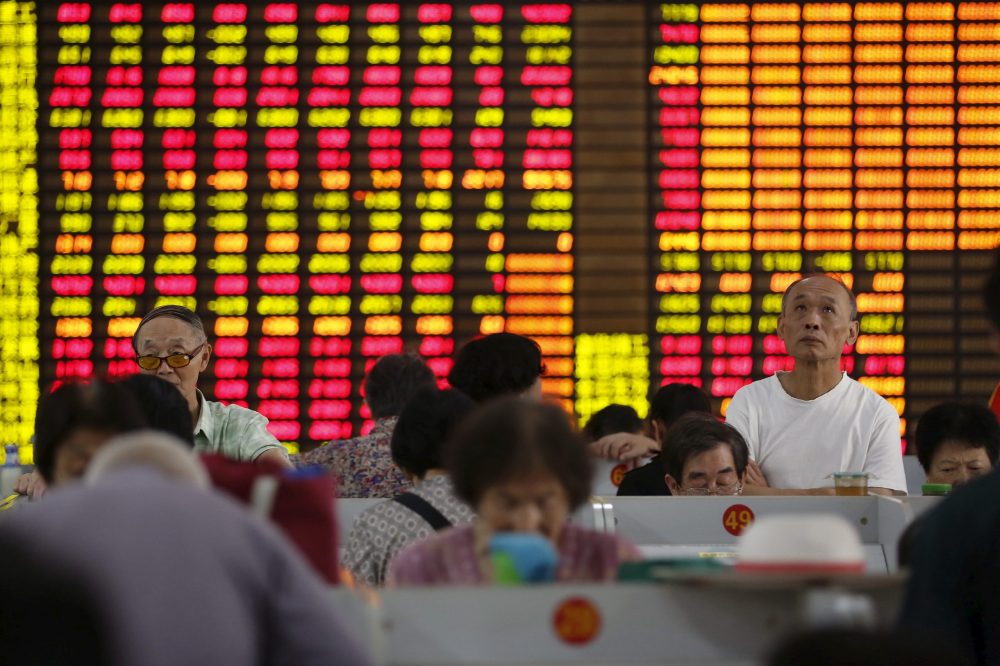
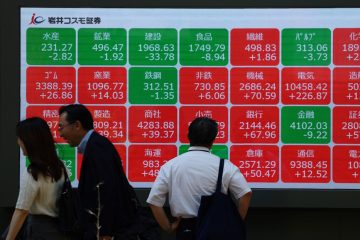
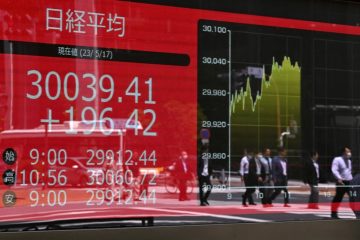
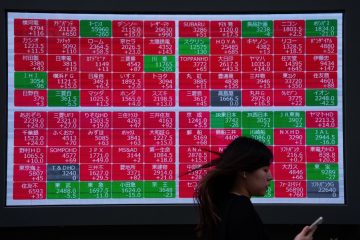
Asian shares experienced a general decline, and US futures followed suit on Thursday as the New Year’s rally on US Market lost momentum. Tokyo’s Nikkei 225 fell by 1.6 percent to 51,117.26, as technology stocks were among those driving the downturn. SoftBank, known for its emphasis on technology investments, experienced a decline of 7.6 percent, while semiconductor equipment manufacturer Tokyo Electron saw a decrease of 4 percent. Hong Kong’s benchmark Hang Seng declined by 1.2 per cent to 26,143.17. In contrast, shares of OpenAI’s Chinese competitor Zhipu surged by approximately 15 per cent above their offer price during the company’s trading debut. The Shanghai Composite index experienced a decline of nearly 0.1 per cent, settling at 4,082.98. South Korea’s Kospi, which achieved record high levels this week, remained mostly unchanged on Thursday, increasing by less than 0.1 percent to 4,552.37. In Australia, the S&P/ASX 200 increased by 0.3 per cent to reach 8,720.80, whereas Taiwan’s Taiex experienced a decline of over 0.2 per cent.
US stock futures experienced a decline, with the futures for the S&P 500 and the Dow Jones Industrial Average dropping by 0.3 percent. On Wednesday, Market’s initial optimism for the year began to wane, partly due to new remarks from President Donald Trump that may prevent large investors from purchasing single-family homes. The S&P 500 experienced a decline of 0.3 percent, retreating from its all-time high to settle at 6,920.93. The Dow Jones Industrial Average fell by 0.9 percent, closing at 48,996.08. The Nasdaq composite increased by 0.2 percent, reaching 23,584.27. On Wednesday, Trump announced via his social media network that he intends to prevent large institutional investors from purchasing single-family homes, aiming to tackle the nation’s housing affordability crisis. Homebuilders experienced a significant decline. D.R. Horton declined by 3.6 percent, while PulteGroup fell by 3.2 percent.
On Wednesday, Warner Bros. Discovery dismissed a revised buyout proposal from Paramount, advising its shareholders to remain committed to Netflix’s offer. Warner Bros. Discovery increased by 0.4 percent, Netflix saw a gain of 0.1 percent, whereas Paramount Skydance experienced a decline of 1 percent. On Thursday, oil prices experienced an increase following the US seizure of two oil tankers, as the Trump administration aimed to establish control over Venezuelan oil. That also followed Trump’s earlier remarks that Venezuela would provide “30 million to 50 million barrels of oil” to the US. Benchmark US crude increased by 0.2 percent, reaching USD 56.22 per barrel. Brent crude increased by 0.3 percent, reaching USD 60.22 per barrel. Oil prices have experienced significant fluctuations this week, as markets evaluate the risks following the US’s removal of Nicolas Maduro from the presidency of Venezuela. Venezuela possesses some of the largest oil reserves in the world.
In bond markets, US Treasury yields fluctuated in response to varied reports on the US economy. The yield on the 10-year Treasury decreased to 4.14 percent from 4.18 percent, while the two-year yield remained steady at 3.46 percent. One report indicated a more significant increase in activity within the US services sector in December than economists had anticipated. However, distinct reports regarding the US job market presented a varied perspective. It was suggested that businesses and government agencies posted significantly fewer job openings in November compared to the previous month. A separate report indicated that businesses added 41,000 jobs in December. The US Labour Department is set to unveil its monthly job report for December on Friday, potentially providing a more detailed perspective. In other dealings early Thursday, the dollar decreased to 156.53 yen, a decline from 156.77 yen. The euro increased to USD 1.1682, up from USD 1.1677.