Asian Stocks Dip, Oil Surges Amid Iran Conflict Concerns
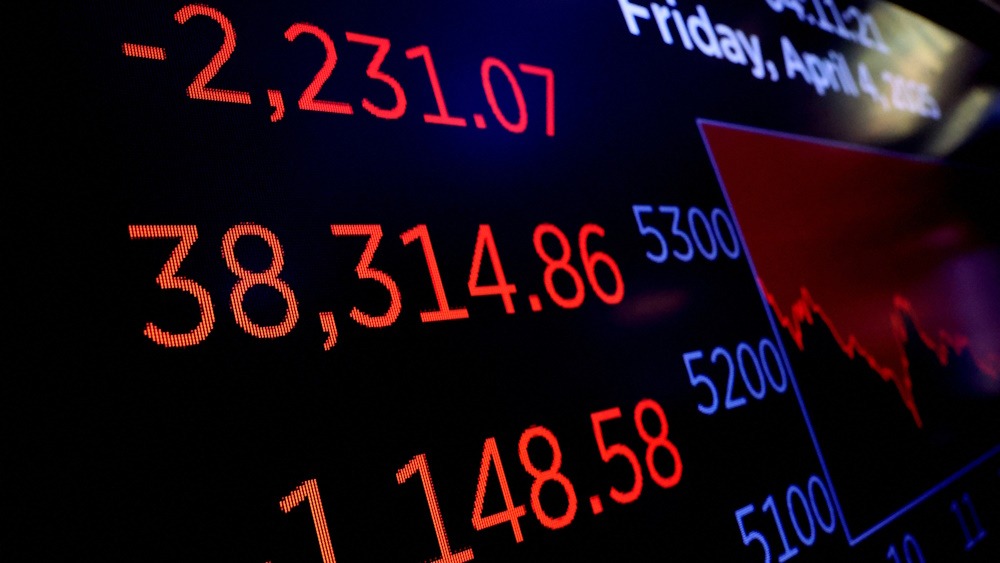
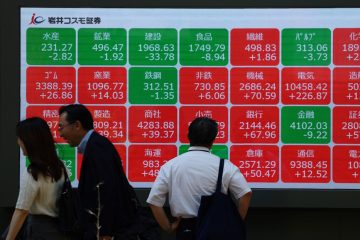
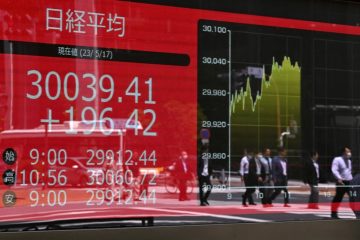
Asian shares largely fell while oil prices climbed on Tuesday as investors focused on the potential threats to the region’s energy supply stemming from the conflict in Iran. Shares in South Korea experienced a decline of 4.8 per cent as markets reopened following a holiday on Monday, settling at 5,946.06. Benchmark US crude increased by 77 cents, reaching $72.00 a barrel. Brent crude, the international benchmark, increased by $1.10 to reach $78.84 a barrel. They surged on Monday but then retreated, remaining at elevated levels compared to earlier, driven by concerns that the conflict could disrupt the global supply of crude oil. Japan’s benchmark Nikkei 225 declined by 2.1 per cent, settling at 56,853.48. Similar to other resource-limited nations in the area, Japan may be particularly affected by restricted access to the Strait of Hormuz, as a significant portion of its oil and natural gas is transported through this route.
Analysts indicate that Japan possesses a substantial stockpile that can last over 200 days, suggesting that the threat is not urgent. Japanese energy stocks experienced a significant decline, with Eneos Corp. falling nearly 6 percent and Idemitsu Kosan decreasing by nearly 4 percent. Defense-related issues, which have risen recently on expectations of more military spending by Prime Minister Sanae Takaichi, retreated as traders sold to secure profits from the previous day. Mitsubishi Heavy experienced a decline of 5 per cent, while IHI saw a drop of 4 per cent. In the rest of the region, Australia’s S&P/ASX 200 declined by 1.2 per cent to 9,089.50, while Hong Kong’s Hang Seng decreased by 0.1 per cent to 26,038.29 and the Shanghai Composite index fell by 0.3 per cent to 4,170.63. On US Market, stocks of airlines such as American Airlines, United, and Delta experienced significant declines on Monday. Rising oil prices pose a significant threat to their already substantial fuel expenses, while the ongoing conflict in the Middle East has resulted in airport closures, leaving travelers stranded. The declines were significant across Asia, with ANA stock decreasing by 2.4 per cent, Japan Airlines dropping 5.2 per cent, Korean Air falling 8.9 per cent, and Qantas Airways experiencing a loss of 2.9 per cent.
The market responses to the war have been notably subdued. Historical military conflicts in the Middle East have not resulted in sustained declines for US markets. According to strategists, led by Michael Wilson, for this war to significantly and sustainably impact US stocks, the price of oil would likely need to exceed $100 per barrel. “Since 2000, there have been 22 one-day oil price spikes of more than 10 percent,” said Stephen Innes. “In other words, energy shocks do not automatically derail equities unless they are severe and sustained.” The market is fully cognizant of that strategy.” On Monday, the S&P 500 experienced a decline of up to 1.2 per cent but ultimately closed with a slight increase of less than 0.1 per cent, finishing at 6,881.62. The Dow Jones Industrial Average experienced a slight decline of 0.1 percent, settling at 48,904.78, while the Nasdaq composite saw an increase of 0.4 percent, reaching 22,748.86. Both also rebounded from significant early declines.
Gold rose by 1.2 percent as investors sought safer assets, while US officials endeavored to assure the global community that this conflict will not endure indefinitely. Oil companies played a crucial role in aiding the US stock market’s recovery from its initial losses, capitalizing on the increasing price of crude. Exxon Mobil climbed 1.1 percent, while Marathon Petroleum rose 5.9 percent. Companies that manufacture equipment for the military have also seen a boost. Northrop Grumman experienced a rise of 5.9 per cent, while RTX saw an increase of 4.7 per cent. Palantir Technologies, known for its software that assists global defense agencies and various clients, saw a rise of 5.8 percent. Big Tech stocks experienced an increase. Nvidia experienced a 2.9 percent increase, serving as the most significant contributor to the upward movement of the S&P 500. The yield on the 10-year Treasury in the bond market increased to 4.04 percent, up from 3.97 percent late Friday. A report indicating that US manufacturing growth exceeded economists’ expectations last month also contributed to an increase in yields. In currency trading, the US dollar declined to 157.32 Japanese yen from 157.47 yen. The euro was valued at $1.1693, a slight increase from $1.1690.