Asian Stocks Climb as Trump Drops Greenland Tariff Threat
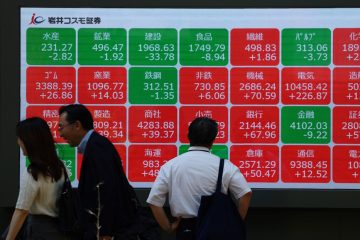
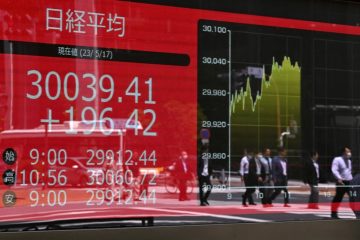
Asian shares predominantly rose on Thursday, following the lead of us market, after US President Donald Trump retracted plans to impose tariffs on eight European nations concerning Greenland and dismissed the option of military intervention to assert control over the territory. The S&P 500 saw an increase of 0.4 percent on Thursday, while the Dow Jones Industrial Average rose by 0.3 percent. Tokyo’s Nikkei 225 rose by 1.9 per cent to 53,760.85, driven by a surge in technology stocks that contributed significantly to the increase. SoftBank Group surged by 11 percent, while chipmaker Tokyo Electron experienced a rise of 3.7 percent. South Korea’s Kospi rose by 2 per cent to reach 5,008.08, surpassing the 5,000 threshold for the first time after achieving record highs earlier this month. The rally was propelled by technology-related stocks. Shares of Samsung Electronics increased by 3.3 percent, while chipmaker SK Hynix saw a rise of 2.3 percent. Hong Kong’s Hang Seng declined by 0.2 percent, settling at 26,531.29. The Shanghai Composite index experienced a decline of nearly 0.2 per cent, settling at 4,110.86. In Australia, the S&P/ASX 200 experienced an increase of 0.7 per cent, reaching 8,841.70. Taiwan’s Taiex surged by 2 per cent, whereas India’s Sensex experienced an increase of 0.7 per cent. US markets experienced their largest declines since October on Tuesday as investors responded to Trump’s weekend threat to impose 10 percent tariffs on Denmark, Norway, Sweden, Germany, France, the United Kingdom, the Netherlands, and Finland for opposing US control of Greenland. This development raised concerns about deteriorating relations between the US and its European allies.
However, during his attendance at the World Economic Forum in Davos, Switzerland, Trump retracted his earlier stance on Wednesday, stating that he would not resort to force to obtain Greenland. The US president stated in a post on his social media site that he had reached an agreement with the head of Nato on a “framework of a future deal” regarding Greenland and Arctic security. The alleviation of tensions fostered a sense of optimism. On Wednesday, the S&P 500 rose by 1.2 percent, reaching 6,875. The Dow Jones Industrial Average increased by 1.2 percent, reaching 49,077.23, while the Nasdaq composite similarly climbed 1.2 percent, settling at 23,224.82. Halliburton, the oil field services company, experienced a notable increase of 4.1 per cent after reporting stronger-than-expected profits for the latest quarter. United Airlines experienced a 2.2 percent increase following quarterly profits that surpassed expectations. Netflix experienced a decline of 2.2 percent despite reporting a profit that exceeded expectations, as investors turned their attention to issues such as the slowing growth of subscribers.
The price of gold decreased by 0.9 per cent to $4,794.70 per ounce, indicating a decline in investor concerns. This follows its rise past the $4,800 threshold on Wednesday, coinciding with Trump’s change of position on Greenland, which led many to seek refuge in safe-haven assets. In the bond market, US Treasury yields eased as investor fears diminished alongside a stabilization in Japan’s bond market turmoil. Japan’s long-term bond yields had surged earlier to records, following Prime Minister Sanae Takaichi’s decision to call a snap election in February. This move sparked concerns over the acceleration of her pledges to cut taxes and increase spending, which could heighten the government’s financial burden. The yield on the 10-year Treasury decreased to 4.25 percent from 4.30 percent late Tuesday.
In other dealings early Thursday, US benchmark crude oil increased by 0.3 percent, reaching $60.79 per barrel. Brent crude, the international benchmark, increased by 0.2 percent to $65.35 per barrel. The US dollar increased to 158.54 Japanese yen, up from 158.27 yen. The euro remained stable at $1.1693.