Asian Markets Dip as Tech Surge Slows with Shutdown Developments
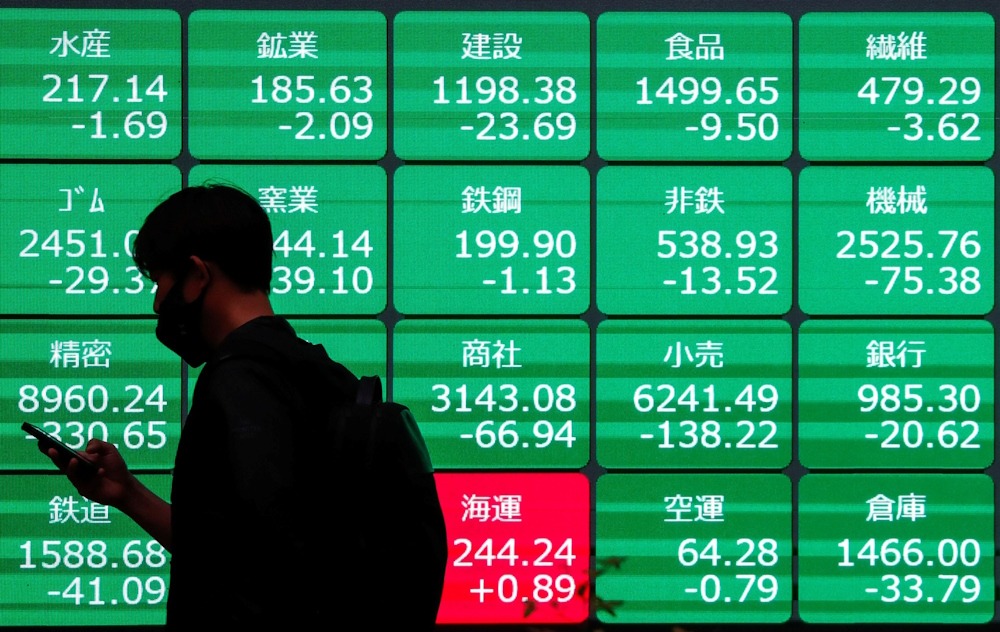
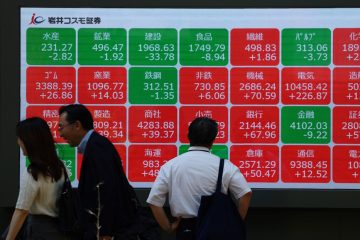
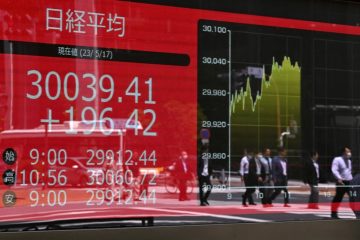
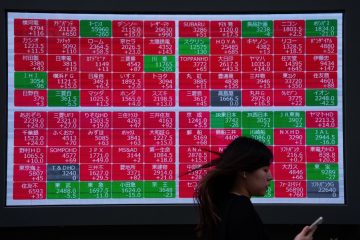
Asian shares experienced a decline on Tuesday as the recent recovery, driven by purchases of technology stocks, began to lose momentum. Markets exhibited minimal response to the recent advancement in resolving the US shutdown, following the Senate’s passage of legislation aimed at reopening the government. US futures showed minimal movement while oil prices experienced a decline. Shares have been fluctuating amid criticism that tech share prices have surged excessively due to the fervor surrounding artificial intelligence, which some have compared to the 2000 dot-com bubble that eventually collapsed. In Tokyo, the Nikkei 225 experienced a decline of 0.5 per cent, closing at 50,675.92. The US dollar rose to 154.15 against the Japanese yen, up from 154.14 yen, approaching its peak since February. Anticipations regarding the government’s potential delay in its timeline for reducing Japan’s substantial national debt, coupled with an increase in spending, have contributed to the depreciation of the yen. The euro rose slightly to $1.1563 from USD 1.1557.
Chinese shares experienced a decline as well. Hong Kong’s benchmark Hang Seng index declined by 0.2 per cent, settling at 26,595.97, while the Shanghai Composite index decreased by 0.4 per cent, reaching 4,002.06. South Korea’s Kospi, which had dipped below the 4,000 level last week, initially saw an increase of more than 1 per cent but ultimately closed up 0.4 per cent at 4,087.56. Australia’s S&P/ASX 200 experienced a decline of 0.2 per cent, settling at 8,818.80. Taiwan’s Taiex experienced a decline of 0.3 per cent, while India’s Sensex saw a decrease of 0.4 per cent. On Monday, Big Tech and other prominent figures of the US stock market resumed their rally, leading market to recover a significant portion of its losses from the previous week. The S&P 500 increased by 1.5 percent, reaching 6,832.43, while the Dow Jones Industrial Average saw a rise of 0.8 percent, settling at 47,368.63.
The Nasdaq composite surged 2.3 percent, reaching 23,527.17. Nvidia emerged as the dominant force propelling the market, surging by 5.8 percent. It was a significant recovery following the decline led by Nvidia and other beneficiaries of the excitement surrounding artificial intelligence technology last week. Critics argue that their stock prices surged too rapidly during the AI frenzy, likening the situation to the 2000 dot-com bubble that eventually collapsed. Drops for several health insurers contributed to limiting the market’s gains. They fell as uncertainty lingers regarding the potential extension of expiring health care tax credits, a contentious issue on Capitol Hill that has resulted in the longest government shutdown in US history. Berkshire Hathaway experienced a decline of 0.4 percent as its CEO, renowned investor Warren Buffett, cautioned shareholders that numerous other companies are likely to perform better in the coming decades due to Berkshire Hathaway’s considerable size. Buffett, 95, is poised to retire in January.
Tyson Foods saw a 2.3 per cent increase after the company, known for its chicken, beef, and pork products, reported a profit for the latest quarter that exceeded analysts’ expectations. Approximately 80% of the companies in the S&P 500 that have reported their summer results to date have exceeded analysts’ profit expectations, as stated by FactSet. Typically, companies surpass analysts’ estimates each quarter; however, the stakes were particularly elevated this time as they had to validate the significant increases in their stock prices since April. Generating larger profits serves as a straightforward method for companies to address concerns regarding the perceived overvaluation of their stock prices. In other dealings early Tuesday, US benchmark crude oil declined by 25 cents, settling at USD 59.88 per barrel. Brent crude, the international benchmark, declined by 25 cents to USD 63.81 per barrel.