Asian equities rise on US-China trade expectations
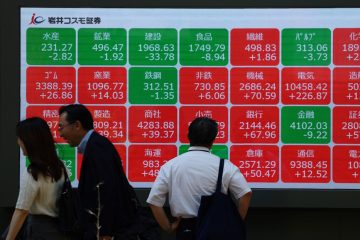
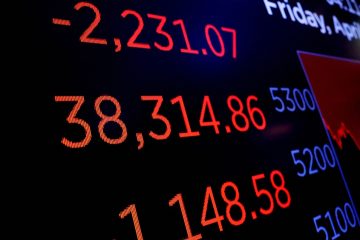
Asian shares experienced a notable rally, while US futures saw a significant increase on Monday, highlighted by Japan’s benchmark Nikkei 225 surpassing the 50,000 mark for the first time. The engagement in trade agreements aimed at reducing tensions among the US, China, and other significant trading partners fostered a positive outlook as US President Donald Trump attended a summit of Southeast Asian nations in Malaysia, where he established initial trade accords with Malaysia, Thailand, Cambodia, and Vietnam. Officials from the United States and China indicated on Sunday that a trade deal was nearing completion, having reached an initial consensus for President Trump and Chinese leader Xi Jinping to attempt to finalize during a crucial meeting later this week. This transcends mere photo-op diplomacy. Amidst the spectacle, the leading trade officials from Washington and Beijing have discreetly outlined a framework that could potentially prevent the world’s two largest economies from further destabilizing the landscape, as noted by Stephen Innes.
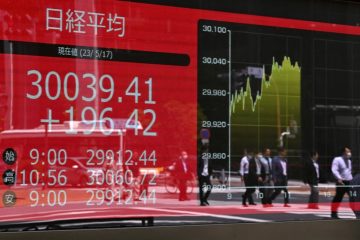
Trump was proceeding to Japan before concluding his Asian tour in South Korea, where he is anticipated to engage with Xi during the sidelines of a Pacific Rim summit, the Asia-Pacific Economic Cooperation forum. A report released Monday projected that annual growth in the region surrounding the Pacific will decelerate to 3 per cent this year, down from 3.6 per cent last year, influenced in part by trade restrictions and elevated tariffs. In Japan, opinion polls indicated that newly installed Prime Minister Sanae Takaichi is experiencing significant public backing for her market-oriented policies. The Nikkei 225 experienced an increase of 2.1 percent, reaching 50,329.08, thereby achieving record intraday highs. Takaichi represents a historic milestone as Japan’s inaugural female prime minister. She advocates for an increase in defence spending, which has led to a rise in the stock prices of prominent defence contractors, including Kawasaki Heavy Industries, which saw an increase of 8.7 per cent. IHI Corp. experienced an increase of 2.6 percent, while Hitachi saw a rise of 2.7 percent.
Trump has consistently expressed grievances regarding the exclusion of American cars from Japanese markets, which he identified as one of several justifications for implementing tariffs of 25 percent, subsequently reduced to 15 percent, on America’s most crucial ally in Asia. Japan’s government has proposed the acquisition of a fleet of Ford F-150 trucks for the purpose of inspecting roads and infrastructure. In South Korea, shares experienced a notable increase, with the Kospi rising by 2 percent to reach a record level of 4,018.73. Investors in that region are anticipating a trade agreement with Trump. Chinese markets similarly experienced robust increases. The Hang Seng in Hong Kong experienced an increase of 1 per cent, reaching 26,427.34, whereas the Shanghai Composite index also rose by 1 per cent, attaining 3,991.35. In Australia, the S&P/ASX 200 increased by 0.3 percent, reaching a level of 9,047.40. Taiwan’s Taiex experienced an increase of 2.1 percent, while India’s Sensex rose by 0.5 percent.
On Friday, US stocks reached new highs following an inflation update that was less severe than anticipated. The data on inflation appears promising, as it may indicate reduced hardship for lower- and middle-income households grappling with persistently elevated price increases. Even more importantly for financial markets, it could also pave the way for the Federal Reserve to continue reducing interest rates in an effort to stimulate the weakening job market. The Federal Reserve recently reduced its primary interest rate for the first time this year, yet it remains cautious about committing to further reductions. This hesitance stems from the understanding that lower rates may exacerbate inflation, in addition to stimulating economic activity and driving up investment prices. Many large US corporations are announcing profits for the most recent quarter that exceed analysts’ expectations, thereby enhancing optimism for sustained growth. In other transactions early Monday, US benchmark crude oil increased by 15 cents to USD 61.65 per barrel. Brent crude, the international benchmark, increased by 12 cents to USD 65.32 per barrel. The US dollar appreciated to 153.15 Japanese yen, up from 152.85 yen. The euro declined to USD 1.1622, down from USD 1.1636.