AI bubble worries, policy divides weigh on Asian equities in 2026
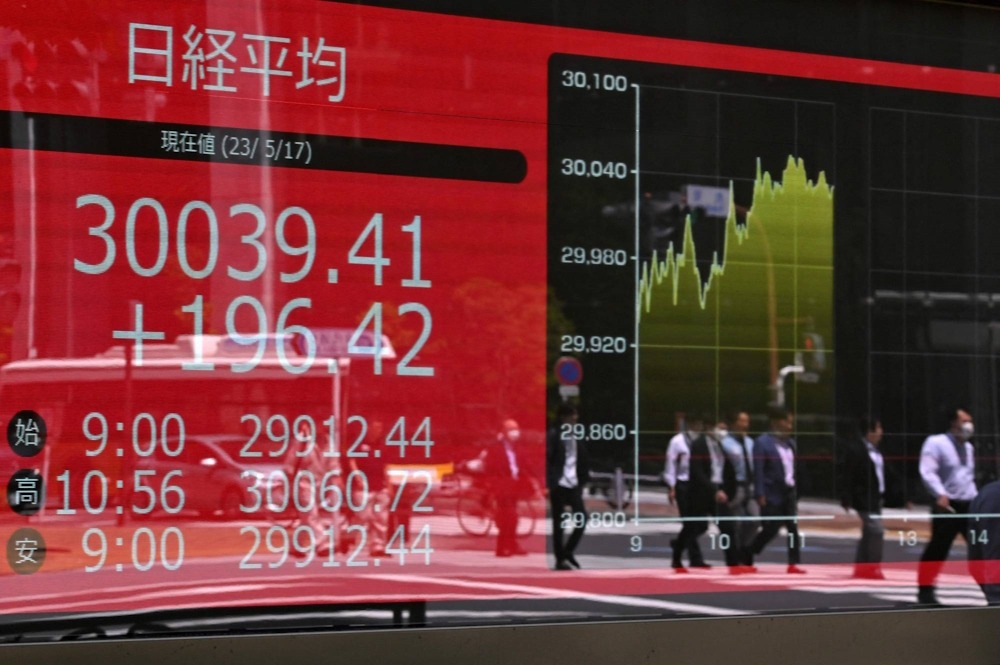
Asian equities began the new year with significant gains; however, this upward momentum could encounter challenges due to concerns regarding an artificial-intelligence bubble and differing interest-rate trajectories throughout the region. Asia’s deep connections to the global AI supply chain render it vulnerable to any sudden downturn on US Market, despite the presence of lower valuations for Chinese chipmakers and Beijing’s efforts towards technological self-sufficiency providing some degree of protection. The sector has captured the attention of investors, as MSCI’s Asia stock index outperformed global counterparts by nearly five percentage points last year, marking its strongest relative performance since 2017. Policy divergence will be another key driver, with growth-focused stances in China and India contrasting with a bias toward curbing inflation in Japan, Australia, and New Zealand. Meanwhile, a rotation may develop into laggards perceived as more resilient to external shocks. South Korea — last year’s standout — may continue to see gains if the momentum for market reform persists. The investment frenzy surrounding AI significantly contributed to the outperformance of Asian stocks compared to their global counterparts last year. The enthusiasm carried into the new year, propelling a regional information technology index to an all-time high on Friday. While some view Asia as a more favorable location for AI investment due to lower valuations, others highlight the heightened risk associated with the dominance of a few major tech companies in markets like Taiwan and Korea. As the rally continues, volatility may rise.
“We’re calling more of an AI fatigue as opposed to a bubble,” stated Ken Wong. “If there’s a pullback in overall AI capex or earnings trajectory starts to deteriorate, there will be some risks,” he said. Despite warnings regarding Wall Street’s enthusiasm for AI, there is a growing sense of optimism surrounding Chinese chipmakers as the country intensifies its commitment to technological self-sufficiency. Beijing is considering a package of incentives valued at up to $70 billion to bolster its semiconductor industry. Investors’ enthusiasm was clearly displayed in the recent blockbuster trading debuts of MetaX Integrated Circuits Shanghai Co. and Moore Threads Technology Co. The robust demand has led their counterparts to hastily seek funding in the stock market, with Baidu Inc.’s AI chip unit and GigaDevice Semiconductor Inc. positioned among those preparing to enter the market. The allure of Chinese tech stocks is also rooted in their more affordable valuations. A key measure of such shares listed in Hong Kong currently trades at 19 times forward earnings, compared to 25 times for the Nasdaq 100 Index.
The Federal Reserve’s policy outlook, with expectations of two rate cuts in 2026, will persist in shaping capital flows and influencing risk sentiment throughout Asia. The monetary easing would create opportunities for central banks in nations such as India and Thailand to reduce borrowing costs, thereby stimulating economic growth. Conversely, the Bank of Japan faces mounting pressure to implement more aggressive rate hikes in order to address inflation and the ongoing depreciation of the yen. In a similar vein, New Zealand’s central bank has indicated that it has likely completed its rate cuts, while there is an increasing expectation for its Australian counterpart to shift towards tightening policy. “India’s sustained low-rate environment may provide gentle tailwinds for its equity market, while further easing in Thailand, Malaysia, and potentially China could boost stocks,” said Dilin Wu. “Overall, markets and sectors with policy flexibility and strong earnings resilience are poised to emerge as the winners, while highly leveraged or rate-sensitive assets are likely to encounter increased pressure.”
As certain investors shift their focus from US assets and the saturated AI market, they are preparing for a resurgence of the underperformers. India’s NSE Nifty 50 Index concluded 2025 with a 10.5% increase, falling behind the MSCI AC Asia Pacific Index by the largest margin since 1998. Investors anticipate that reduced consumption-tax rates and interest-rate cuts will enhance earnings and catalyze a trend reversal. Some also wager that Indonesia can gain additional advantages from the government’s stimulus initiative. Southeast Asia, in general, fell behind the wider region last year. “India and ASEAN are interesting for being very non-AI, while some of these markets have underperformed so there might be value,” stated Xin-Yao Ng. “A good pick will be one with resilient cash flow that’s less dependent on macro/politics, while paying high dividend.” The focus will also be on Korea, where stocks experienced a remarkable 76% rally last year, driven by the AI boom and a sense of optimism regarding corporate and market reforms. The benchmark Kospi Index rose by 2.3% on Friday, closing above 4,300 as it moves closer to the 5,000 level aimed for by President Lee Jae Myung. The momentum for AI continues to be robust for the nation’s leading semiconductor companies. Samsung Electronics Co. continued its impressive performance on Friday, following remarks from its co-chief executive officer that customers were expressing, “Samsung is Back.” The momentum was bolstered by recent Korean data revealing a 43% increase in December semiconductor exports, highlighting the crucial contributions of Samsung and SK Hynix Inc. to the global AI surge. The upcoming phase of the bull run will depend significantly on government initiatives aimed at enhancing corporate governance, alongside measures to support small-cap stocks.