SpaceX Surpasses Boeing in NASA’s Moon Mission
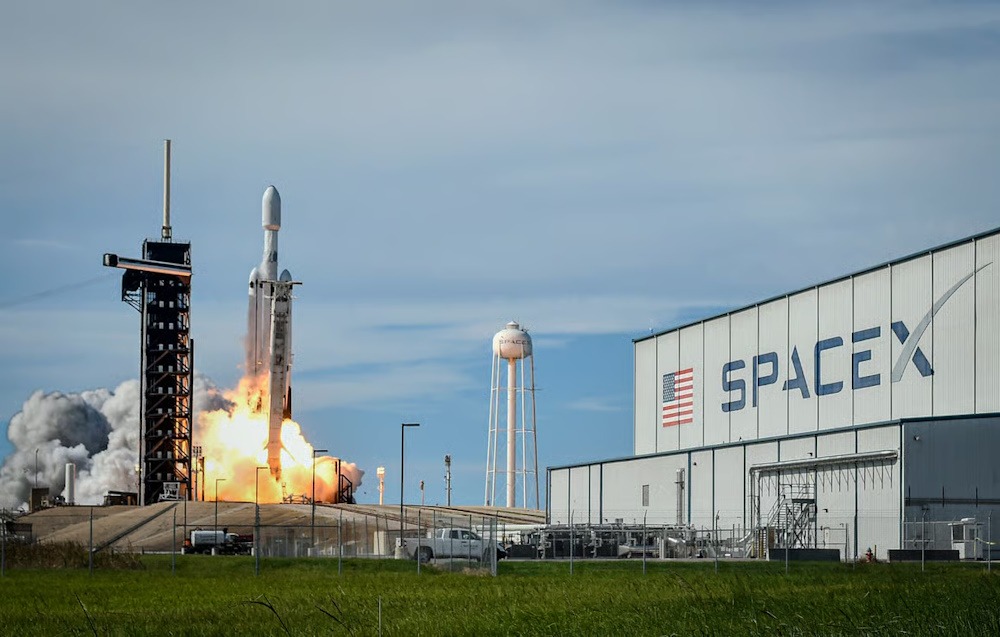
Nasa is revising its moon-landing plans, diminishing Boeing Co.’s involvement while promoting SpaceX’s Starship rocket to take on the task of transporting astronauts to lunar orbit, according to sources familiar with the situation. According to the original plan established years ago, Boeing’s Space Launch System rocket was intended to transport a crew of four within the Orion crew capsule, constructed by Lockheed Martin Corp., to the moon, where the spacecraft would subsequently position itself in lunar orbit. A Starship lander would rendezvous and dock with the capsule in lunar orbit, subsequently transporting astronauts to the surface of the moon. The new proposal indicates that SLS will no longer serve the purpose of boosting Orion near the moon, a role that was previously considered essential for the rocket. Rather, Starship and Orion would connect in Earth’s orbit, assigning Starship the crucial task of transporting the capsule to the moon’s orbit, prior to delivering astronauts to the lunar surface. Nasa Administrator Jared Isaacman is scheduled to meet on Tuesday with the companies involved in the Artemis and human landing system program, including Blue Origin LLC, Boeing, and SpaceX, to discuss their progress and the latest plans at the agency. Any changes to the mission may encounter Congressional scrutiny, and the agency could reconsider and modify its plans, said the individuals, who requested anonymity due to the confidential nature of the matter.
According to sources, even if Nasa reduces the significance of SLS, the rocket will continue to be utilized for launching Orion into Earth orbit. “Nasa is committed to using the SLS architecture through at least Artemis V, which is necessary to support both HLS providers, and their associated acceleration plans to return American astronauts to the moon,” Isaacman said in a statement provided by an agency spokesperson. “We’re incredibly supportive of both our HLS providers and their plans to accelerate America’s path forward to the moon,” Isaacman added. Representatives for Boeing, SpaceX, and Blue Origin have yet to provide a comment. “Orion is the only vehicle capable of returning astronauts from the moon, and is essential for the Artemis program,” stated a representative from Lockheed. “We’re deep into the assembly of spacecraft for Artemis III, IV and V — all of which are multipurpose and can accommodate Nasa’s evolving missions.” The consideration is part of a broader effort to accelerate the Artemis program to return humans to the moon for the first time in over fifty years in 2028 — an initiative that has faced numerous delays and cost overruns for years. Nasa has been considering options for landing astronauts on the moon from SpaceX and Blue Origin, which was established by Amazon.com Inc. Executive Chair Jeff Bezos. Both companies possess multibillion-dollar contracts to create moon landers for Artemis.
This would represent yet another challenge for a Boeing initiative that has been central to Nasa’s flagship human spaceflight endeavor. It would also introduce a new challenge: Elon Musk-led SpaceX has only two years to complete development of a rocket that has yet to carry out a successful end-to-end orbital flight, let alone carry a crew. Shares of Boeing momentarily deepened their declines, exceeding 3% in New York trading following a report, before recovering some of those losses. SLS and Orion have consistently functioned as the main rocket and foundation of NASA’s Artemis lunar program. However, Orion’s propulsion capabilities, developed in Europe, face limitations, while Boeing’s rocket is significantly delayed and has exceeded its budget by billions of dollars. Nasa’s inspector general has estimated that the combined cost of the first four flights of the SLS and Orion will exceed $4 billion each. The rocket is poised for its second flight, anticipated as early as April, for a mission named Artemis II, which aims to send a crew of four astronauts on a journey around the moon. Blue Origin has submitted a revised lunar lander plan following NASA’s call for the company and SpaceX to expedite their development last year.
Since then, the space agency has thoroughly evaluated multiple strategies for altering its approach to the moon landing, including the landers developed by both SpaceX and Blue Origin. According to a source, the plan to utilize Starship to propel Orion to the moon has received approval. A revised Blue Origin landing plan has garnered support, the individual stated. The function of SLS in that mission remains ambiguous. The revised SpaceX landing strategy will depend on placing Orion in an alternative orbit around the moon, differing from NASA’s initial plan. The initial roadmap proposed that Orion would enter a highly elongated orbit around the moon, referred to as a near-rectilinear halo orbit, or NRHO. Instead, the revisions would call for Starship to propel Orion into a much tighter, circular orbit known as low-lunar orbit. The revised SpaceX flight plan aims to utilize Starship’s potential to place Orion in low-lunar orbit, a feat that SLS and Orion were unable to accomplish together. Meanwhile, SpaceX’s Starship has faced scrutiny for failing to meet its development milestones, and a recent report from NASA’s inspector general indicated that further delays in the rocket’s development are probable. The possible recent updates follow Isaacman’s announcement of a major overhaul of NASA’s Artemis program at the close of February.