Russia to Construct Moon Nuclear Power Plant in 10 Years
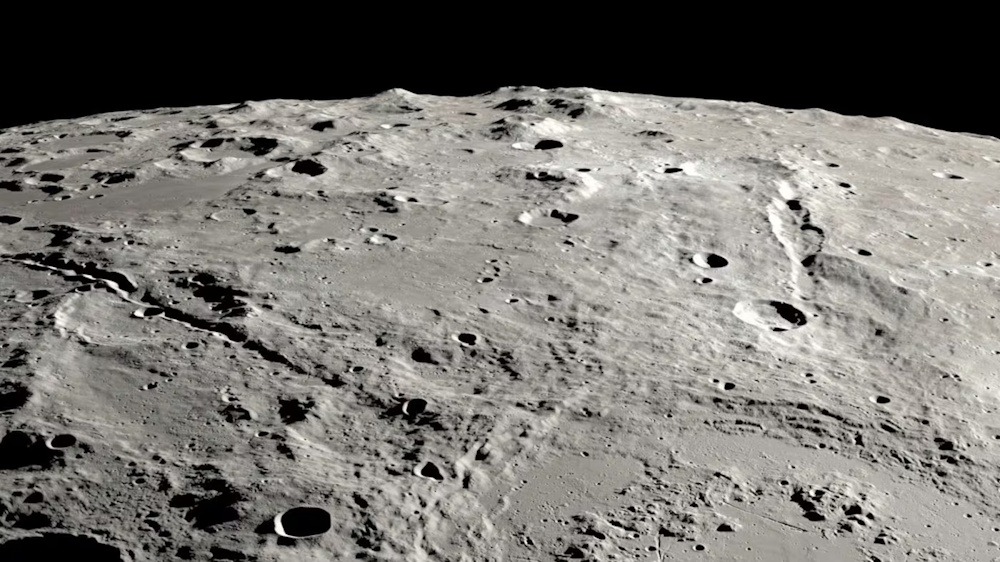
Russia intends to establish a nuclear power plant on the moon within the next decade to support its lunar space programme and a collaborative Russian-Chinese research station, as leading nations accelerate their efforts to explore the earth’s only natural satellite. Since Soviet cosmonaut Yuri Gagarin made history as the first human to venture into space in 1961, Russia has taken great pride in its status as a leading force in space exploration. However, in recent decades, it has lagged behind the United States and, more recently, China. In August 2023, Russia faced a significant setback when its unmanned Luna-25 mission crashed into the moon’s surface during its landing attempt. Meanwhile, Elon Musk has transformed the landscape of space vehicle launches, an area that was once dominated by Russian expertise.
Russia’s state space corporation, Roscosmos, announced its intention to construct a lunar power plant by 2036 and has formalized a contract with the Lavochkin Association aerospace company to facilitate this endeavor. Roscosmos did not explicitly state that the plant would be nuclear; however, it did mention that the participants included the Russian state nuclear corporation Rosatom and the Kurchatov Institute, which is Russia’s leading nuclear research institute. Roscosmos stated that the plant’s purpose is to support Russia’s lunar programme, which encompasses rovers, an observatory, and the infrastructure for the collaborative Russian-Chinese International Lunar Research Station. “The project is an important step towards the creation of a permanently functioning scientific lunar station and the transition from one-time missions to a long-term lunar exploration programme,” Roscosmos said.
Dmitry Bakanov stated in June that one of the corporation’s objectives is to establish a nuclear power plant on the moon and to investigate Venus, often referred to as Earth’s “sister” planet. The moon, located 384,400 km (238,855 miles) from our planet, plays a crucial role in moderating the earth’s wobble on its axis, thereby ensuring a more stable climate. The phenomenon also results in the creation of tides in the world’s oceans. Russia is not the only nation with such intentions. NASA announced in August its plan to deploy a nuclear reactor on the moon by the first quarter of fiscal year 2030.
“We find ourselves in a competition to reach the moon, engaged in a contest with China for lunar exploration. And to have a base on the moon, we need energy,” US Transport Secretary Sean Duffy stated in August. He stated that the United States was presently lagging in the competition to reach the moon. He stated that energy was crucial for sustaining life on the moon and subsequently for enabling humans to reach Mars. International regulations prohibit the placement of nuclear weapons in space; however, there are no restrictions on the deployment of nuclear energy sources in space, provided they adhere to specific guidelines. Some space analysts have predicted a lunar gold rush: NASA states that there are estimates of a million tonnes of Helium-3, an isotope of helium that is rare on Earth, on the moon. Research indicates that rare earth metals, which are utilized in smartphones, computers, and advanced technologies, can also be found on the moon. This includes elements such as scandium, yttrium, and the 15 lanthanides.