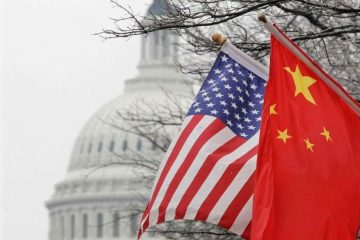
Private equity firms face challenges exiting China investments
The largest private equity firms globally are facing challenges in divesting companies in China, resulting in billions of dollars tied up in investments and hindering the movement of capital throughout Asia. According to a report, data indicate that prominent buyout firms such as KKR, Blackstone, CVC Capital Partners, Warburg Pincus, and The Carlyle Group did not execute any publicly disclosed full exits from their mainland Chinese buyout investments in 2025. The ongoing economic slowdown reveals a worldwide trend, as private equity firms hold onto their assets for longer durations due to elevated interest rates and market valuations that fall short of ideal levels, thereby limiting their ability to sell companies and return funds to investors. According to the report, unsold private equity assets worldwide reached $3.8 trillion in 2025, underscoring a growing backlog across markets. Private equity firms realize financial returns by selling businesses following enhancements in their operational and financial performance. The firms typically conclude their investments by either selling to other companies or through initial public offerings.
However, in China, various structural factors have complicated these exits. According to the reports, asset valuations have declined in recent years as a result of slower economic growth and diminished investor demand. Additionally, Western institutional investors have scaled back their exposure to China in light of geopolitical tensions and regulatory uncertainty. The exit slowdown has compelled investors to retain assets for a longer duration than initially intended, consequently postponing capital distributions to pension funds, sovereign wealth funds, and family offices that allocate resources to private equity funds. The issue has been exacerbated by elevated global interest rates, which have diminished borrowing capacity and decreased company valuations. This development has rendered acquisitions and public listings less appealing, thereby further hindering exit activity. The absence of exits has resulted in a liquidity gap for private equity funds focused on China, with secondary market transactions occurring at considerable discounts as investors sell stakes in funds to other investors.
According to the source, private equity fund stakes across Asia have been trading at average discounts of approximately 44 per cent, while funds specific to China have experienced discounts ranging from 40 to 50 per cent. Investors globally have begun to utilize secondary markets as their main approach for generating liquidity. In 2024, investors turned to secondary private equity transactions, which totaled $162 billion, as they sought exit options beyond the conventional IPO and acquisition pathways. Hong Kong’s stock market has experienced a resurgence in listings, amassing approximately $35 billion in 2025. This development has enabled certain private equity firms to divest from smaller investments, especially those acquired through venture-style stakes rather than complete buyouts, as reported. Nonetheless, there are initial indications of a modest recovery this year. In January, Bain Capital finalized the sale of its China-based data centre operator Chindata, achieving a valuation of approximately $4 billion. The buyers comprised a Chinese industrial company along with investors linked to the government. This represented one of the initial significant departures by a global buyout firm in mainland China in almost two years.
However, the majority of exit activity has been characterized by domestic buyers rather than international investors, indicating a decline in cross-border deal activity. As a result, private equity firms are progressively reallocating capital to other Asian markets where exits are more straightforward. For instance, Japan and India have drawn considerable investment owing to enhanced economic growth, governance reforms, and more developed capital markets. Simultaneously, certain firms persist in raising Asia-focused funds, suggesting that enduring interest in the region remains robust despite the existing exit challenges, as reported. Consequently, while China continues to be one of the largest private equity markets worldwide, the existing exit constraints highlight structural challenges in transforming investments into realized returns.