Nvidia and Fanuc Join Forces for a Robotics Revolution
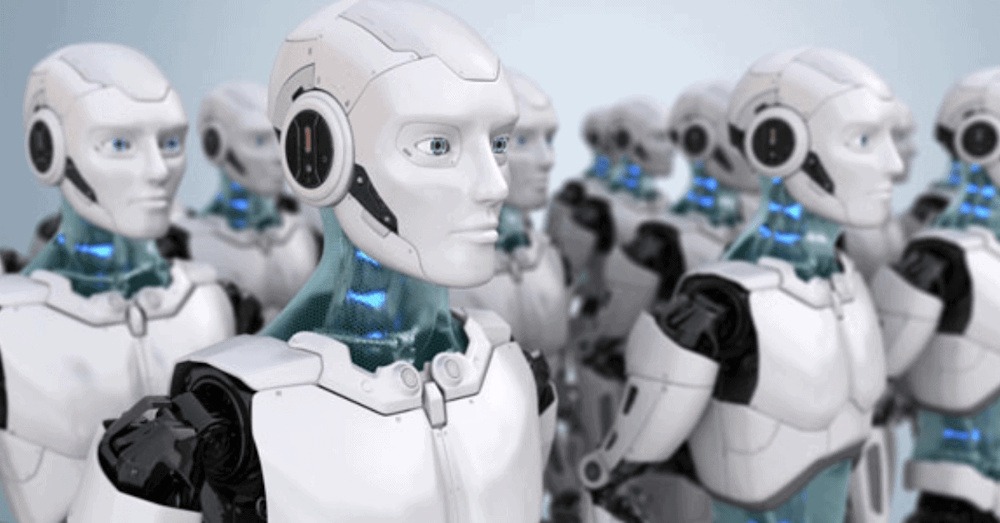
On Monday, Japanese industrial robot maker Fanuc revealed its collaboration with Nvidia to create AI-powered factory robots that can respond to spoken commands, according to a report by Nikkei Asia. The move signifies a significant transformation for Fanuc as it ventures into the realm of “physical AI”, where machines analyse real-time data and adapt their actions instantaneously. Fanuc and Nvidia are set to develop physical AI systems that will feature Nvidia computers. The upgraded robots are anticipated to comprehend verbal instructions and function safely in the vicinity of individuals, steering clear of unintentional collisions. The robots will be trained inside Nvidia’s virtual factory to expedite deployment. Upon completion of the training phase, the systems can be seamlessly implemented at actual manufacturing locations. The companies also stated that the new robots will support ROS 2, an open-source robotics platform. This will facilitate the process for engineers to construct, evaluate, and implement applications. The machines can be controlled using Python, a programming language that is widely utilised in the development of artificial intelligence. Fanuc currently holds a significant share of nearly 20 percent of the global industrial robot market and has successfully shipped over 1 million units to date. However, this marks the company’s inaugural public commitment to physical AI.
Conventional factory robots necessitate specific installation areas and skilled technicians to meticulously program each movement. These machines execute repetitive tasks with efficiency; however, they present challenges in terms of installation and maintenance. The report indicated that a shortage of skilled workers has also impeded broader adoption. As per reports, there were 4.66 million industrial robots in operation globally last year, with annual shipments estimated at approximately 500,000-550,000 units. The majority consist of multi-jointed robotic arms. However, AI is anticipated to transform this landscape rapidly. Physical AI systems possess the ability to comprehend their environments, recognise objects, and make informed decisions, thereby paving the way for significantly more intricate automation. The worldwide competition to develop sophisticated robots is intensifying. In the United States and China, startups are developing humanoid robots, and Tesla is gearing up for a phased introduction of its humanoid robot, Optimus, within its factories.
Industry forecasts indicate that as many as 1 billion robots may be functioning in factories and warehouses by the year 2050. The report indicated that this growth is compelling established players such as Fanuc to adapt swiftly. In October, SoftBank Group revealed its intention to acquire the robotics division of Swiss engineering powerhouse ABB for $5.37 billion. Masayoshi Son stated, “We will unite world-class technology and talent under our shared vision to fuse Artificial Super Intelligence and robotics – driving a groundbreaking evolution that will propel humanity forward.” Yaskawa Electric intends to produce AI-enabled robots in the United States. These robots will incorporate Nvidia GPUs and are anticipated to manage more sophisticated tasks, including tunnelling and harvesting vegetables.
Nvidia CEO Jensen Huang has urged employees to leverage AI to the fullest extent, according to the reports. Addressing worries that certain managers were recommending staff to restrict their use of AI, Huang stated, “My understanding is Nvidia has some managers who are telling their people to use less AI… Are you insane?” He stated, “Any task that can be done by AI should be done by AI,” and reassured employees that their jobs are safe. Nvidia, in contrast to numerous tech companies, has been pursuing an aggressive hiring strategy. Recently, other firms, including Apple and HP, have announced job cuts. Apple is reorganising its global sales division, while HP announced plans to cut 4,000-6,000 positions worldwide by FY28 as it leverages AI to enhance operational efficiency.