Debt drives AI data center expansion, posing financial concerns
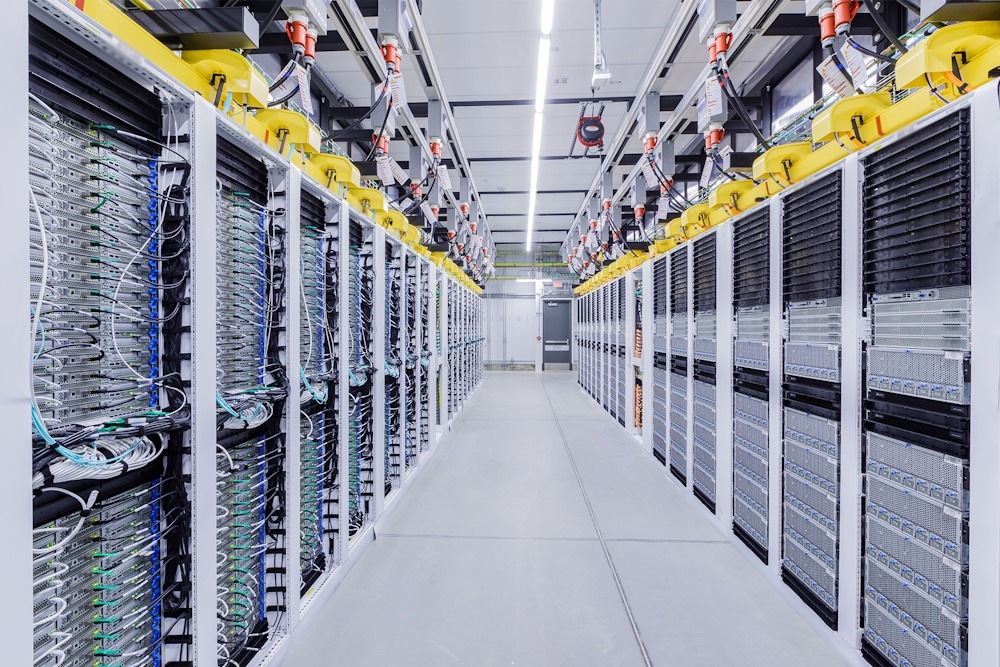
For years, the tech industry’s giants, which generate tens of billions of dollars in annual profits, typically financed the construction of new data centers with their own funds. Last year, Google expanded its already extensive computing facility in Oklahoma, while Amazon initiated the development of a new data center in Indiana, which is projected to consume enough electricity to power over a million homes. However, a new group of free spenders is coming to the forefront in the race towards increasingly larger artificial intelligence projects. Less prominent organizations — not yet recognized as household names, lacking substantial wealth but keen to participate in the AI surge — have begun constructing their own massive data centers. They are borrowing tens of billions of dollars to accomplish this. In September, Meta reached an agreement to purchase $14.3 billion in computing power from CoreWeave, a New Jersey company that made its public debut this year.
CoreWeave has informed that for every $5 billion in computing power it intends to sell to customers over the next four years via new data centers, it will need to borrow $2.85 billion. In the same month, Microsoft entered into a comparable agreement with Nebius, a start-up located in Amsterdam, valued at $19.4 billion. Nebius has recently raised $3.16 billion through the sale of convertible notes, a financial instrument that starts as debt but can be converted into company shares in the future. Currently, there is an increasing apprehension that these smaller companies are taking on risks beyond their capacity, becoming entangled in relationships that financial analysts describe as alarmingly unclear. A select group of significantly larger corporations is collaborating with OpenAI, the San Francisco-based firm that ignited the AI revolution with its ChatGPT chatbot three years prior. According to analysts, the debt incurred to finance data centers may surpass $1 trillion by 2028, representing over a third of the total expenditure on these facilities. If AI technologies fail to generate the anticipated revenue in the coming years, companies burdened with debt may find themselves bearing the consequences for the entire industry. The transition to debt financing echoes the dot-com boom of the late 1990s, a period when numerous companies accumulated debt in their haste to install the fiber-optic cables that would ultimately shape today’s high-speed internet.
When the bubble burst, companies such as WorldCom, Global Crossing, and Lucent faced bankruptcy or were compelled to sell themselves to larger rivals. Projects led by OpenAI are contributing to this mounting pile of debt. Despite generating billions of dollars in annual revenue, the company’s chief executive, Sam Altman, has stated that profitability will not be achieved until 2029. Oracle announced that it would assume an additional $18 billion in debt. Analysts project that Oracle will need to secure $25 billion annually over the next four years to construct these facilities. In certain instances, Oracle is covering only a portion of the data center expenses. At OpenAI’s inaugural data center in Abilene, Texas, Oracle is financing the computer hardware, while a company named Crusoe is tasked with constructing the building, the cooling systems, and other essential infrastructure. In relation to the project, Crusoe secured $15 billion through a partnership with Blue Owl Capital, a private credit lender that is facilitating the funding of multiple data centers nationwide and will possess the one located in Abilene. OpenAI has also committed to purchasing computer chips from those companies as it develops its data centers. If OpenAI does not require those chips, Nvidia and AMD may withdraw from the agreements; however, OpenAI and others could still be liable for the debt they have incurred.
“The risk is that companies will buy a bunch of computer chips for AI and they won’t have the revenues to pay for them,” said Andrew Odlyzko. As companies secure loans to construct data centers, the collateral often consists of the computer chips intended for installation in these massive facilities; should the companies fail to meet their loan obligations, the lenders take ownership of the chips. However, computer chips, similar to cars, depreciate in value over time. Financial experts say, “The risks could extend beyond the tech industry.” The debt associated with data centers is distributed among a diverse range of financial institutions, encompassing traditional banks, private credit lenders such as Blue Owl and Ares Management, as well as numerous companies investing in new computing facilities. “Who is holding all this debt?” It is not as if it is solely in the hands of large financial institutions. “It is all over the place,” said Paul Kedrosky.