AI Will Shrink Workweek to 3.5 Days, Predicts JPMorgan’s Jamie Dimon
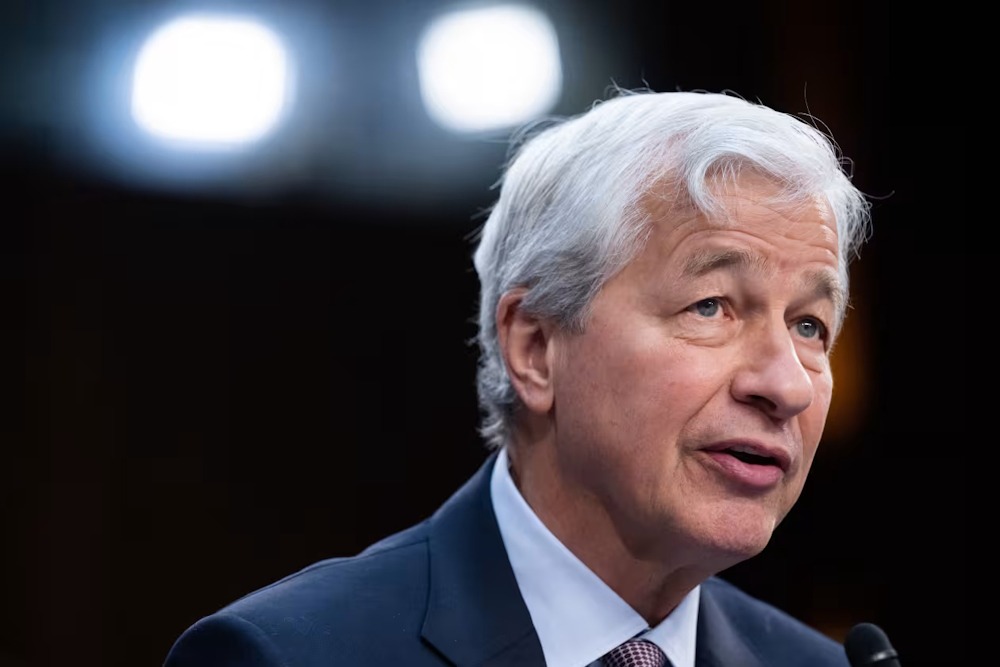
JPMorgan Chase CEO Jamie Dimon on Thursday predicted that artificial intelligence will optimise the work schedule within “our lifetime,” and added that the workdays will be reduced to just three-and-a-half during a week, Fortune reported. During his address at the America Business Forum in Miami, Dimon remarked, “It’s going to affect every application, every job, every customer interface.” “My guess is the developed world will be working three and a half days a week in 20, 30, 40 years, and have wonderful lives.” He further stated that the technology has its drawbacks and is frequently utilized by “bad people,” yet urged individuals to “embrace it.” Dimon’s forecast is informed by his extensive experience in transforming JPMorgan Chase into a significant AI testbed, where nearly 2,000 employees are engaged in developing AI systems and over 150,000 staff utilize large language models for internal tasks.
The bank currently employs numerous AI applications across various functions, including fraud detection, legal review, reconciliations, and marketing optimisation. Dimon stated that these innovations illustrate how productivity gains from automation could allow for the same level of output in fewer hours, fundamentally altering the conventional five-day workweek. During a separate event, Dimon cautioned that the shift to artificial intelligence will not be without its challenges. He cautioned individuals that artificial intelligence will “eliminate jobs,” emphasizing that “people should stop sticking their heads in the sand.” Dimon emphasized the necessity for businesses and governments to ready themselves for workforce transformations by investing in retraining, income support, redeployment, and, when required, early retirement to avert social unrest. He stated that JPMorgan is formulating its strategy with an emphasis on redeploying employees.
Dimon emphasized the capital- and power-intensive nature of AI infrastructure, stating it necessitates more cautious investment compared to the early internet boom. He urged investors to assess data centre and AI projects “deal by deal,” taking into account construction risks and financial returns rather than simply pursuing the AI trend indiscriminately. “Some AI efforts will be in a bubble,” Dimon stated, “but overall, the technology will probably pay off.” Dimon reportedly stated that the bank’s workforce is likely to remain steady or grow as artificial intelligence becomes deeply embedded in the bank’s operations. In an interview, he articulated that JPMorgan’s emphasis lies in leveraging technology to enhance efficiency, rather than reducing its workforce.
While he acknowledged the potential job cuts that could arise from artificial intelligence, he emphasised that it could also lead to the creation of more jobs, particularly in data, analytics, and technology infrastructure. Dimon stated that artificial intelligence could replace 80 per cent of jobs in certain professions, but new roles could emerge in other areas. Highlighting the promise of AI, Dimon praised Nvidia as an “unbelievable company,” emphasizing that the technology is “real” and possesses the ability to make firms “hugely productive.” He likened the present rise of artificial intelligence to the formative years of the internet, noting that although not every initiative thrived, it eventually led to the emergence of significant entities like Google, Facebook, YouTube, Microsoft, Amazon, and Salesforce, despite the presence of a “bit of a bubble.”