The new 15% US-EU tariff deal: What does it cover?

US President Donald Trump and European Commission President Ursula von der Leyen announced a trade agreement on Sunday, July 27, imposing a 15 per cent tariff on most European imports into the US. The deal, finalized in a brief meeting at Trump’s Turnberry golf resort in Scotland, averted the impending 30 percent tariff scheduled to take effect on August 1.
The headline tariff rate remains set at 15 per cent, yet numerous details of the agreement are still ambiguous. The agreement features zero tariffs on specific ‘strategic goods’ including aircraft and aircraft parts, certain chemicals, semiconductor equipment, select agricultural products, and essential raw materials. Pharmaceuticals, steel, and certain farm goods are not included in this agreement.
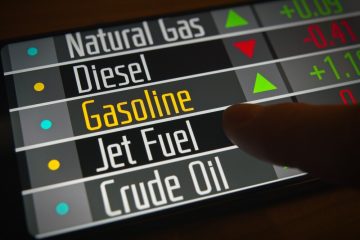
Von der Leyen announced that the EU would purchase $750 billion worth of US energy — including natural gas, oil, and nuclear fuel — to replace Russian supplies, and invest an additional $600 billion in the US. The source of this investment, however, was not specified. The agreement alleviates immediate tariff threats, yet several issues persist unresolved. Trump confirmed that the current 50 percent US tariff on imported steel will remain in effect. Discussions will persist regarding the establishment of steel import quotas and the reduction of overcapacity in the global market.
Pharmaceuticals were excluded from this agreement. Von der Leyen clarified that those discussions are ongoing and distinct from Sunday’s deal. Some EU agricultural product tariffs remain unchanged, yet there is no clear indication of which items are excluded. The 15 per cent tariff marks a substantial rise from the pre-Trump average US tariff of approximately 1 per cent on European goods and exceeds the 10 per cent baseline tariff imposed during negotiations. The impact on European exporters could be significant, as many companies will have to choose between passing costs onto US consumers or absorbing losses.
The previous 10 per cent tariff was sufficient to lead the European Commission to reduce its growth forecast from 1.3 per cent to 0.9 per cent. German industry leaders now warn of “immense negative effects” on export-reliant sectors, with a 15 per cent impact. Von der Leyen defended the deal, stating it is “the best we could do” and highlighting that it ensures ongoing access to the US market while providing a level of stability.
The car industry, anticipating a 30 per cent tariff, views the 15 per cent rate as a relief. Von der Leyen noted that the new rate is considerably lower than the existing 27.5 percent tariff on cars from all countries, which encompasses Trump’s 25 percent tariff and the prior 2.5 percent US auto tariff. European automakers continue to face significant pressure. Volkswagen disclosed a loss of $1.5 billion in profits during the first half of the year, attributed to increased US tariffs. Mercedes-Benz, a major producer of vehicles sold in the US from its Alabama facilities, indicated that price increases are expected for upcoming model years.
Prior to Trump’s presidency, tariffs between the US and EU were comparatively low. The Brussels-based Bruegel think tank reported that the US averaged a 1.47 percent tariff on European goods, while the EU imposed 1.35 percent on American products. Trump often criticized the $235 billion US merchandise trade deficit with the EU, labeling the European market as unfair, especially regarding the automotive sector. The EU contends that the US benefits from a significant surplus in sectors such as cloud computing, travel, and financial services, which aids in balancing the trade deficit. Despite Trump’s assertion that the EU “was formed to screw the United States,” both parties acknowledge the importance of maintaining their trading relationship. The US and EU constitute the world’s largest bilateral trading bloc, with $2 trillion in annual commerce.
A last-minute breakthrough occurred just days ahead of the US deadline to implement new tariffs. Trump and von der Leyen engaged in brief discussions at Trump’s golf resort in Scotland, accompanied by senior EU trade officials. Commerce Secretary Howard Lutnick stated that the August 1 deadline is non-negotiable. “No extensions, no more grace periods,” he stated. He stated that Trump remained open to future dialogue. The EU prepared a list of retaliatory tariffs aimed at hundreds of US goods, including beef, auto parts, beer, and Boeing aircraft. Without a deal, American consumers could have faced higher prices on everything from French cheese to German electronics.
Although the agreement sidestepped an immediate trade war, analysts warn that certain aspects of the deal remain ambiguous. “There is nothing on paper, yet,” stated ING’s global chief of macro Carsten Brzeski. He cautioned that the absence of formal documentation complicates enforcement and interpretation. German Chancellor Friedrich Merz commended the outcome for safeguarding “core interests” but voiced disappointment over the lack of deeper tariff relief.