Tariffs raise US inflation in June, postponing Fed rate drop prospects
The Commerce Department’s Bureau of Economic Analysis reported a 0.3% increase in the personal consumption expenditures (PCE) price index last month after an upwardly revised 0.2% increase in May. US inflation rose in June as tariffs elevated prices for imported goods such as household furniture and recreational products, reinforcing perspectives that price pressures are likely to intensify in the latter half of the year and postpone the Federal Reserve’s plans to resume interest rate cuts until at least October.
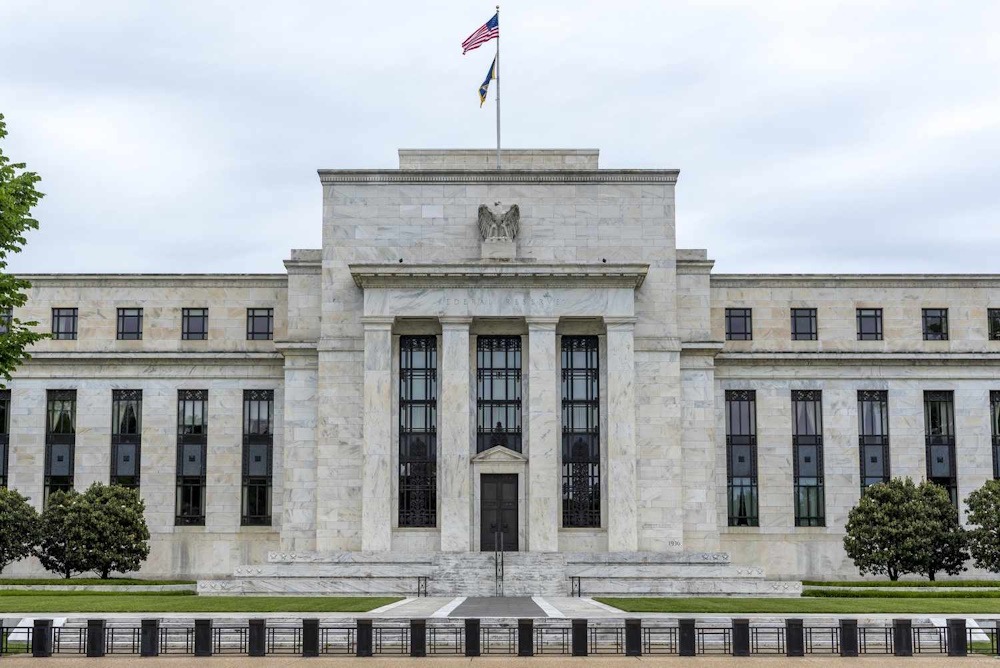
The report released by the Commerce Department on Thursday indicated that goods prices experienced their most significant increase since January, accompanied by notable rises in the costs of clothing and footwear. The US central bank on Wednesday maintained its benchmark interest rate within the 4.25 per cent-4.50 per cent range. Following this decision, Fed Chair Jerome Powell’s remarks diminished confidence that the central bank would initiate policy easing in September, a move that had been broadly expected by financial markets and certain economists. “The Fed is unlikely to welcome the inflation dynamics currently taking hold,” stated Olu Sonola, head of US economic research at Fitch Ratings. Inflation is currently exhibiting a clear divergence from the target rather than converging toward it. This trajectory is poised to complicate prevailing expectations for a rate cut in September or October.
The personal consumption expenditures (PCE) price index experienced an increase of 0.3 percent last month, following an upwardly adjusted gain of 0.2 percent in May, according to the Commerce Department’s Bureau of Economic Analysis. According to a survey conducted by Reuters, economists had anticipated an increase of 0.3 percent in the PCE price index, building on a previously reported rise of 0.1 percent in May.
Prices for furnishings and durable household equipment rose by 1.3 per cent, marking the largest increase since March 2022, following a 0.6 per cent rise in May. Prices for recreational goods and vehicles increased by 0.9 percent, marking the largest rise since February 2024, following a period of stability in May. The price index for clothing and footwear experienced an increase of 0.4 percent. Excluding tariff-sensitive goods, prices for gasoline and other energy products experienced a rebound of 0.9 percent following a decline that persisted for four consecutive months. Prices for services increased by 0.2 percent for the fourth consecutive month, moderated by lower airline fares and stable costs for dining and hotel accommodations. In the year ending in June, the PCE price index rose by 2.6 percent, following a 2.4 percent increase in May. The advance gross domestic product report for the second quarter, released on Wednesday, indicated a cooling of inflation, although it continues to exceed the Federal Reserve’s 2 percent target. Businesses continue to sell inventory that was accumulated prior to the implementation of President Donald Trump’s extensive import duties, according to economists.
A widespread rise in goods prices was anticipated in the latter half. Procter & Gamble announced this week that it would increase prices on certain products in the US to counterbalance tariff expenses. The Federal Reserve monitors the Personal Consumption Expenditures price indices as a key component of its monetary policy framework. Omitting the fluctuating food and energy sectors, the PCE price index saw an increase of 0.3 percent last month, following a rise of 0.2 percent in May.
Alongside elevated prices for goods, the core PCE inflation experienced an uptick due to increasing expenses in healthcare, as well as in financial services and insurance. In the year ending in June, core inflation increased by 2.8 percent, maintaining the same rate of growth observed in May. Equities on Wall Street exhibited a mixed performance. The dollar maintained stability against a range of currencies. US Treasury yields declined.
The BEA reported that consumer spending, which constitutes over two-thirds of economic activity, increased by 0.3 percent in June following a period of no change in May. The data was also incorporated in the advance GDP report, indicating that consumer spending expanded at a 1.4 percent annualized rate in the last quarter, following a near standstill in the first quarter. In the second quarter, economic growth rebounded at a rate of 3.0 percent, propelled by a significant decrease in the trade deficit, attributed to a decline in imports compared to the unprecedented increase observed in the January-March quarter. The economy experienced a contraction of 0.5 per cent during the initial quarter of the year.
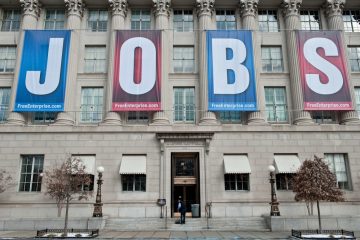
Consumer expenditure is bolstered by a resilient labor market, as additional data from the Labor Department indicates that initial claims for state unemployment benefits increased by 1,000, reaching a seasonally adjusted total of 218,000 for the week ending July 26. However, the hesitation of employers to expand their workforce due to uncertainty regarding the eventual stabilization of tariff levels is complicating the job search for those who have been laid off, potentially hindering future consumer spending.
The count of individuals obtaining benefits following the first week of assistance, serving as an indicator of employment trends, remained steady at a substantial seasonally adjusted figure of 1.946 million for the week concluding on July 19, according to the claims report. The forthcoming employment report from the government, scheduled for release on Friday, is anticipated to indicate an increase in the unemployment rate to 4.2 percent in July, up from 4.1 percent in June. Analysts anticipate that the influence of tariffs and a decelerating labor market will hinder consumer spending in the third quarter. Evidence suggests that slow growth is already underway, as inflation-adjusted consumer spending increased by 0.1 percent in June, following a decline of 0.2 percent in May.
Precautionary saving may also restrict consumption. The saving rate remained stable at 4.5 per cent in June. Despite a third report from the Labor Department indicating an increase in wage growth during the second quarter, inflation-adjusted annual gains decreased to 0.9 percent from 1.1 percent in the 12 months ending in March. The BEA report indicated that inflation has adversely affected household income after tax considerations, which remained unchanged in June. Indicators of financial pressure are beginning to surface within higher-income households, which have predominantly been the engine of consumer expenditure. Tariff-related price increases, elevated borrowing costs, and a deceleration in economic activity have disproportionately impacted lower- and middle-income families. “While consumer spending has thus held up — supported by solid income gains — it now faces mounting headwinds from a cooling labor market and renewed inflationary pressures,” stated Gregory Daco, chief economist at EY-Parthenon.