Ally Nations to pour Billions into $10 Trillion US Sovereign Wealth Fund
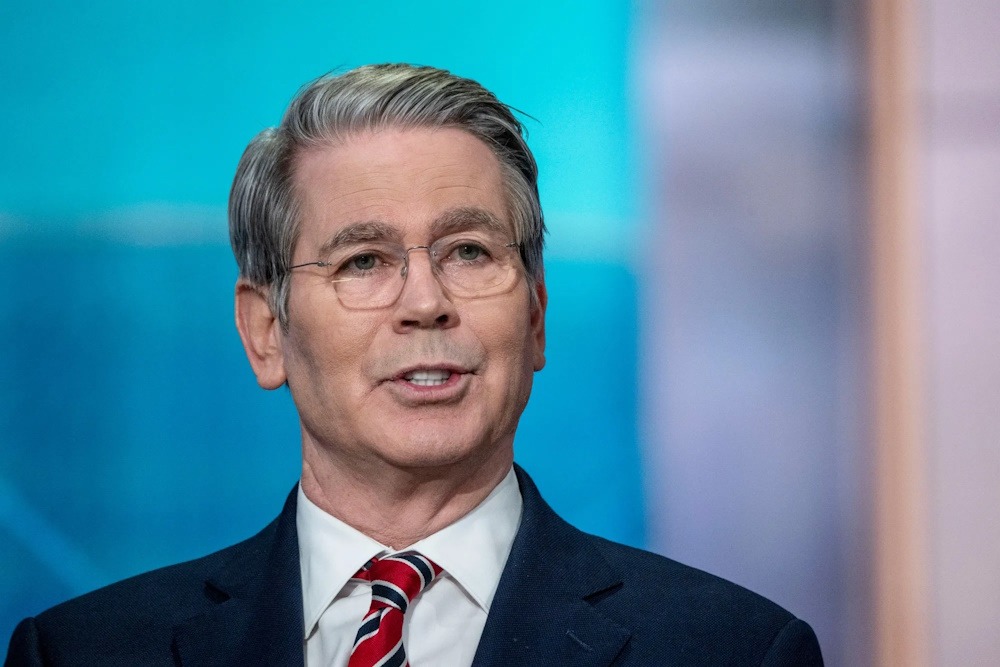
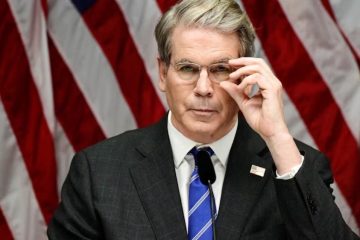
US President Donald Trump’s trade policy has tied the financing of new American factories to the easing of some tariffs for foreign allies, a strategy that could channel more than $10 trillion into US manufacturing and critical industries, Treasury Secretary Scott Bessent said in a Fox Business interview on Wednesday). “We have agreements in place where the Japanese, the Koreans, and to some extent the Europeans will invest in companies and industries that we direct—largely at the President’s discretion,” Bessent said. “Other countries, in essence, are providing us with a sovereign wealth fund.”
The arrangement, characterized previously by Commerce Secretary Howard Lutnick as “buying down tariffs”, entails significant financial commitments. “Take Japan, for example—we’re going to have $550 billion, and they will reinvest that back into the US economy.” Bessent stated, “We will be able to direct that as we reshore these critical industries.” The sectors identified for focus encompass semiconductors, magnets, pharmaceuticals, steel, automobiles, and defense technology. “We are attempting to mitigate risks to the US economy based on the observations made during Covid,” he added.
Earlier today, Mitsubishi Corp disclosed a $600 million investment aimed at acquiring a 30 per cent stake in Arizona’s Copper World project. This announcement comes in the wake of the recent imposition of a 50 per cent tariff on all copper imports by the US. Mitsubishi is set to allocate $600 million to acquire a 30% equity interest in a copper mining initiative located in the United States.
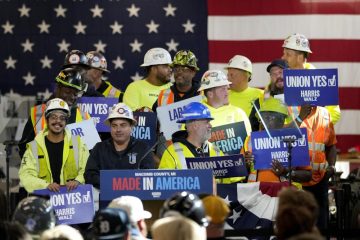
“The President loves new factories,” the host remarked during the discussion. “He’ll take rehabbed old factories, but he loves new factories—especially in strategic areas you are mentioning: semiconductors, pharmaceuticals, cars, steel, defence technology.” The essence of his entire trade policy is the desire for new factories. “And if a couple of these countries have to pay up for the privilege of helping us—fine,” the host added. Bessent remarked: “He likes factories and the factory workers love him. Those steelworkers—he is their President. “He wants Main Street to win…” “Within the next year or two, Main Street’s going to hit a new high too,” Bessent said.
It is important to note that not all tariffs will be considered for reduction. “Twenty per cent of the tariffs are what we call the fentanyl tariffs,” Bessent stated. “We will need to observe several months, potentially extending to quarters or even a year, of progress on that before I could envision those tariffs being reduced.” He observed that China serves as the origin of the precursor chemicals for fentanyl, which are transported through Canada and Mexico into the United States, resulting in an estimated 100,000 to 200,000 American fatalities in the previous year. In response to the inquiry about China’s potential involvement in the investment-for-tariff-reduction initiative, Bessent stated: “My sense is no…” Numerous sectors require a strategic shift to be relocated from China.
The magnitude of the trade-and-investment initiative is considerable. “On tariff income alone, I’d been saying $300 billion, but we’ll likely revise that up—well in excess of 1 per cent of GDP,” Bessent stated. “Incorporating both sovereign investments and private industry commitments, the total exceeds $10 trillion.”
However, Trump’s trade policy is encountering judicial scrutiny, with the Supreme Court anticipated to review the case in October and issue a decision in early 2026. In the interim, it is probable that tariffs will remain enforced as legal proceedings advance. “If the tariff court rules against us, the tariffs will likely continue while it’s enjoined.” “Then it goes to the Supreme Court in October, with a ruling expected in January,” Bessent said. “The more transactions we’ve engaged in, the more challenging it becomes for SCOTUS [Supreme Court of the United States] to issue a ruling contrary to it.”