Dollar Holds Steady as Markets Prepare for Prolonged Middle East Conflict
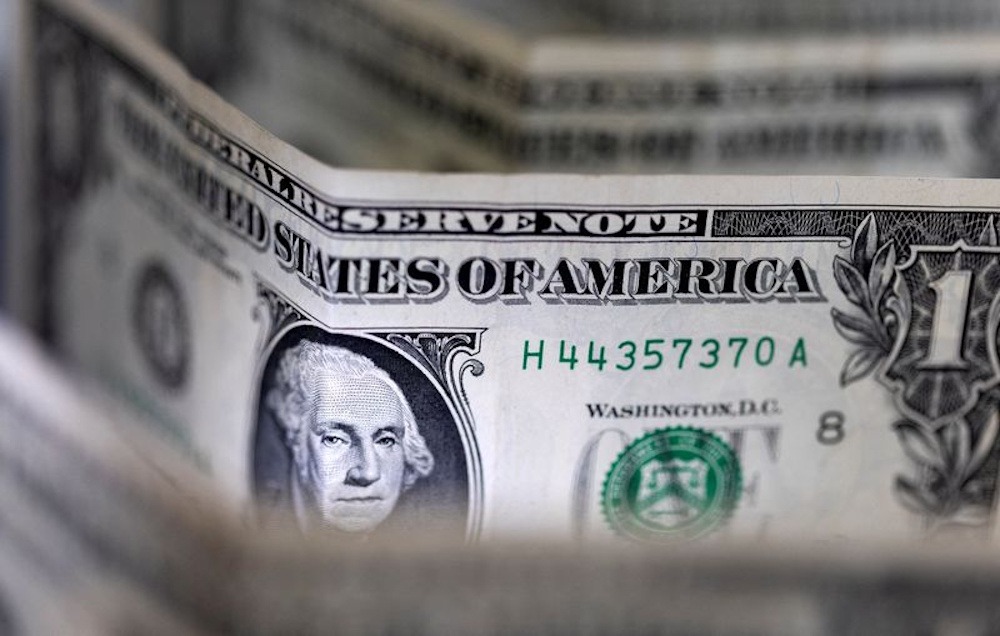
The U.S. dollar remained largely stable on Monday, on track for its most significant monthly increase since July as investors express concerns over the implications of a prolonged conflict in the Middle East, pushing the yen below the critical 160 mark and raising fears of potential intervention. Markets have experienced turbulence this month following the conflict that has effectively closed the Strait of Hormuz, a critical chokepoint for approximately a fifth of global oil and gas flows. This situation has propelled Brent crude toward its largest monthly increase and has unsettled expectations regarding interest rates. The conflict, ignited by U.S. and Israeli actions against Iran on February 28, has since expanded throughout the Middle East. Concerns over a potential ground offensive and the involvement of Yemen’s Iran-aligned Houthis on Saturday have further dampened sentiment. Pakistan announced its preparations to host “meaningful talks” aimed at resolving the conflict in the near future, while Tehran expressed its readiness to respond should the United States initiate a ground operation.
Investors showed little reaction to remarks from U.S. President Donald Trump, who stated that Washington has engaged in “direct and indirect” discussions with Iran and described its new leaders as “very reasonable.” The U.S. dollar experienced a slight decline during Asian hours but largely maintained its recent gains. The euro was 0.1% higher at $1.15145, yet it faced a 2.5% drop in March, marking its weakest monthly performance since July. Sterling was at $1.3271, showing minimal movement on the day but poised for a decline of 1.7% this month. The dollar index, which measures the U.S. currency against six other units, was 0.2% lower at 100.1.What is notable is the rapid shift in probabilities. “Only two weeks ago, U.S. boots on the ground in Iran was seen as a low-probability outcome,” said Chris Weston. That has clearly changed, underscoring the necessity for markets to stay open-minded. “The playbook is to sell rallies in risk and maintain volatility hedges.”
Currently, the broader market attention is squarely on oil prices, with Brent crude futures at $115.53 per barrel, reflecting an increase of approximately 59% in March, marking its most significant monthly rise on record. The future direction of the USD is fundamentally tied to the outlook on oil. “Where oil goes, the USD goes,” said Prashan Newnaha. Rising oil prices have sparked renewed worries about inflation, leading U.S. rate futures to start factoring in the possibility of a Federal Reserve rate hike later this year. This marks a significant change from earlier in the year, when traders were anticipating as many as two rate cuts in 2026. Simultaneously, investors are progressively considering the extended economic impact of an enduring conflict. “Central banks find themselves in the most uncomfortable of positions: facing prices that argue for tightening while growth signals argue for caution,” said Marc Chandler. “It is stagflation’s calling card, and it arrived before most were ready to receive it.” The Japanese yen strengthened to 159.70 per dollar after reaching a low of 160.47 earlier in the session, marking its weakest level since July 2024, when Tokyo last intervened in the currency markets. The reversal occurred as Japan prepared its threat of yen intervention and indicated that additional declines in the currency might warrant a near-term interest rate increase.
The yen has experienced a decline of more than 2% in March, driven by concerns over rising oil prices. Japan’s leading currency diplomat Atsushi Mimura stated that authorities might have to take “decisive” actions if speculative activities continue in the currency market. Meanwhile, Bank of Japan Governor Kazuo Ueda remarked that the central bank will carefully monitor yen fluctuations as they impact the economy and prices. The Australian dollar, sensitive to risk, has faced challenges in March. Concerns regarding global growth, fueled by rising energy costs and supply-chain disruptions, have overshadowed the support anticipated from domestic rate hikes. The Aussie reached a two-month low of $0.6843 and was on track for a monthly decline of approximately 3.5%, marking its sharpest drop since December 2024. The New Zealand dollar declined by 0.3% to $0.57355, marking a 4.3% decrease in March.