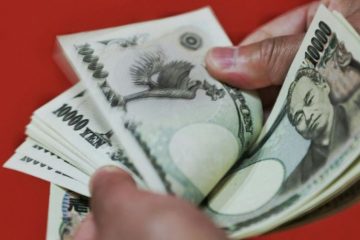
Asia’s $8 Trillion Currency Defense Boosts Stability
Asia’s foreign-exchange reserves have reached nearly $8 trillion, equipping authorities from Tokyo to Mumbai with significant resources should they need to enhance their currency defense efforts. This year, the major central banks in the region have increased their reserves by over $400 billion, resulting in 11 of the largest monetary authorities holding nearly $8 trillion in total, as per reports. The rise has been supported by the depreciation of the dollar this year and the surge in gold prices. “Asia Pacific countries have ample FX reserves despite the drawdown by some nations on the back of smoothing activities,” stated Wee Khoon Chong. “Currently, the import cover ratio for regional countries stands at levels that are more than adequate.” Central bank intervention has re-emerged as a focal point in Asia, driven by increased volatility in global equity markets. This has resulted in a rebound of the dollar since September, accompanied by widespread weakness in regional exchange rates. The Indian rupee and Philippine peso have reached unprecedented lows in the last two months, while the South Korean won is approaching its weakest point in 16 years.
India’s foreign exchange reserves have increased by $4.7 billion, reaching a total of $703 billion, approaching a record high. This year’s foreign-reserve buildup saw significant contributions from China, which raised its total by $141 billion, and Japan, which added $116 billion. The depreciation of the dollar during the initial three quarters of the year contributed to an enhancement of reserves by elevating the worth of non-dollar assets, while the climbing gold prices additionally augmented the total value of reserves. India’s rupee has experienced a decline of over 3 per cent this year, impacted by US tariffs of 50 per cent on the nation’s exports and outflows from local stocks. The central bank has engaged in activities across both onshore and offshore markets in recent weeks, aiming to avert the currency from surpassing its record low of 88.80 per dollar established in late September. The Korean won experienced a decline of 3.2 percent in the last month, prompting officials to announce their intention to collaborate with key market participants, such as the state-owned National Pension Service, to support the currency. Japan’s Finance Minister Satsuki Katayama reiterated her concerns regarding the yen’s depreciation, as the currency fell to a 10-month low against the dollar.
While attempts to mitigate currency declines may appear essential, they carry the potential risk of conflict with US President Donald Trump, who cited foreign exchange intervention as a rationale for imposing higher tariffs. Taiwan’s central bank and the US Treasury have recently reached an agreement to refrain from interfering with exchange rates or international monetary systems in order to prevent any unfair competitive advantages. “There are some signs that Asia central banks are growing more concerned about forex weakness,” stated Michael Wan. “FX reserves should continue to serve as the primary safeguard in a measured manner, while Asian central banks will also be aware of the implications of perceived exchange rate manipulation by the US Treasury and its potential impact on the progression of trade agreements in the future.” The US Treasury refrained from designating any nation as a currency manipulator in its latest semiannual review of foreign-exchange practices released in June. However, it did highlight China for “its lack of transparency.”
The roster of trading partners whose currency activities are under close observation encompasses Asian nations including China, Japan, Korea, Taiwan, Singapore, and Vietnam. Alongside increasing foreign-exchange reserves, the authorities possess additional instruments available for use. These encompass issuing verbal warnings, a practice often seen in Japan, or promoting the repatriation of overseas earnings, as exemplified by Malaysia.