Tesla Set to Acquire $2.9 Billion in Solar Gear from China
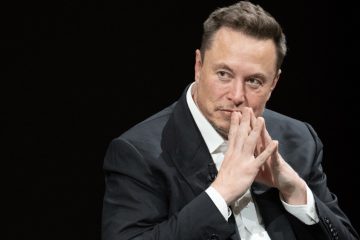
Tesla is seeking to acquire equipment valued at $2.9 billion for the production of solar panels and cells from Chinese suppliers, including Suzhou Maxwell Technologies, according to individuals familiar with the situation. This move aligns with CEO Elon Musk’s goal to increase solar capacity in the United States by 100 gigawatts. Musk stated in January that solar power has the potential to fulfill all of the electricity requirements of the United States, including the continually rising demand from an expanding number of data centres. Job postings on the Tesla website stated that the company aims to deploy 100 GW of “solar manufacturing from raw materials on American soil before the end of 2028.” Suzhou Maxwell Technologies, recognized as the largest manufacturer of screen-printing equipment utilized in the production of solar cells, is positioned as a top contender to provide machinery for the project. The company has been pursuing export approval from China’s commerce ministry, as reported by two sources and a third individual. According to the first two individuals, other potential suppliers are Shenzhen SC New Energy Technology and Laplace Renewable Energy Technology.
According to sources, some of the estimated 20 billion yuan ($2.9 billion) worth of equipment, including screen-printing production lines, will require export approval from Chinese regulators. The extent of the equipment needing approval and the duration of the process remain uncertain. According to sources, the Chinese companies were instructed to deliver the equipment prior to this autumn, with two of them indicating that it would be shipped to Texas. Musk intends to develop the solar capacity primarily for Tesla’s use, although a portion will also be allocated to power SpaceX satellites, according to sources. The potential order underscores a significant challenge for the United States as it seeks to lessen its reliance on China; revitalizing US manufacturing still necessitates a certain level of trade with the world’s second-largest economy. Last month, reports indicated that Tesla has engaged with multiple solar companies in China. This report presents, for the first time, the details of the companies engaged in advanced discussions, the estimated scale of potential acquisitions, the anticipated delivery timeline, and the regulatory requirements involved. An order from Tesla would signify a significant uplift for Chinese manufacturers of solar production equipment, who have faced challenges due to a surplus in domestic production leading to weak demand. The US solar market is significantly shielded by tariffs designed to limit the influx of more affordable panels and cells from China and Southeast Asia, where numerous Chinese manufacturers maintain subsidiaries.
In 2024, the Biden administration decided to exclude solar manufacturing equipment from tariffs, responding to the appeals of US solar panel manufacturers who contended that they had no alternative sources for the machinery required to establish domestic factories. The Trump administration has extended that exemption, while the United States is actively working to establish its own solar supply chain in order to lessen its reliance on Chinese companies. Musk has expressed his concerns regarding tariff barriers, stating that they render the economics of deploying solar in the United States “artificially high,” particularly as the nation grapples with a significant power shortage fueled by increased demand from AI data centres and manufacturing. His solar ambitions stand in sharp contrast to the energy policies of his former employer, President Donald Trump, who aims to maximize US fossil fuel production and has reduced federal subsidies for solar and wind projects, labeling them as costly and unreliable. Musk had a brief tenure in the Trump administration, where he led the Department of Government Efficiency, a role that involved overseeing significant layoffs of federal employees aimed at reducing costs. The Energy Information Administration reports that US power consumption reached its second consecutive record high in 2025 and is projected to increase further in 2026 and 2027. Establishing 100 GW of solar manufacturing within a few years would be an extraordinary achievement, and Musk has a reputation for making grand commitments on ambitious schedules that frequently fail to materialize.
As of 2024, the United States possessed 1,300 GW of capacity for electricity generation, as noted in a report released last year by the American Public Power Association. Of that total, merely 10 percent, or 135 GW, was generated from solar power. Tesla has been actively working to source a greater number of components locally across various regions. Nevertheless, it continues to rely on 400 suppliers based in China to maintain its cost efficiency. Sixty of these suppliers also provide Tesla on a global scale, including for its electric vehicle plants in the United States. Production preparations for Tesla’s Cybertruck and Semi models in the US faced challenges last year due to the suspension of component shipments from China, a consequence of a substantial tariff increase on Chinese goods enacted by the Trump administration, as reported.