Small firms urge Supreme Court to expedite Trump tariff case
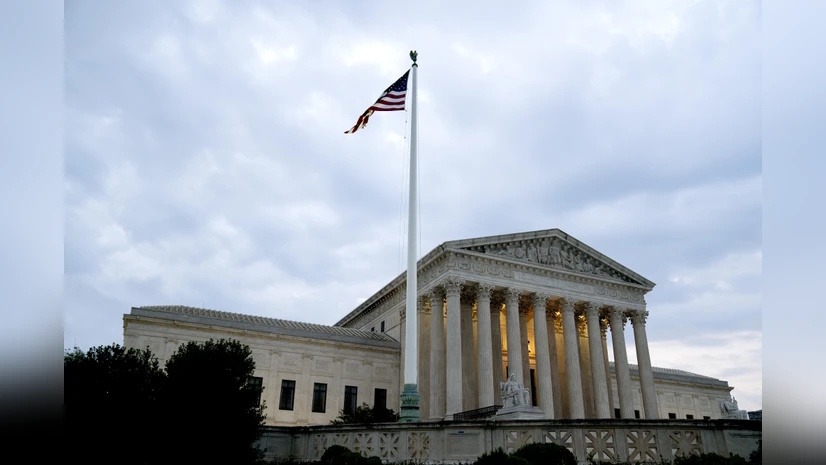
The companies said they favor accelerated review because they are suffering serious economic hardships as a result of the price increases and supply chain delays’ in a Friday court filing. Small businesses contesting President Donald Trump’s extensive tariffs informed the US Supreme Court of their support for his initiative for an expedited review of the levies, highlighting the potential global economic ramifications of this dispute. Trump approached the Supreme Court on Wednesday, just five days following a federal appeals court decision that determined he was overstepping his authority under a 1977 statute aimed at managing national emergencies. Trump has requested that the court establish a notably accelerated timeline for the case, aiming for arguments to be presented in the initial week of November.
In a recent court filing, the companies expressed their endorsement of an expedited review, citing that they are “suffering severe economic hardships as a result of the price increases and supply chain interruptions caused by the tariffs.” The proposed timeline suggests that the court could issue a ruling by year-end, despite the court’s term continuing until the middle of the following year. The administration has requested the Supreme Court to determine by September 10 whether it will consider the case. The financial stakes are substantial. A defeat for Trump would reduce the current average US effective tariff rate of 16.3 percent by at least half and could compel the US to refund tens of billions of dollars. It has the potential to disrupt the initial trade agreements that Trump has established with various nations.
The levies continue to be enforced as the appeals court has temporarily stayed its ruling, allowing Trump the opportunity to pursue intervention from the Supreme Court. The ruling, however, “has jeopardized ongoing foreign negotiations and threatens framework deals,” stated US Solicitor General D John Sauer in court. The contested taxes encompass Trump’s April 2 “Liberation Day” tariffs, which establish levies ranging from 10 percent to 50 percent on the majority of US imports, contingent upon the country of origin of the goods. The tariffs implemented on April 2 marked the most significant rise in US import taxes since the Smoot-Hawley tariffs of the 1930s, resulting in the country’s average applied tariff rate reaching its highest point in over a hundred years.
The appeal additionally encompasses the tariffs that were instituted by Trump on Canada, Mexico, and China, justified by the objective of tackling fentanyl trafficking. The situation arises from distinct legal actions initiated by states governed by the Democratic Party and a coalition of small enterprises. The appeal will examine the dynamics of a court influenced by conservative ideologies, which has, until now, largely supported Trump in his assertions of powers not previously claimed by his predecessors. Should they choose to take up the case, the justices will confront a statute that provides the president with a wide array of instruments to respond to national security, foreign policy, and economic crises, yet does not specifically reference tariffs.
The recent 7-4 ruling from the Court of Appeals for the Federal Circuit reaffirmed a prior decision made by the US Court of International Trade. Both courts determined that the 1977 International Emergency Economic Powers Act does not grant the authority for such extensive import taxes, referencing a provision that allows the president to “regulate” the “importation” of property in response to an emergency. The case in question is Trump v. V.O.S. Selections, 25-250.