Sam Altman’s inner circle leads OpenAI’s $1.5 trillion semiconductor deals
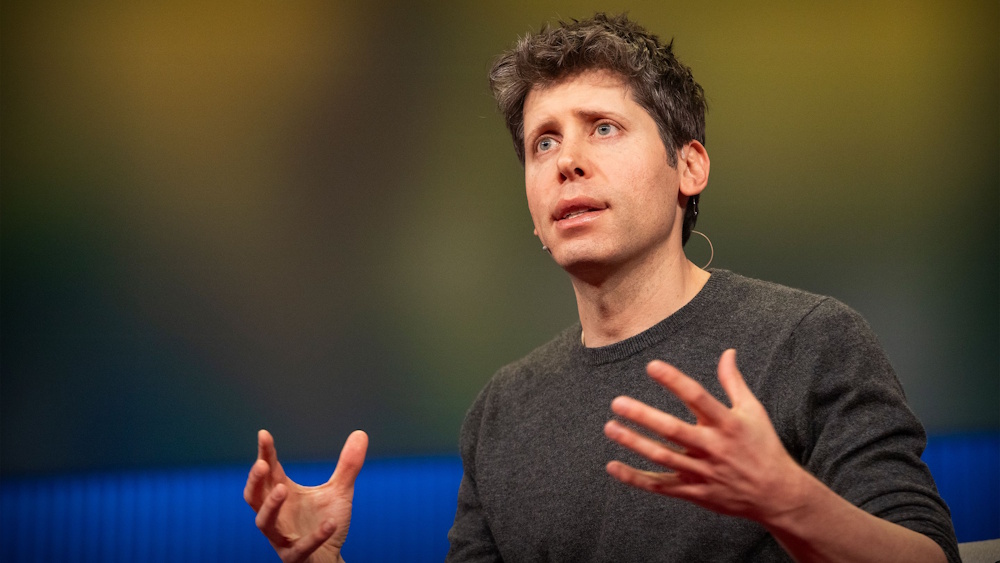
OpenAI Chief Executive Officer Sam Altman and a select group of top executives have negotiated deals valued at up to $1.5 trillion, primarily without the involvement of external bankers or lawyers. Amid the intricate and non-traditional frameworks at play, Altman predominantly depended on his reliable team to forge alliances with Nvidia, Oracle, AMD, and Broadcom for chips and computing infrastructure. Altman collaborated closely with OpenAI president Greg Brockman, chief financial officer Sarah Friar, and Peter Hoeschele, who has recently been promoted to lead infrastructure financing. Together, this small circle managed negotiations that numerous analysts have described as opaque, featuring absent financial details and complex connections among OpenAI’s suppliers, investors, and customers, according to the report. With the announcement of each deal, market responded positively, rewarding OpenAI’s partners with substantial stock increases, driven by anticipations of considerable future earnings. However, insiders indicate that Altman’s focus was not on immediate financial gains but rather on securing access to the chips essential for powering OpenAI’s artificial intelligence systems, according to the report.
The IT industry in India is witnessing significant developments in IT services, automation, and artificial intelligence. The rise of generative AI and skill transformation is reshaping the organisational structure, particularly affecting entry-level engineers. The traditional pyramid structure is evolving into a diamond-shaped workforce, reflecting changes in the mid-tier workforce and IT hiring trends. Companies like OpenAI, Perplexity, and Anthropic are increasingly looking to India to recruit top AI talent. A source informed that the team has prioritized the technical aspects of the chip deals ‘first and foremost,’ while the financial details are ‘coming later.’ The agreements were designed to span several years, with payments tied to specific milestones, allowing OpenAI the flexibility to reduce orders should its funding or requirements shift. Executives articulated the objective as enhancing chip production capacity, with more detailed financial aspects to be addressed at a later time. According to insiders, Altman presented the overarching vision, while Brockman and Friar managed the specifics. According to a source, “Sam is the visionary, but Greg and the team under him really pulled these deals together.” Brockman played a crucial role in shaping the partnerships. Friar, who joined from Nextdoor in 2023, brought extensive financial expertise from her years at Goldman Sachs, Salesforce, and Block, along with her experience leading Nextdoor’s $4.3 billion public listing. While Altman sometimes sought fundraising advice from former Citigroup banker Michael Klein, Klein was not involved in these chip supply deals.
Hoeschele took the helm of a small team dedicated to enhancing computing power in pursuit of Altman’s ambitious target of 1 gigawatt per week. OpenAI’s strategy for dealmaking was initially evaluated through its collaboration with AI cloud provider CoreWeave in March. The start-up committed to an expenditure of $11.9 billion for CoreWeave’s computing capabilities and, in exchange, acquired $350 million worth of CoreWeave stock. The partnership has since expanded to exceed $22 billion, with CoreWeave’s valuation experiencing a threefold increase. In line with this approach, Altman established comparable open-ended collaborations with leading chip manufacturers. The deals were frequently initiated by companies reaching out to OpenAI, with a significant portion of the negotiation relying on trust and direct communication instead of protracted legal procedures. For instance, the substantial partnership between Nvidia and OpenAI, which includes a potential $100 billion investment from Nvidia in return for OpenAI’s expenditure of $350 billion on chips, was negotiated directly between Altman and Nvidia CEO Jensen Huang. OpenAI’s agreement with AMD followed years of negotiations aimed at developing a custom chip. AMD chief executive Lisa Su revisited talks and finalized a structure granting OpenAI the option to purchase up to 10 percent of AMD shares for just one cent each, in return for buying 6GW of chips.
The report indicated that the law firm Sullivan & Cromwell provided counsel to OpenAI regarding the share purchase design. Another significant agreement was reached with Oracle, valued at $300 billion over five years. The agreement came about after Oracle experienced a loss of a data centre client in Abilene, Texas, in 2024. OpenAI swiftly assumed control of the site, with Clay Magouyrk steering the discussions. In a move to bolster OpenAI’s financial framework for upcoming agreements, Altman has initiated the expansion of his advisory team. In September, he appointed Mike Liberatore to serve as OpenAI’s new business finance officer. Liberatore is anticipated to be instrumental in funding forthcoming infrastructure and chip collaborations, according to the report. Altman’s direct and swift approach — has transformed the way major AI companies manage their supply chains. It remains to be seen whether this unconventional model can sustain OpenAI’s trillion-dollar ambitions.