Nvidia CEO Huang claims next-generation processors are in production

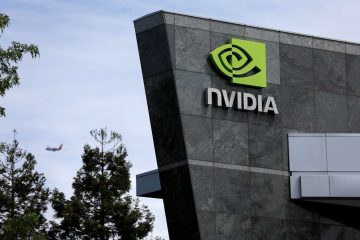
Nvidia CEO Jensen Huang stated on Monday that the company’s next generation of chips is in “full production,” claiming they can deliver five times the artificial-intelligence computing power of the company’s previous chips when utilized for chatbots and other AI applications. During a speech at the Consumer Electronics Show in Las Vegas, the head of the world’s most valuable company disclosed new information regarding its chips, set to launch later this year. Nvidia executives informed that these chips are already undergoing testing in the company’s labs by AI firms, amid rising competition from rivals and challenges posed by its own customers. The Vera Rubin platform, consisting of six distinct Nvidia chips, is anticipated to launch later this year, featuring a flagship server equipped with 72 of the company’s graphics units and 36 of its new central processors. Huang demonstrated the capability of linking them into “pods” containing over 1,000 Rubin chips, asserting that this could enhance the efficiency of producing what are referred to as “tokens” – the essential unit of AI systems – by a factor of 10.
To get the new performance results, however, Huang said the Rubin chips use a proprietary kind of data that the company hopes the wider industry will adopt. “This is how we were able to deliver such a gigantic step up in performance, even though we only have 1.6 times the number of transistors,” Huang said. While Nvidia continues to lead the market for training AI models, it encounters increased competition from traditional rivals such as Advanced Micro Devices, as well as from customers like Alphabet’s Google, in providing the benefits of those models to hundreds of millions of users of chatbots and other technologies. Huang’s speech prominently highlighted the effectiveness of the new chips for that purpose, particularly emphasizing the introduction of a new layer of storage technology known as “context memory storage,” which is designed to assist chatbots in delivering quicker responses to lengthy questions and discussions. Nvidia also touted a new generation of networking switches with a new kind of connection called co-packaged optics. The technology, essential for connecting thousands of machines into a cohesive system, faces competition from offerings by Broadcom and Cisco Systems.
Nvidia stated that CoreWeave will be among the first to receive the new Vera Rubin systems, and it anticipates that Microsoft, Oracle, Amazon, and Alphabet will adopt them as well. In other announcements, Huang emphasized new software designed to assist self-driving cars in determining their routes, while also maintaining a record for engineers to reference later. Nvidia presented research on a software named Alpamayo late last year, with Huang stating on Monday that it would be released more broadly, alongside the data utilized for its training, enabling automakers to conduct evaluations.”Not only do we open-source the models, we also open-source the data that we use to train those models, because only in that way can you truly trust how the models came to be,” Huang said from a stage in Las Vegas. Last month, Nvidia acquired talent and chip technology from startup Groq, including executives who played a key role in assisting Alphabet’s Google in the design of its own AI chips. Although Google is a significant customer of Nvidia, its own chips have surfaced as one of Nvidia’s most formidable challenges, as Google collaborates closely with Meta Platforms and others to undermine Nvidia’s dominance in the AI sector.
In a question-and-answer session with financial analysts following his speech, Huang stated that the Groq deal “won’t affect our core business” but may lead to new products that broaden its lineup. Nvidia is keen to demonstrate that its latest products surpass older chips such as the H200, which U.S. President Donald Trump has permitted to be exported to China. It is reported that the chip, which was the predecessor to Nvidia’s current “Blackwell” chip, is in high demand in China, raising concerns among China hawks across the U.S. political spectrum. Huang told financial analysts after his keynote that demand is strong for the H200 chips in China, and Chief Financial Officer Colette Kress said Nvidia has applied for licenses to ship the chips to China but was waiting for approvals from the U.S. and other governments to ship them.