Jensen Huang claims Nvidia won’t send AI processors to China

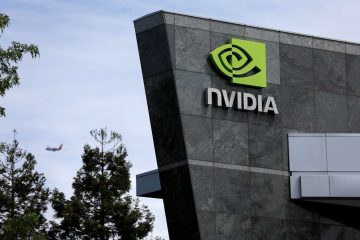
Nvidia Corp. Chief Executive Officer Jensen Huang stated that his company is currently unable to sell its AI chips in China, as both Washington and Beijing have implemented restrictions on sales into the world’s largest semiconductor market. Huang arrived in Taiwan on Friday for meetings with his longstanding partner, Taiwan Semiconductor Manufacturing Co., following a whirlwind global tour that featured notably controversial remarks regarding the US-China AI race. The chief of Nvidia was stating, “China will win” that competition due to its lower energy costs and more favorable regulations. Huang clarified that his intention was simply to highlight the Asian country’s expertise in the emerging technology.
The 62-year-old founder has consistently expressed a desire to expand business operations in China; however, the political tensions between the American and Chinese governments have hindered those aspirations. In October, President Donald Trump stated he would bring up the topic of selling Nvidia’s Blackwell chips — the current leading-edge AI chip line — to China before his meeting with Xi Jinping. However, he later retracted those comments and ultimately did not address the issue with the Chinese leader. On Friday in Taiwan, Huang stated that Nvidia is not attempting to renew efforts to supply Blackwell AI chips to Chinese companies. “There are no active discussions.” “Currently, we’re not planning to ship anything to China,” Huang said. Nvidia has received approval from Washington to sell its less advanced H20 chips to Chinese customers; however, Beijing has instructed its companies to avoid purchasing those products in favor of domestic alternatives.
Companies like Huawei Technologies Co. and Cambricon Technologies Corp. are creating their own AI chips, with the Communist Party aiming to bolster local industry — partly to reduce China’s reliance on American technologies. “It’s up to China when they would like Nvidia products to go back to serve the Chinese market,” Huang stated. “I look forward to them changing their policy, and hopefully we’ll be able to serve the Chinese market again.” Huang has cautioned that US export controls may have unintended consequences, as they could drive China to develop formidable competitors in AI chips and technologies. Nvidia has achieved a remarkable milestone, adding $1 trillion to its market value in just a few months, thus becoming the first company in history to reach a $5 trillion valuation. This achievement comes as Huang journeyed from Washington to South Korea, securing deals with companies eager to leverage its artificial intelligence expertise. Despite a recent decline in momentum, Nvidia continues to hold the title of the most valuable company in the world, surpassing technology rivals Apple Inc. and Microsoft Corp.
Huang has advocated for the broader adoption of Nvidia’s technology across various regions and industries, aiming to address worries that the trillions of dollars earmarked for AI investments — including data centers and Nvidia chips — will yield returns. Nvidia faces challenges from rival chipmakers Advanced Micro Devices Inc. and Broadcom Inc., both of which are pursuing their own AI opportunities. Huang has argued that Nvidia possesses a significant opportunity in China, were it not for the tensions between Washington and Beijing. “If Nvidia were allowed to ship more capable products to the Asian nation, it would have a $50 billion opportunity there,” Huang said during earnings in August. “Huge demand for AI systems in China means that the market is set to grow at 50% per year,” he said. The recent challenges in China have heightened worries among certain market investors regarding the long-term viability of unprecedented investments in AI. Concerns arise that artificial intelligence may not fulfill its potential to create new revenue streams capable of justifying the hundreds of billions of dollars invested in capital expenditures.