Ford Faces $19.5B Loss, Shifts Focus from EVs to Hybrids
Ford Motor on Monday announced that it anticipates approximately $19.5 billion in charges, primarily associated with its electric-vehicle sector, as the company redefines its strategy in response to sluggish demand for EVs, as per reports. The charges highlight the significant distance Ford has moved away from its previous electric vehicle aspirations. Since 2023, the company has incurred a loss of $13 billion in its EV operations. Now, it intends to focus more on gas-powered vehicles, hybrids, and what are known as extended-range electric vehicles, which utilize a gasoline engine to assist the battery. Ford stated that the strategy change is focused on divesting from unprofitable assets and reallocating funds previously designated for EVs into vehicles that can yield greater returns.
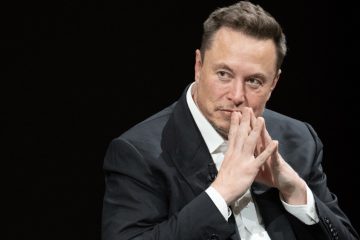
“Instead of plowing billions into the future knowing these large EVs will never make money, we are pivoting,” Jim Farley stated in an interview. “We now know enough about the US market where we have a lot more certainty in this second inning” of reduced-emissions powertrains, he said. Regulatory changes and slow consumer adoption have compelled US automakers to decelerate their transition to electric vehicles. Ford, which previously positioned EVs at the heart of its growth strategies, is now one of the companies implementing significant adjustments. Ford has announced that, despite scaling back on large, expensive electric vehicles, it remains dedicated to the development of more affordable electric models. The company stated it is on schedule to introduce a $30,000 electric pickup by 2027, which it anticipates will be the first of multiple affordable EVs. “Now this is the core of our EV strategy in America,” Farley stated. “We’ve got to land the plane.”
In a significant change, Ford will cease production of the all-electric F-150 Lightning pickup and will instead provide an extended-range version of the truck. The report indicated that plans for an additional electric truck and electric commercial vans have also been abandoned. By 2030, Ford anticipates that approximately half of its global vehicle sales will be derived from hybrids, extended-range vehicles, and EVs, in contrast to the 17 percent recorded this year. Hybrids are increasingly popular globally as consumers perceive them to be more cost-effective and practical compared to fully electric models. In a bid to generate new revenue, Ford announced plans to transform its Kentucky EV battery factory into a battery storage business. The site is set to provide stationary batteries to clients including utilities, renewable energy developers, and large data centers utilized for artificial intelligence, according to the report.
Ford is set to hire thousands of workers throughout the US; however, approximately 1,600 employees at the Kentucky battery plant will face layoffs as the facility undergoes retooling. In Kentucky, Ford and its former partner SK Group had invested nearly $6 billion in what was intended to be the largest single-site battery complex in the United States. One building was never equipped, while the other operated below capacity producing batteries for the now-cancelled electric F-150. The $19.5 billion charge encompasses $6 billion associated with the termination of a joint venture with SK aimed at constructing EV batteries in the US. The majority of the charges are expected to be recorded in the fourth quarter. In light of the write-down, Ford has elevated its earnings outlook, projecting $7 billion in adjusted pretax earnings, an increase from the previous range of $6 billion to $6.5 billion. In 2024, Ford reported net income of $5.9 billion on revenue of $185 billion, according to the report. Other automakers are likewise reducing their operations. General Motors has reduced the value of its electric vehicle assets and has decided to forgo its goal of exclusively selling electric vehicles by 2035. Farley stated that elevated battery costs, increased cooling demand following the post-Covid-19 surge in electric vehicles, and the requirements of truck buyers rendered Ford’s previous strategy impractical. He stated that a mixed approach is the safer path forward. “This is a better solution for customers,” Farley stated. “None of us really know what the future is going to be, but Ford knows enough about the future to know that this mix is the right mix.”