Ford CEO Talks China-US Car Joint Venture with Trump Officials
The chief executive of Ford Motor Co. engaged in discussions with senior officials from the Trump administration regarding a possible framework that would allow Chinese automakers to manufacture vehicles in the United States, while also providing certain protections for domestic companies, as reported. Last month, Ford Chief Executive Officer Jim Farley and members of Trump’s cabinet engaged in discussions regarding the potential for Chinese carmakers to collaborate with US companies via joint ventures, wherein the American firm would maintain a controlling interest, according to sources. The ventures would be organized in a manner that ensures both the Chinese and US partners share profits and technology in the joint venture, according to the sources. No decision has been reached regarding the matter, and participants described the discussion as informal and preliminary. Such a setup would reflect what China demanded from western automakers three decades ago, when they were required to partner with Chinese carmakers to establish factories in that country. The discussions, previously unreported, arise as China’s automakers approach America’s doorstep with increasing proximity. Canada’s government has recently unveiled a plan to permit certain Chinese electric vehicles to enter the country, as BYD Co. vehicles increasingly populate the streets of Mexico.
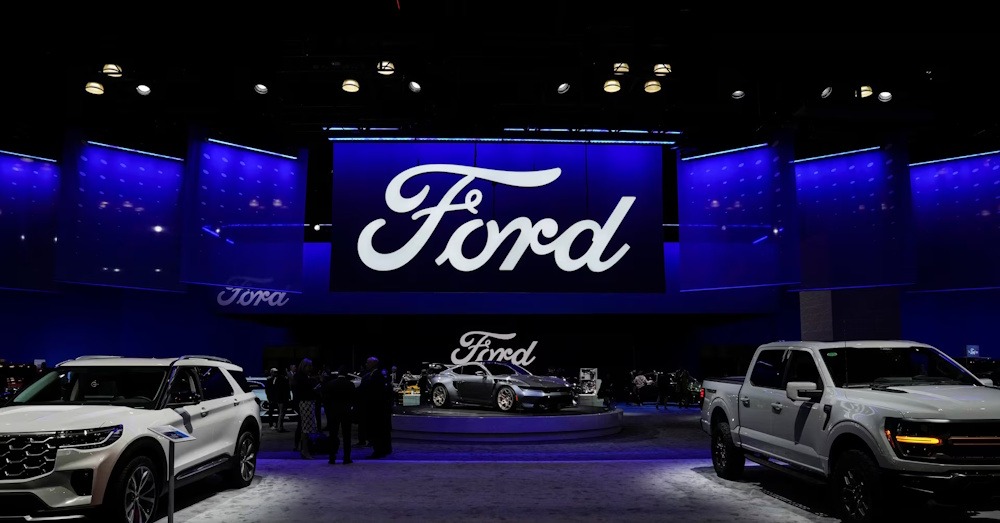
Farley engaged in discussions with US Trade Representative Jamieson Greer, Transportation Secretary Sean Duffy, and Environmental Protection Agency Administrator Lee Zeldin during their visit to the Detroit Auto Show last month, according to sources. The conversation occurred shortly after President Donald Trump expressed a willingness to permit Chinese automakers to enter the US market, provided they established manufacturing plants and employed American workers. He stated, “let China come in” during a speech at the Detroit Economic Club on January 13. Ford stated that Farley provided the cabinet secretaries with a tour of the Ford stand at the auto show, where they “discussed a variety of industry topics,” but he refrained from disclosing any specifics. Ford’s discussions regarding China with the Trump administration have consistently highlighted “the need to protect our home market from a flood of subsidized vehicles built in China,” Mark Truby stated. “We have also been clear about the privacy and national security issues associated with Chinese vehicles in the US and we will continue to reiterate this in our discussions with policymakers,” Truby stated. Although Farley was not advocating for the JV option, it was brought up as a means to safeguard American interests in a situation where Chinese companies gain a foothold in the US, according to sources. Nonetheless, it received a frosty response from the Trump officials, who believed it would encounter resistance in Washington, according to the sources. Nonetheless, certain individuals within the administration view such an investment deal as a potential result of Trump’s upcoming meeting in Beijing with Chinese President Xi Jinping in April. Officials from the EPA, USTR, and DOT did not provide an immediate response. On Friday in New York, Ford’s shares experienced an increase of less than 1 percent. The stock has risen by 7.6 percent this year, outperforming the S&P 500 Index, which remains relatively stable. The entry of Chinese competitors into the American market would represent a pivotal shift, carrying significant consequences for domestic automakers, their supply chains, and consumers alike.
China’s carmakers have swiftly increased their market presence in Europe, Mexico, and South America by offering lower-cost models equipped with advanced electric-vehicle batteries and infotainment systems. They also receive substantial government subsidies and can provide technology at low prices partly because they accept slim margins and losses, granting them a competitive advantage that western rivals find difficult to match. Trump’s January comments took Detroit’s automakers by surprise, as they believed that the significant trade barriers established by the US would prevent Chinese automakers from entering the market for a sufficient period, enabling them to close the gap on China’s advancements in electric vehicles, batteries, and other automotive technologies. General Motors Co. has informed the Trump administration of its opposition to a Chinese entry into the market, according to one source. GM has contended that established companies would forfeit market share and that a disruption in the supply of parts from China could severely impact North American suppliers. GM’s opposition reflects a broader sentiment within Trump’s cabinet that the US ought to prevent China’s automakers from entering the US market. The president has indicated a willingness to welcome Chinese companies into the US, provided they establish car manufacturing here. However, numerous members of his team express opposition to this idea, citing economic and national security concerns. Farley has also cautioned that China’s low-cost, high-tech cars pose a “existential threat.”
“Their cost, their quality of their vehicles is far superior to what I see in the west,” Farley stated last summer at the Aspen Ideas Festival, where he disclosed that he had visited China a half dozen times in the past year. “We are in a global competition with China and it’s not just EVs. And if we lose this, we do not have a future at Ford.” Simultaneously, Ford has demonstrated a willingness to collaborate with Chinese companies. Farley has pursued partnerships with Chinese carmakers and battery manufacturers to gain insights, while concurrently working on its own low-cost electric vehicle set to launch in 2027, designed to compete with China’s BYD, the leading seller of EVs globally. In recent weeks, Ford engaged in discussions with BYD regarding the expansion of a battery-supply partnership and investigated a potential manufacturing collaboration in Europe with China’s Geely. In December, Ford broadened a licensing agreement with the Chinese battery powerhouse Contemporary Amperex Technology Co., or CATL, extending its collaboration from producing cells for electric vehicles to also include the manufacturing of stationary power sources for utilities and data centers. A recent report suggested that Ford was considering a joint venture with Xiaomi to manufacture vehicles in America, a claim that was unequivocally denied by both companies.