Ferrari’s push into electric supercars faces a rocky beginning
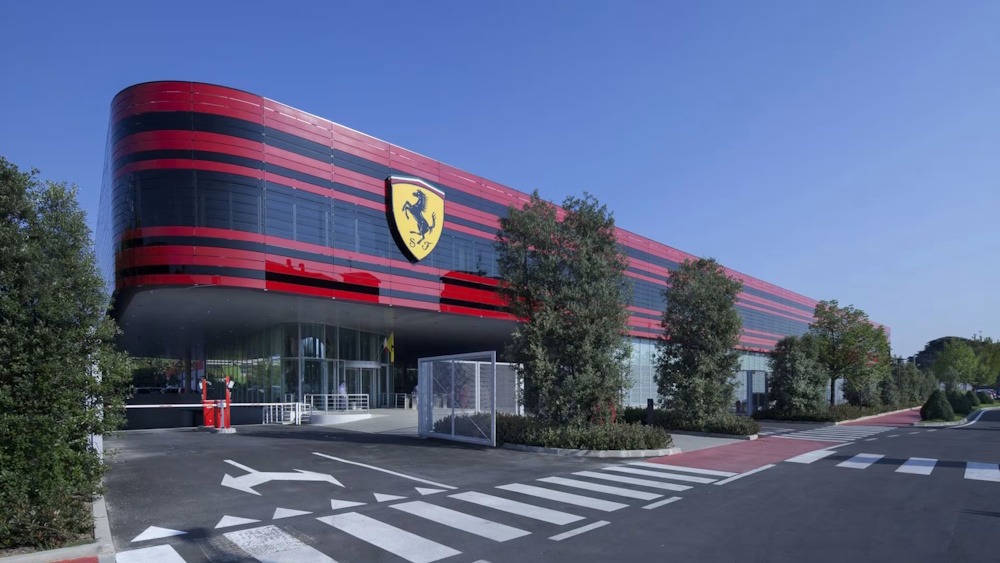
At one of Italy’s largest Ferrari dealers, Edoardo Schön raises the hood of a 1951 340 America that once competed at Le Mans, revealing the immaculate V-12 beneath. The blue-and-white grand tourer holds a prominent position in the Milan showroom, surrounded by vintage Testarossas, F40s, and a 275 GTB4. Together, they embody the legacy of racing excellence and exclusivity that has consistently distinguished Ferrari from its competitors, ensuring a continuous influx of affluent customers at dealerships such as Schön’s family-owned Rossocorsa. In the year ahead, Ferrari NV, along with its team of engineers, marketers, and dealers, confronts a significant challenge for a brand rich in automotive heritage: conveying the allure of its roaring supercars to Elettrica, the company’s inaugural all-electric model. The challenge lies in capturing the essence of the Prancing Horse in a vehicle that will forgo many of the characteristics of its fossil-fueled forebears: absent are the spitting exhaust pipes, the bragging rights at the gas station, replaced instead by the resonant hum of its four electric motors. “I wonder if the Ferrari Elettrica will have the same feeling,” Schön remarked. “The hard part is to evolve Ferrari’s DNA instead of changing it altogether, and give customers the full experience of something they haven’t had before.” On Thursday, at Ferrari’s investor day in Maranello, Italy, the elements of the Elettrica were unveiled, with deliveries set to commence in late 2026. The debut was overshadowed by financial forecasts that fell short of investor expectations, causing Ferrari shares to plummet in Milan by the largest margin ever recorded.
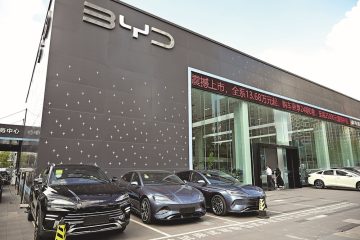
The misstep highlights the dangers that lie ahead for Ferrari as it navigates unfamiliar territory. Until now, the Italian company has maneuvered through the late fossil-fuel era more adeptly than any of its competitors. While others have navigated the complexities of the EV transition, its shares continue to trade at multiples comparable to luxury brands such as Hermès International SCA. For Ferrari to successfully navigate its transition, it must channel the passion cultivated over 80 years into the electric era, all while contending with competitors from China who have gained an early advantage. “T-Rex vanished because it could not adapt to a cataclysmic climate change,” stated Peter Wells. “This is precisely the challenge facing Ferrari. Either it adapts, quickly, or it will only be known in museums.” So far, Ferrari’s affluent clientele has shown an almost cult-like loyalty to the brand. For many, their loyalty is rooted in passion — Enzo Ferrari famously described his creations as engines with wheels, encased in an exquisite design. Elettrica will serve as the initial assessment of Ferrari’s ability to engage audiences in their electrification journey, or to attract sufficient new fans along the way. In the years the company has spent waiting before introducing its first EV, China has surged into the global car industry with a wave of long-range, fast-charging, high-technology models. This year, one in four passenger vehicles sold worldwide will be powered by battery-electric or plug-in hybrid technology, with over half of those deliveries occurring in China. In a historic milestone, BYD Co. is set to become the world’s leading seller of fully electric vehicles on an annual basis, with a significant margin — the Chinese manufacturer has delivered nearly 390,000 more EVs than Tesla Inc. in the first nine months of the year. Although Ferrari executives may not prioritize sales contests — the company delivered fewer than 14,000 cars last year — Thursday’s stock decline highlights the slim margin for error. In revealing the technical and performance specifications of the Elettrica, Ferrari has adjusted its strategy regarding the production of additional electric vehicles, a decision that will reduce the financial investment required. However, the company also cannot afford to remain stagnant. Vigna suggested that at least one more battery-powered model will arrive by 2030.
“Electric is a new dimension for us, it’s a new opportunity and we continue to develop in that field,” he stated at the event. The car boasts an impressive output of over 1,000 horsepower, accelerating to 100 kilometers per hour (62 mph) in just 2.5 seconds. While it falls short of the Rimac Nevera’s remarkable 1.81 seconds, it still surpasses the Cyberbeast variant of the Tesla Cybertruck. While other supercars may surpass the Elettrica’s top speed of approximately 310 kph, the essence of the Ferrari experience has always transcended mere velocity. “It’s about emotion, craftsmanship and the racing DNA you feel behind the wheel,” stated Schön. The true measure of Elettrica will be if Ferrari can replicate the bond and driving enthusiasm that characterize the brand, he stated. “From what I know so far, Ferrari is on the right path, but until customers drive it, we won’t know if it fully lives up to that heritage.” Maranello, located in the hills of Italy’s Emilia-Romagna region, thrives with the energy of the company that reigns over the town of approximately 17,000 residents. The streets are adorned with vibrant red banners, and the cafes boast names inspired by renowned models and iconic races. At the nearby test track, prototypes thunder by amidst the trees. For decades, this soundtrack offered comfort to the loyal Ferrari enthusiasts. This is also evolving, as the future shifts towards batteries, engineers, and quieter test runs. Additional features of the Elettrica will be disclosed as we approach customer deliveries, which are set to commence in late 2026. The interior of the new model is set to be revealed early next year, while the complete car will make its debut in the spring. Pricing will be revealed next year. The Elettrica offers a range of approximately 530 kilometers (330 miles), which is on par with Tesla’s Model Y, yet falls short of the Mercedes-Benz EQS. Ferrari executives stated that charging will be compatible with as many stations as possible, featuring a fast-charge option that brings the battery to 80% full in just 15 minutes to alleviate range anxiety.
In 2022, Ferrari broadened its lineup by introducing hybrids and the four-door Purosangue. However, there are risks associated with diluting an elite brand, and achieving the right balance is challenging. Lamborghini’s Urus established the hyper-SUV category, yet interest has waned for Porsche’s electric Taycan, while Mercedes-Benz Group AG’s $100,000 EQS has not met expectations. The combustion roar is one element of a petroleum-powered Ferrari that Lucas Li, a 32-year-old entrepreneur in Zhejiang, China, is hesitant to part with. “If I have 4 million to 5 million yuan ($560,000-$700,000) in cash ready to buy a car, I’ll always pick a fuel-powered Ferrari over the electric one,” said Li, who owns a Ferrari 599 GTB and an F430 along with several electric vehicles for daily use. He stated that many members of his Ferrari club, which boasts over 300 individuals, share the same sentiment. “For us, the most compelling reason to purchase a Ferrari is the sound.” Within a glass and steel structure in Maranello, engineers clad in red coveralls meticulously attend to motors and battery packs, striving to imbue the Elettrica with a look and feel that embodies the essence of Ferrari. The company submitted a patent in Italy in 2021 for an acoustic device designed to amplify the electric motor’s whine, transforming it into a sound more akin to a growl. A later US patent outlined a “virtual gearbox” designed to mimic the experience of shifting gears without the need for mechanical connections, thereby reintroducing a degree of excitement to the acceleration process. “Sounds are amplified when appropriate, for example when accelerating in a certain way, when our senses expect the sound to be present and to rise in volume,” said Gianmaria Fulgenzi in an interview. Weight presents yet another challenge. The Elettrica features an enhanced version of the active suspension found in the Purosangue, with Ferrari incorporating the battery pack into the chassis to reduce its center of gravity and enhance handling.
“Battery packs add a lot of weight, and weight gets in the way of agile and nimble cornering and braking ability,” stated Samuel De Rocco. “The electric supercars I’ve driven provide astonishing acceleration, but beyond straight-line speed they feel like trucks. That’s the pitiful truth.” Li stated that Ferrari’s sales staff in China are making efforts to maintain the loyalty of their affluent clientele. While the market for Ferrari may be limited, CEO Vigna recognizes the potential it holds, particularly as electric vehicles benefit from reduced import fees. “China could be a good fit for our Elettrica as there’s a good appetite for that product because customers are already used to electric vehicles,” Vigna said. Li stated that dealers participate in WeChat groups for Ferrari owners, providing updates on forthcoming models and addressing customer concerns. During Chinese holidays, salespeople extend their gestures of goodwill by sending gifts and cards. They also invite clients to exclusive events, track days, and private test drives, fostering a sense of belonging to an inner circle. “Owning a Ferrari gives you a sense of being trendy, while also elevating other aspects such as social status and life taste,” said Li. Ferrari’s first EV must appeal to new customers, and “China is likely to be central to that strategy,” stated Susy Tibaldi. An electric model may align more closely with market demands, albeit with certain challenges, she noted. “China’s luxury consumers aren’t accustomed to waiting two years for a purchase, and competition in the EV segment is especially intense.” Indeed, over the past decade as a public company, Ferrari has successfully established itself as a luxury brand, skillfully employing the concepts of scarcity, sequencing, and ritual with a finesse comparable to that of Birkin bag maker Hermes. With a market cap of approximately €63 billion, Ferrari significantly outpaces competitors such as Porsche and Mercedes, despite the latter selling considerably more vehicles.
Safeguarding the valuation will present significant challenges. Multiples have decreased in recent months as investors permit less flexibility. The stock drop “is starting to feel extreme,” noted James Grzinic. “As our travels continue, we will more accurately assess how wide the real gap between RACE’s conservatism and investors’ rebased expectations truly is.” Some customers cannot wait to get their hands on the new model. “Ferrari always creates something people don’t think is possible — in design, performance and feeling,” stated Cristian Appelberg. “As soon as there is any kind of ability to place an order for the Ferrari Elettrica, if I can, I’ll do it,” he stated in an interview. “I trust them completely.” Markus Lienkamp stated “The biggest risk for Ferrari is being perceived as ‘me-too’ unless it can deliver something truly distinctive.” Nonetheless, Ferrari has already surpassed a significant milestone on its path to electrification. Approximately 50% of its shipments are now hybrids, a significant milestone that would have seemed unimaginable just a few years ago. Analysts express optimism that the new F80 hybrid supercar will generate profits. Ferrari faces a constrained opportunity to counter emerging competitors such as BYD, whose luxury division Yangwang recently set a world record with the U9 Xtreme, the fastest production car, achieving speeds exceeding 308 miles per hour. “We are beginning to see some absolutely insane machines coming out of China,” remarked Andrea Levy.