BYD Surges Past Tesla in 20+ Countries in Just Five Years
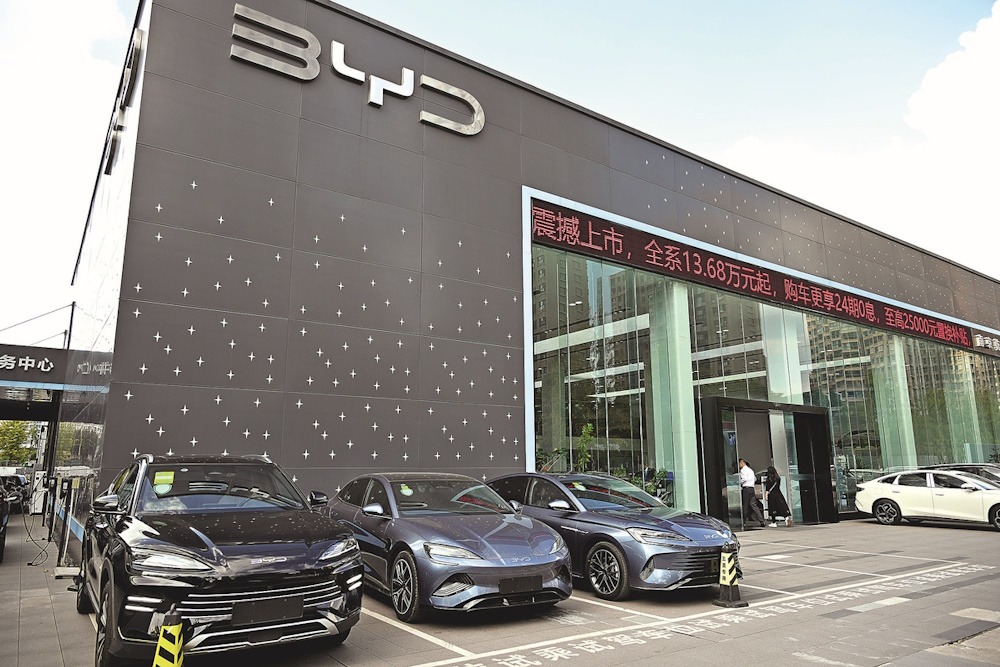
Chinese electric vehicle maker BYD is swiftly transforming the global automotive landscape. Once regarded primarily as a formidable domestic player, the company has now surpassed Tesla in over 20 countries and regions in the last five years, as reported. With sales growth in China experiencing a slowdown, BYD is turning its attention to overseas expansion to sustain its momentum. Last year marked a significant milestone in the UK, as its annual sales exceeded those of Tesla for the first time. In that year, while visiting a dealership in west London, Wang Chuanfu encountered a customer who had recently purchased the Atto 3 electric SUV – BYD’s inaugural exported passenger car in 2021. The term “Atto” signifies an attosecond, an incredibly brief unit of time, highlighting the company’s commitment to speed and innovation. Wang has consistently emphasized the importance of speed, particularly as major global automotive manufacturers transition to electric vehicles.
Since 2021, BYD has expanded its presence to 113 countries and regions. Data indicates that BYD surpassed Tesla in 22 markets from 2020 to 2025. In addition to the UK, the Chinese company advanced in nations like Spain and Italy. It also gained traction in Hong Kong and Singapore, regions recognized for their robust appetite for luxury vehicles. According to the report, last year, BYD ascended to the position of the world’s leading EV seller, relegating Tesla to second place. One factor contributing to BYD’s swift ascent is its pricing. In China, passenger vehicles were sold at an average price of 114,000 yuan (about $16,600) last year. The company maintains low costs through the in-house production of its own batteries and key components. This vertical integration enables the company to offer vehicles at competitive prices on a global scale.
BYD has gradually made its way into smaller markets as well. In Uruguay, a nation of just 3.4 million inhabitants, the company conducted its initial tests of electric buses more than a decade ago. The report indicated that it subsequently provided buses and taxis, fostering strong relationships with local officials and dealers prior to the introduction of its passenger cars. In Peru, vehicles manufactured in China are now arriving at the newly constructed Chancay port, developed as part of China’s Belt and Road initiative. This has reduced shipping time to about 25 days, around 10 days faster than earlier routes. Nevertheless, growth has encountered obstacles. The report indicated that plans for a plant in Mexico were abandoned following criticism from US President Donald Trump. The European Union has also tightened rules, creating standards that favour smaller electric vehicles and making it harder for Chinese brands to compete freely. As BYD expands its global presence, it faces a decline in its domestic performance. The company sold about 3.5 million passenger vehicles in China last year, roughly 10 per cent fewer than in 2024.
For the first time in over five years, quarterly revenue experienced a decline, and free cash flow significantly plunged into negative territory, the report stated. Reduced cash reserves may restrict international investment opportunities. In an effort to mitigate trade tensions and circumvent tariffs, BYD is transitioning to local manufacturing. The company intends to establish a plant in Hungary this year, following the launch of factories in Thailand in 2024 and Brazil in 2025. Other Chinese automakers are following similar strategies. Great Wall Motor has assumed control of a former Mercedes-Benz facility in Brazil, while Chery Automobile is in the process of acquiring factories in South Africa from Nissan Motor. In 2023, China surpassed Japan to become the world’s largest car exporter. While Japanese automakers continue to manufacture millions of vehicles abroad, Chinese companies are rapidly narrowing the gap, with BYD at the forefront of this movement.