S&P confirms AA+ credit grade for Trump tariffs
President Donald Trump’s sweeping tariffs have created significant volatility in markets, caused apprehension among trade partners, and elicited criticism from prominent economists. However, there is a positive aspect: The levies will assist the US in preserving its fiscal health, as noted by S&P Global Ratings. The credit rating agency has confirmed its AA+ long-term rating for the United States, partly due to its belief that tariff revenues will mitigate the fiscal impact of a recent tax and spending legislation. The outlook for the long-term rating was maintained at a stable level.
The decision presents a favorable development for Trump, who has countered claims that his unprecedented tariff program will adversely affect the US economy. While the S&P analysts did not dispute that perspective, they emphasized that as Trump initiates an ambitious agenda of tax reductions and increased spending, tariffs will serve to mitigate the impact. “Amid the rise in effective tariff rates, we expect meaningful tariff revenue to generally offset weaker fiscal outcomes that might otherwise be associated with the recent fiscal legislation, which contains both cuts and increases in tax and spending,” wrote analysts including Lisa Schineller in a note.
)
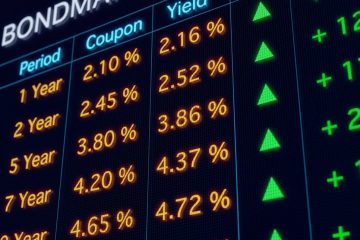
The perspectives of S&P are significant for investors operating within the largest bond market globally, which has been consistently challenged by ongoing concerns regarding the fiscal deficit and the sustainability of debt. In May, yields on 30-year Treasuries surged past 5 percent, driven by concerns over tariffs and the implications of Trump’s multi-trillion dollar tax legislation, which created volatility in global markets. Whether tariffs will provide the US with a significant revenue increase remains a contentious issue among economists, who highlight an evident contradiction at the core of Trump’s strategy: Tariff revenues are contingent upon trade dynamics; however, Trump’s initiatives to repatriate production and promote the purchase of American-made goods may ultimately diminish future revenue from these levies. Thus far, the data indicates robust performance. In July, tariff revenue achieved a new monthly high, as customs duties increased to $28 billion. Treasury Secretary Scott Bessent indicated that tariff revenues for the entirety of 2025 might reach “well in excess of 1 per cent of GDP,” adjusting his earlier projection of $300 billion. However, the bipartisan Congressional Budget Office projects that the recently enacted budget bill will contribute an additional $3.4 trillion to the deficit over the forthcoming decade.
In Asia trading on Tuesday, the yields on US 30-year bonds remained relatively stable at approximately 4.94 percent, while the benchmark 10-year yields experienced a slight increase, reaching 4.34 percent. The findings suggest a subdued immediate effect from the S&P report, although it contributes a significant perspective as market participants assess the implications of tariffs in the months ahead. “These are still small nuances close to the top of the credit ratings hierarchy and it doesn’t signal any material change in the US fiscal health, which is a complex issue,” stated Homin Lee, senior macro strategist at Lombard Odier Ltd. in Singapore.
“The pressures on the Fed to again consider defying rates markets and hold next month just received a (rather modest) boost as S&P Global Ratings delivered a solid report card for the US’s economy and outlook,” states Garfield Reynolds, MLIV Team Leader. The United States experienced a downgrade in its credit rating from the major three agencies in May, as Moody’s Ratings revised its status from Aaa to Aa1. It attributed the growing budget deficits to successive administrations and Congress, asserting that these deficits exhibit minimal signs of diminishing. Fitch Ratings and S&P have previously downgraded the United States from its AAA rating.
S&P indicated that the stable outlook reflects its expectation that, although the fiscal deficit is unlikely to see significant improvement, it also will not experience a persistent deterioration in the coming years. The agency anticipates that net general government debt will exceed 100 per cent of GDP within the next three years. Furthermore, it projects that the general government deficit will average 6 per cent from 2025 to 2028, a decrease from the 7.5 per cent recorded last year. The affirmation of the rating may provide a favorable outlook for the dollar, particularly in light of the concerns surrounding the sustainability of US debt raised by Trump’s tax and spending bill, as noted by Fiona Lim, a senior currency strategist at Malayan Banking Bhd. However, the more enduring influence on the dollar will stem from the forthcoming Federal Reserve minutes, along with Fed Chair Jerome Powell’s address in Jackson Hole on Friday, she noted.
Bessent states that US tariff revenues are expected to increase ‘substantially’, which will be allocated towards debt reduction. US Treasury Secretary Scott Bessent indicated an anticipation of a significant rise in tariff revenues from the $300 billion projected earlier this year, asserting that these funds would be allocated towards the reduction of the considerable US federal debt. Bessent, in an interview on CNBC, refrained from providing a specific new revenue forecast, yet emphasized that he and President Donald Trump were “laser-focused” on addressing the debt issue. “I have consistently asserted that tariff revenue could reach $300 billion this year.” Adding, “I’m going to have to revise that up substantially.”