Xi’s red line on Trump’s export curbs risks shattering fragile truce
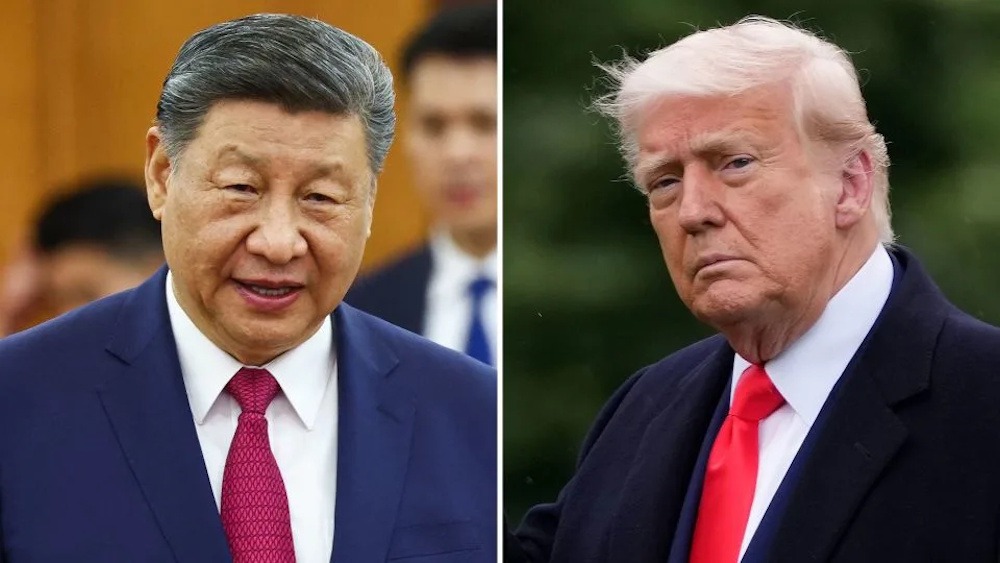
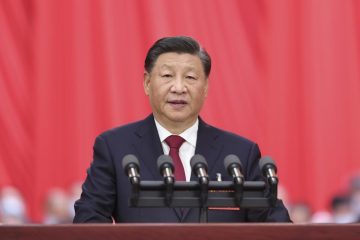
Chinese President Xi Jinping has established a definitive boundary in an effort to counter new US export controls, warning of a potential resurgence of a tit-for-tat trade conflict with Donald Trump just weeks ahead of a scheduled meeting between the leaders of the world’s largest economies. Following China’s announcement of extensive global export controls on products containing even minimal amounts of specific rare earths last week, Trump responded by threatening to cancel a scheduled in-person meeting with Xi — their first encounter in six years. The US leader also announced plans to double tariffs on Chinese goods to 100 per cent, along with sweeping curbs on “any and all critical software.” On Sunday, Beijing defended its actions as necessary for protection and charged that the US has implemented new restrictive measures aimed at China since the discussions held in Madrid in September. Last month, the US Commerce Department announced a significant expansion of its export controls, effectively closing loopholes in existing measures aimed at preventing Beijing from accessing advanced chips. “Willful threats of high tariffs are not the right way to get along with China,” stated the Commerce Ministry. “China’s position on the trade war is consistent: we do not want it, but we are not afraid of it.”
China’s firm response indicates that both sides remain at odds regarding the terms of the truce established in May, when they consented to reduce tariffs from levels that had escalated beyond 100 percent. Whereas Xi perceived the agreement as a mutual freeze on any new restrictions regarding critical shipments or company limitations, the US seems to interpret the truce as confined to reduced tariffs in exchange for unrestricted flows of rare earth magnets. The pressing question is whether both parties can reach an agreement once more before tariffs escalate to a point that risks initiating a broader separation between the US and China. On Friday, markets experienced a significant downturn, with US stocks enduring their most severe selloff in half a year, while commodities such as soybeans, wheat, copper, and cotton also saw declines. “We will not be intimidated by such coercive and unilateral actions of power politics,” stated Zhou Mi, a think tank under the Ministry of Commerce. “Our actions have clearly shown this.” Both sides have provided opportunities for deescalation. Trump’s tariffs are scheduled for Nov 1, just days following the anticipated meeting with Xi at a summit in South Korea. China’s new controls are scheduled to take effect a week later, just before the expiration of the latest trade truce that has been preventing tariffs as high as 145 per cent. Export controls on technology and magnets essential to artificial intelligence and weapons manufacturing are central to trade negotiations among the world’s largest economies.
Following Trump’s imposition of 145 percent tariffs on China in April, Xi responded by prohibiting US companies from purchasing its magnets. This action led to factory shutdowns and heightened anxiety regarding the country’s reliance on Beijing for essential metals critical to national security. If the US leader raises tariffs once more, Beijing may reinstate that blockade, leading both nations into a contest of which superpower can endure greater economic hardship. “Washington’s fear of China is strategic, not economic,” according to analysts. “A disruption in rare earth flows threatens defense production capacity, a core pillar of US global power projection and, by extension, dollar stability.” The recent confrontation highlights the challenges faced by two competitors in reaching a trade agreement. Chinese negotiators have allegedly presented a substantial investment package to Trump’s team; however, such capital inflows would probably face obstruction from US national security regulations. The repercussions may also threaten an agreement regarding the US operations of TikTok, the social media giant owned by China, which has faced opposition from US lawmakers due to security issues. Ultimately, the US will find the escalation and any collapse of the TikTok deal harder to bear than its rival, according to reports. “The Trump administration relies on TikTok to woo young voters, and with political pressure from the 2026 mid-term elections it has limited scope for extreme measures,” the organization wrote in a Saturday paper. “Inflation and shortages that tariffs are causing in the US will be hard to alleviate in the short term.”
Chinese exports have reached unprecedented levels in various markets this year, demonstrating that Beijing can thrive independently of the US consumer. Data due Monday is anticipated to reveal the factory engine advancing once more, providing Xi with additional breathing space. Nonetheless, a significant increase in tariffs would intensify the strain on an economy that is already grappling with sluggish domestic demand and deflationary pressures. Officials from both sides may reconvene as early as this week, as a delegation from China travels to Washington for a scheduled series of discussions with international finance leaders. Officials from Beijing may encounter resistance from their global counterparts, as the latest restrictions on rare earths are not confined to the US, posing a risk of disruption to European and Asian companies as well. The renewed brinkmanship raises concerns about a more profound split in global trade that may lead the two economies toward partial decoupling. On Friday, markets experienced a significant downturn, with US stocks facing their most severe selloff in six months. Commodities, including soybeans, wheat, copper, and cotton, also saw declines. A source estimates that a 100 per cent US tariff hike would push effective rates on Chinese goods to around 140 per cent — a level that shuts down trade, not just raises costs. Despite the current 40 per cent rate, which stands 25 percentage points above the world average and presents challenges, China’s manufacturing advantage has ensured a steady flow of exports. Tariffs exceeding 100 per cent would disrupt the majority of flows. “Ultimately, the endgame will likely involve some form of negotiated settlement,” said Ray Wang. “The economic, security and supply-chain stakes for both sides are simply too high to sustain the current standoff indefinitely,” he added.
Earlier this year, China leveraged its control over essential rare earths to compel Trump into relaxing export restrictions on specific products to the Asian nation. Xi’s team may urge the US to consider a comparable concession in their upcoming discussions. Hu Xijin, the former editor-in-chief of state-run tabloid Global Times, characterized the recent rupture as a “turning point” in China’s relationship with the US, as it utilizes its leverage in rare earths to counteract chip curbs. “This year, the Trump administration imposed tariffs on Chinese products several times without even consulting us. Sanctioning our companies was done just as casually,” he wrote. “China will use its strength to prevent the US from crossing the line.”