Xi Jinping Tightens Military Control as Generals Disappeared
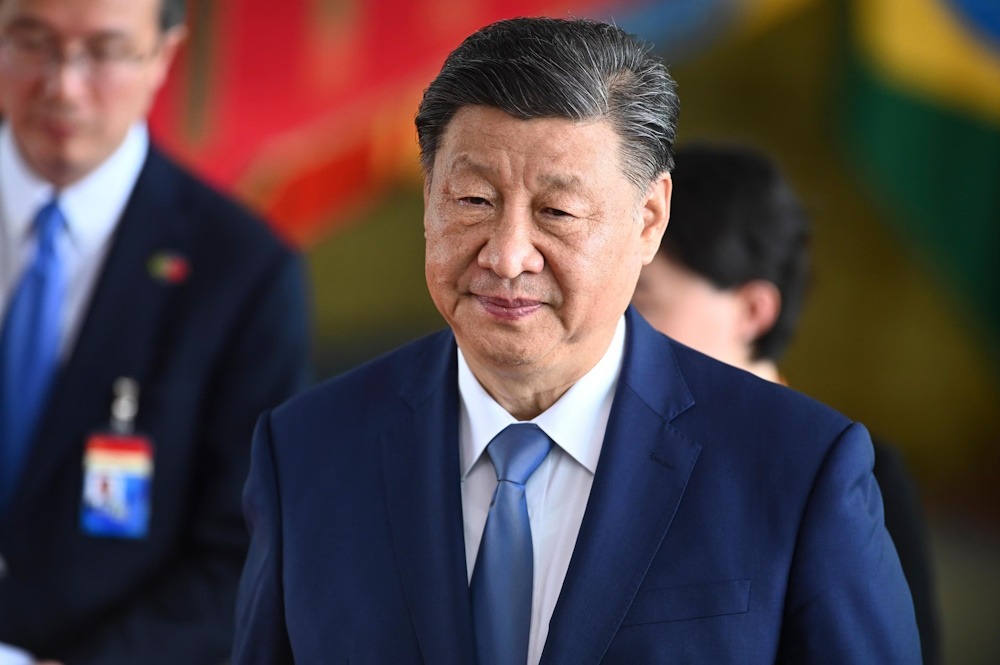
In March 2023, China’s military leadership presented a united front before the nation, rallying behind Xi Jinping. After nearly a decade in power, Mr. Xi had assembled the leadership he desired: loyalists chosen to transform the People’s Liberation Army into a world-class force. However, even Mr. Xi’s most devoted supporters have not escaped his extensive initiative to reform the military — a campaign that, while publicly aimed at addressing corruption, also serves to reinforce loyalty to him. Members of the Central Military Commission have been dismissed and placed under investigation, one by one. The most recent was Gen. Zhang Youxia, the foremost general under Mr. Xi. Mr. Xi has also removed dozens of other senior military officials in just under three years, a level of upheaval unmatched in modern Chinese history. This image illustrates the probable scope of the purges within the military forces. At the beginning of 2023, China had a minimum of 30 generals and admirals overseeing specialized departments and theater commands.
Almost all of them have been expelled or have vanished amid Xi Jinping’s extensive purge. In certain instances, Mr. Xi designated new generals to take over as replacements. However, numerous individuals have also disappeared from the public eye. Our review identified merely seven generals who seem to continue in active roles. The purges exemplify Mr. Xi’s remarkable authority, yet they have also resulted in a leadership void within the military. The removal of General Zhang and his counterpart, General Liu Zhenli, has left the Central Military Commission without the key leaders responsible for preparing the forces for battle. Although numerous junior officers are engaged in the practical planning of significant military operations, the sudden departure of the two highest-ranking “operational” commanders may temporarily diminish Mr. Xi’s assurance in the preparedness of the People’s Liberation Army. The only general left on the commission is Zhang Shengmin, who has managed Mr. Xi’s military purges and now seems tasked with upholding political discipline and loyalty.
General Zhang dedicated a significant portion of his career to serving as an antigraft and political discipline inspection officer within the Rocket Force, the entity responsible for overseeing China’s nuclear and conventional missile programs. Last year, Mr. Xi elevated him to the position of vice chairman of the Central Military Commission. The dismissals have extended significantly into almost all sectors of the armed forces. This encompasses both the Rocket Force and the navy. The five theater commands — the regions established by Mr. Xi in 2016 to oversee the armed forces — have also been significantly diminished, including the Eastern Theater Command, which oversees operations in the vicinity of Taiwan. Late last year, Mr. Xi appointed a new commander for the Eastern Theater.
Following General Zhang’s downfall, the official newspaper of the Chinese military has called on officers and soldiers to support the decision and unite behind Mr. Xi. It also recognized that the dismissals and disruption were leading to “short-term hardships and pain.” Ultimately, the paper stated, an even stronger Chinese military would emerge. First, however, Mr. Xi must identify a new group of reliable generals he can depend on as the 72-year-old leader aims for a fourth term as China’s Communist Party secretary-general in 2027, a position he is almost certain to secure.