Will Global Climate Efforts Endure and Succeed Under Trump leadership
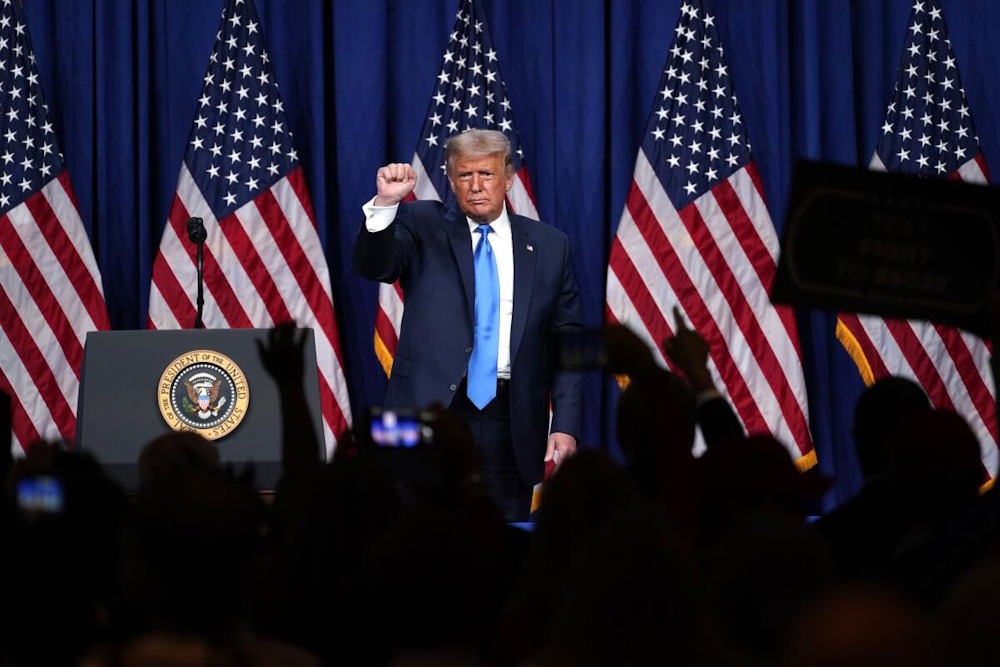
In his extensive address to the United Nations last month, United States President Donald Trump characterized climate change as “the greatest con job ever perpetrated on the world.” This assertion was baseless, disregarding the substantial scientific evidence indicating that climate change is indeed happening. The gathered dignitaries seemed unconvinced, appearing bemused by a speech that felt more appropriate for a campaign rally than for a presidential address to world leaders. However, as the pivotal global COP30 climate talks in Brazil approach, the speech prompts an important inquiry: what implications does a second Trump administration hold for international climate action? In addition to empowering climate denialists and those spreading disinformation, Trump has, in the end, fulfilled his campaign promise to vigorously back the US fossil fuel industry. In his words: “drill, baby, drill.” Or, more recently: “mine, baby, mine.” Soon after his inauguration, Trump signed an executive order to withdraw the US from the Paris Agreement, the legally binding UN treaty aimed at limiting global temperature rise well below 2 degrees Celsius over pre-industrial levels.
Last month, Trump unveiled a proposal to make 13 million acres of federal land available for coal mining, while also proposing hundreds of millions in federal subsidies for coal initiatives. He has mandated the removal of climate data from government websites and has effectively eradicated direct government funding for climate science research and monitoring. He has dismantled the Inflation Reduction Act, the hallmark climate initiative of the Biden administration intended to foster significant investment in renewable energy. In summary, Trump’s initiatives are expected to result in an increase of 7 billion tonnes of emissions when compared to a scenario in which the US fulfilled its Paris commitments. This is unfortunate news. What implications will this have for international climate cooperation? Undoubtedly, 7 billion tonnes of additional emissions presents a significant challenge. According to various sources, this accounts for approximately one fifth of the global carbon budget necessary to adhere to the Paris Agreement’s target of limiting warming to under 2 degrees Celsius. When the world’s most powerful state, largest economy, and second-largest greenhouse gas emitter withdraws from the United Nations Framework Convention on Climate Change, it signals troubling prospects for international climate action. This inevitably prompts the inquiry into how the organisers of the Brazilian climate talks can encourage nations to embrace robust emissions targets, particularly when affluent, high-emission countries choose to disengage. The US position poses a genuine risk of alleviating pressure on other high-emitting nations, including the Gulf States and Russia, which bear a disproportionate share of the responsibility for the issue.
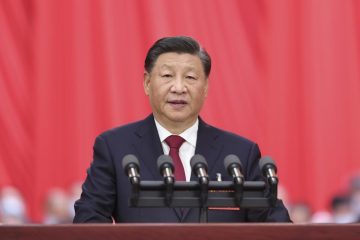
Finally, climate finance – financial resources used to support action on climate change – emerges once again as a pivotal issue at climate negotiations. Securing sufficient funding will be significantly more complex due to Trump’s “America First” platform, which emphasizes foreign and domestic policies that serve US interests. In light of this, one can still find reasons to remain hopeful. A primary argument for cautious optimism is that global emissions may have reached their peak and are poised to decline for the first time since the Industrial Revolution. This has been propelled by an unparalleled surge in global investment in renewable energy. The energy market is undergoing swift transformations, even in the face of substantial US subsidies for the fossil fuel sector. Global energy investment is projected to exceed A$1.5 trillion by 2025. Meanwhile, coal, oil, and natural gas will experience the first decline in global investment since the Covid pandemic. Other countries, such as China, appear to perceive the US position as an opportunity. Last month, Beijing set forth a target for emissions reduction (7–10 per cent by 2035) for the first time in its history. While China continues to expand its fleet of coal-fired power stations, it is simultaneously increasing its solar and wind capacity at a rate that surpasses the total of the rest of the world combined. China may seek to position itself as a responsible global leader, especially in contrast to the United States. This could, in turn, promote China’s strategic interests in areas like the Pacific, which are particularly susceptible to the impacts of climate change.
To date, there is no indication that nations have leveraged the United States’ retreat as a rationale to withdraw from global collaboration. No nation has exited the Paris agreement since Trump’s withdrawal. In 2001, as the Bush administration indicated that the US would not ratify the Kyoto Protocol, Australia’s Prime Minister John Howard quickly aligned with this stance. However, in 2025, just months after the US’s withdrawal from the Paris Agreement, Prime Minister Anthony Albanese announced a heightened emissions target. Even within his own borders, Trump’s stance has not signaled the end for climate action. California, under the leadership of Governor Gavin Newsom, who is known for his satirical take on Trump’s communication style on social media, manages one of the largest emissions trading schemes globally and has established a climate partnership with Brazil to enhance collaboration in anticipation of COP30. Overall, there are reasons for measured optimism, even a sense of hope, that the global community may unite in the absence of US leadership. Negotiators at next month’s COP30 talks will encounter significant challenges that have intensified due to the climate stance of the Trump administration. However, previous experiences indicate that intense COP negotiations can generate significant momentum for global action by drawing international focus. They may be able to exert pressure on the US to rejoin the collective efforts, or at the very least, empower pro-climate advocates within the US to seek reform in spite of President Trump’s obstruction.