Why US-Iran talks in Islamabad collapsed after 21 hours

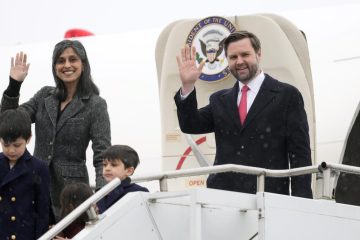
Direct negotiations between the US and Iran concluded in a deadlock following over 21 hours of dialogue in Islamabad on Sunday. The negotiations, facilitated by Pakistan, followed the announcement of a two-week ceasefire and were regarded as pivotal in shaping the future course of a conflict that has significantly impacted global supply chains. US Vice President JD Vance, present in Islamabad to spearhead negotiations on behalf of Washington, provided a briefing to the press on Sunday morning regarding the results of the meeting. “The unfavorable development is that we have not achieved a consensus, and I believe this is more detrimental for Iran than it is for the United States,” Vance stated. “We have explicitly outlined our non-negotiable boundaries.” The negotiations represented the most significant diplomatic interaction between the two nations since the 1979 Islamic Revolution. The delegation from the United States was headed by Vance, accompanied by Jared Kushner and Steve Witkoff. On the Iranian side, Parliament Speaker Mohammad Bagher Ghalibaf led a delegation comprising 71 members.
Both parties participated in extended and rigorous negotiations covering a broad spectrum of topics, highlighting the significant stakes and intricacy of the discussions. Iran’s nuclear programme and uranium enrichment have become the principal obstacles in the negotiations. Vance noted that Washington had demanded a “firm commitment” from Tehran regarding its non-pursuit of nuclear weapons and the development of capabilities necessary for their rapid attainment. “I won’t go into all the details because I don’t want to negotiate in public after we negotiated for 21 hours in private. But the simple fact is that we need to see an affirmative commitment that they will not seek a nuclear weapon and that they will not seek the tools that would enable them to quickly achieve a nuclear weapon,” Vance said. The demands outlined were integral to the US’ 10-point peace proposal, encapsulating enduring concerns frequently articulated by US President Donald Trump. Iran, in contrast, described the US stance as “excessive,” as reported. The report indicated that Washington had also advocated for concessions concerning the Strait of Hormuz and the elimination of nuclear materials, demands that Iran contended exceeded what the US had been capable of securing during the conflict.
In the wake of the negotiation breakdown, Vance conceded that the talks had been “substantive” yet ultimately did not yield the desired outcomes. He stated that although there had been significant dialogue on various matters, the two parties could not reconcile their disparities. He reiterated that the United States had distinctly articulated its red lines, along with the domains in which it was prepared to exhibit flexibility. However, he stated that the Iranian delegation opted not to accept those terms. “We just could not get to a situation where the Iranians were willing to accept our terms,” Vance stated. The US delegates demonstrated a degree of flexibility and accommodation; however, the US vice president lamented that no significant progress was achieved. The US delegation maintained continuous communication with Trump throughout the process, engaging in multiple discussions with him during the extensive 21-hour marathon. He also stated that he engaged in discussions with Trump anywhere from a “half dozen” to a “dozen times” throughout the negotiations. Vance characterized the US proposal as its “final and best offer” and did not suggest any imminent extension of the discussions prior to his departure for Washington. We maintained ongoing communication with the team as we engaged in negotiations with sincerity. We conclude with a straightforward proposition: a framework for comprehension that represents our ultimate and most favorable proposal. “We will see if the Iranians accept it,” stated Vance, without suggesting any possibility of extending the discussions.
Soon after Vance’s announcement, Iran’s Foreign Ministry spokesperson Esmaeil Baqaei stated that no agreement had been reached. In a post on X, he indicated that a significant number of messages and texts had been exchanged between the two parties throughout the negotiations. In the last 24 hours, discussions have taken place regarding several key negotiation topics, such as the Strait of Hormuz, the nuclear issue, war reparations, the lifting of sanctions, and the definitive conclusion of the conflict involving Iran and the broader region. The effectiveness of this diplomatic endeavor hinges on the opposing side’s commitment and sincerity, avoiding unreasonable demands and illegal requests, while recognizing Iran’s legitimate rights and interests. In a Telegram post, Iranian state broadcaster IRIB stated, “The Iranian delegation negotiated continuously and intensively for 21 hours in order to protect the national interests of the Iranian people; despite various initiatives from the Iranian delegation, the unreasonable demands of the American side prevented the progress of the negotiations.” Consequently, the negotiations concluded. The inability to secure an agreement introduces new uncertainty regarding the sustainability of the ceasefire and the likelihood of both parties resuming negotiations.
Vance’s remarks indicate that there appears to be constrained immediate potential for additional discussions, as he described the US proposal as definitive. Nevertheless, certain analysts contend that diplomacy has not reached its conclusion. In a post on X, Asia Pacific Foundation Non-Resident Senior Fellow Michael Kugelman noted that the US possesses significant domestic political motivations to finalize an agreement that would enable its withdrawal from the conflict. He observed that the presence of a high-level US delegation in Pakistan signifies Washington’s dedication to negotiations. Further discussions may occur; however, it remains uncertain whether they will take place in Pakistan or another location, he stated. The breakdown of negotiations is expected to yield prompt consequences for international markets and the stability of the region. The oil and gas markets are anticipated to respond significantly to the prevailing uncertainty, whereas the overall investor sentiment could be influenced by the absence of a diplomatic resolution.