Why Musk and Gates misjudged electric truck futures
According to Bill Gates, the electric drivetrains that have revolutionized the passenger vehicle industry in the last ten years are unlikely to achieve the same success in heavy trucks. Elon Musk asserts that this transition is unavoidable – and Tesla Inc. will be at the forefront of it. Both individuals are mistaken. Electric vehicles in the truck segment are poised for a significant shift – yet Tesla seems to be lagging behind. So far, only approximately 50,000 units of the formidable cubist pickup, the Cybertruck, have been sold. The semi tractor trailer remains fundamentally a demonstration model, eight years following its initial announcement. The scale of the sales surge in China during the last year has been astonishing. In September 2020, during Musk’s Twitter dispute with Gates regarding skepticism about his truck, only a handful of battery-powered semi-trailers had been sold in that market. There were 79,142 medium and heavy trucks sold. In the first half of this year alone, a total of 81,508 changed hands.
In August, sales of electric heavy trucks saw a remarkable increase, nearly tripling compared to the same month last year, as reported by First Commercial Vehicle Network, a local freight information service. This surge has resulted in these vehicles capturing approximately 26 percent of their market segment. 29 per cent of medium-sized trucks sold in China in August were plug-in variants, alongside 22 per cent of light trucks. Contemporary Amperex Technology Co., the largest battery manufacturer, estimates that heavy trucks will be 50 percent electrified by 2028, whereas Sany Heavy Industry Co. believes the number could reach as high as 80 percent. The ramifications of this extend well beyond the borders of China. Due to the extensive distances they travel and the substantial loads they transport, heavy trucks contribute significantly to pollution, consuming half of China’s road fuel while representing only 15 percent of the total vehicle count. Approximately 3.6 percent of the global oil consumption is attributed to diesel usage in China. Most is loaded into the same trucks that are electrifying at a dizzying speed. That will quickly begin to exert downward pressure on demand for crude. Rhodium Group, a consultancy, estimates that electrified cars and trucks in China will be responsible for a reduction of approximately 1.76 million barrels a day in demand next year, which is equivalent to about one in forty-five barrels of crude produced.
The anticipated difficulties of electrifying energy-intensive heavy trucks have been pivotal to the belief that petroleum consumption will remain steady in the coming years, despite the fact that EVs are reducing usage among cars. A 2017 report by the International Energy Agency on the future of freight omitted plug-in long-haul trucks from its price analysis entirely, as it deemed the technology too implausible to warrant modeling. This year’s sales figures decisively challenge those complacent assumptions. What has changed? Stricter fuel-economy regulations that took effect in China on July 1 are part of the explanation. The understanding that a significant number of trucks operate inefficiently is crucial, as it opens the door for electrified models to capture substantial portions of the market that do not involve transporting the heaviest loads over extended distances. However, the most significant element is undoubtedly economics. In the trucking industry, which operates on slim margins, managing running costs is of utmost importance. If a technology can save you a few yuan, you will be pragmatic about embracing it.
A brief surge in natural-gas powered trucks, which seemed poised to dominate China’s logistics industry last year, is already diminishing. Battery prices have now decreased to as low as $90 per kilowatt hour, highlighting that the value proposition of electric rigs is undeniably superior. The initial cost of a plug-in semi-trailer remains considerably elevated; however, operators can offset this disparity through reduced expenses in fueling, maintenance, and insurance. When the price of a long-haul electric truck reaches approximately $250,000 – a milestone anticipated -the zero-emission alternative will become more economical in regions where the cost of diesel exceeds that of roughly four kilowatt-hours of electricity. China is currently leading this industry, and it is poised to be a significant competitor in the future as Sany Heavy and XCMG Construction Machinery Co. increasingly concentrate on export markets. Europe, however, is not to be underestimated. It surpasses America in the proportion of freight transported by road, and its manufacturers currently represent over half of heavy truck sales in the US – probably a contributing factor to President Donald Trump’s declaration of a 25 percent tariff on imports Thursday.
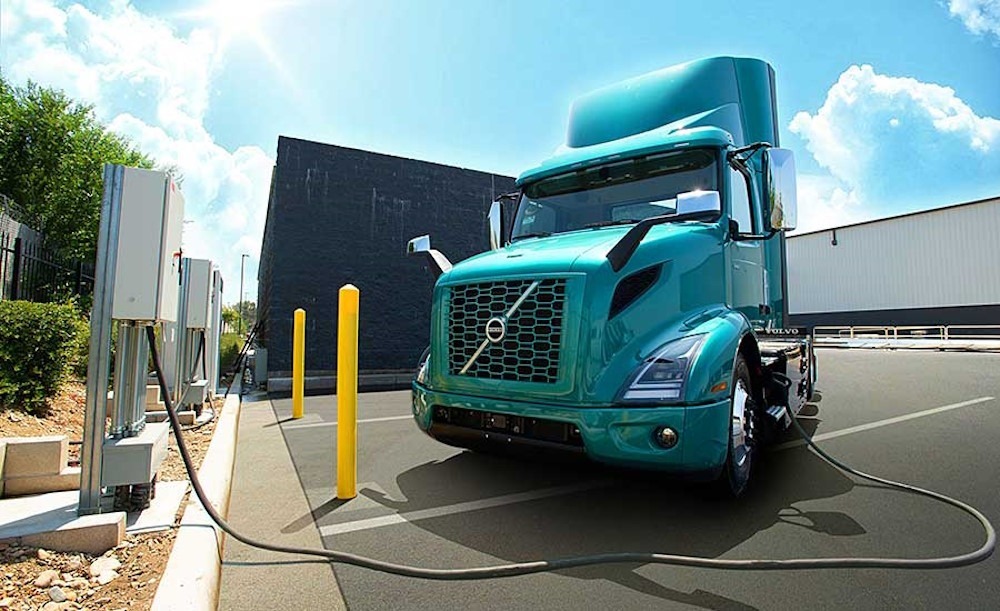
In April, Volvo achieved a significant milestone by selling its 5,000th electric truck. In May, it introduced a semi-trailer boasting a 600-kilometer range, designed to carry a 48 metric ton load and recharge during the duration of drivers’ mandatory rest breaks. That should be more than capable of competing with the traditional long-haul freight market. Fossil fuel advocates may present optimistic forecasts of a prosperous future, yet in reality, crude demand continues to falter, failing to reach the heights it achieved in 2018. One after another, the supposed bulwarks of future growth — emerging markets, energy-hungry grids, construction machinery, shipping, and now trucks — are collapsing. Only jet fuel and petrochemicals remain resilient. For oil producers, winter is approaching.