Why did France’s government fall after four prime ministers in a year?
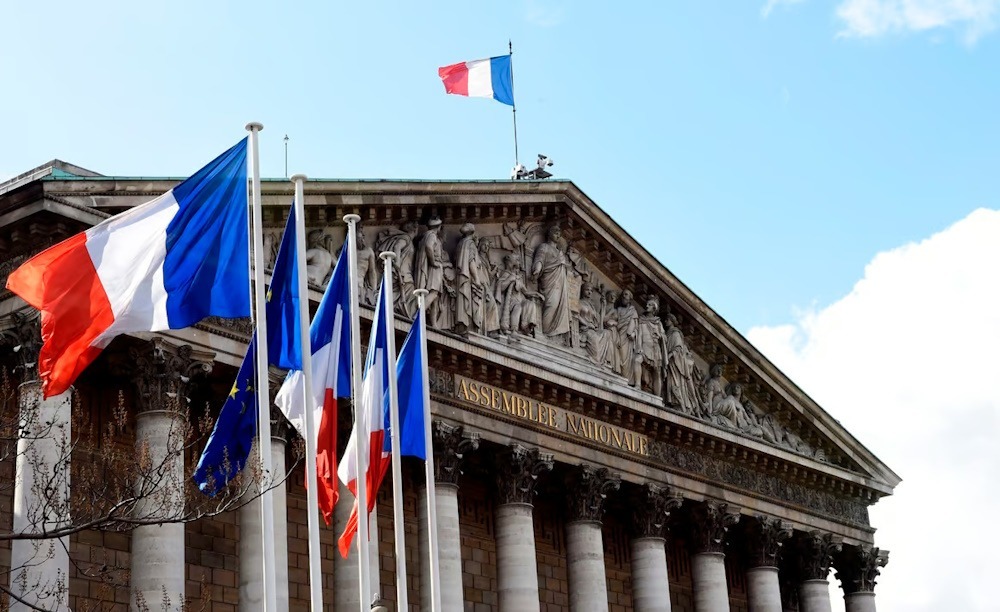
France’s government fell apart following Prime Minister François Bayrou’s defeat in a parliamentary confidence vote on Monday. The 74-year-old centrist, who had been in office for less than nine months, faced a significant defeat in the National Assembly, losing by a margin of 364 to 194, which compelled him to submit his resignation to President Emmanuel Macron. The outcome reveals Macron in pursuit of yet another leader to guide Europe’s second-largest economy. Bayrou served as Macron’s fourth prime minister within a year and marked the sixth individual to hold the position since his election in 2017.
Macron, who was elected in May 2017 and re-elected in April 2022, wields executive power and has the authority to appoint the prime minister. However, his centrist coalition does not possess a parliamentary majority, necessitating dependence on precarious alliances to enact crucial policies. Bayrou’s downfall resulted from a political gamble that did not pay off. He proposed €44 billion in spending cuts and tax increases. The measures encompassed proposals as drastic as the elimination of two public holidays to achieve cost reductions. He contended that immediate fiscal consolidation was essential to control France’s public debt, which has escalated to €3.35 trillion. Bayrou urged a vote of confidence linked to this contentious budget proposal. Lawmakers ultimately decided to remove him from office.
Political paralysis and a revolving door of prime ministers have hindered Macron’s domestic agenda and eroded investor confidence as France’s public debt has soared to 114 per cent of GDP. The budget deficit reached 5.8 per cent of GDP in 2024, significantly exceeding the European Union’s 3 per cent limit, and Bayrou’s austerity programme aimed to reduce the gap to 4.6 per cent by 2026. The internal turmoil within the country further undermines Macron’s standing as a global leader. Macron continues to be a significant presence on the international stage, yet these challenges jeopardize the nation’s capacity to engage in European matters, particularly as the EU must demonstrate a cohesive position amid the war in Ukraine and global trade disruptions. Macron has, however, pledged to complete his second term until 2027 and has dismissed calls for his resignation. Macron’s 2022 victory over far-right leader Marine Le Pen provided him with a substantial mandate to advance pro-European reforms and drive economic modernization. However, his decision in June 2024 to dissolve the National Assembly and call snap legislative elections was disastrous. The elections resulted in a fragmented National Assembly, lacking a dominant bloc in control, rather than consolidating power.
Since then, his administrations have stumbled from one crisis to another. The government relies on the coalitions formed by opposition groups, which, despite their insufficient numbers to govern independently, possess the ability to unite and challenge the authority of his prime ministers. Since mid-2022, France has faced challenges in maintaining a prime minister. Gabriel Attal (July 2024 – September 2024): Referred to as ‘baby Macron’ by the foreign press, Attal made history as France’s youngest-ever prime minister at the age of 35. Although Attal enjoyed popularity among the public, he faced a deficit of parliamentary backing and ultimately resigned following his coalition’s inability to secure a majority. Michel Barnier (September – December 2024): A seasoned conservative and former EU Brexit negotiator, Barnier was removed from his position after merely 90 days, following the passage of a no-confidence motion by parliament. Barnier attempted to push his budget forward without obtaining parliamentary approval. François Bayrou (December 2024 – September 2025): A seasoned centrist figure.
Announced as the fourth prime minister in a span of just over a year. His downfall occurred following a high-stakes confidence vote regarding his austerity package. Marine Le Pen, leader of the far-right National Rally, has called for Macron to dissolve parliament once more and initiate new elections, believing that her party could achieve a majority this time. “A big country like France cannot live with a paper government,” she stated following the vote. Socialist leader Olivier Faure has asserted that it is time for his camp to take the reins of government and move away from Macron’s pro-business agenda. Furthermore, far-left leader Jean-Luc Mélenchon and conservative Republicans like Bruno Retailleau have explicitly stated that they will not support a cabinet led by socialists. Macron is set to accept Bayrou’s resignation and appoint a new prime minister “in the coming days.” More than a week passed before he appointed Bayrou following Barnier’s fall, and it took two months to install Barnier initially. Whoever Macron names will encounter the same structural challenges: a fragmented Assembly, a growing opposition, and the urgent necessity for an acceptable budget.