US Restarts Graphite Mining as Battery Demand Surges
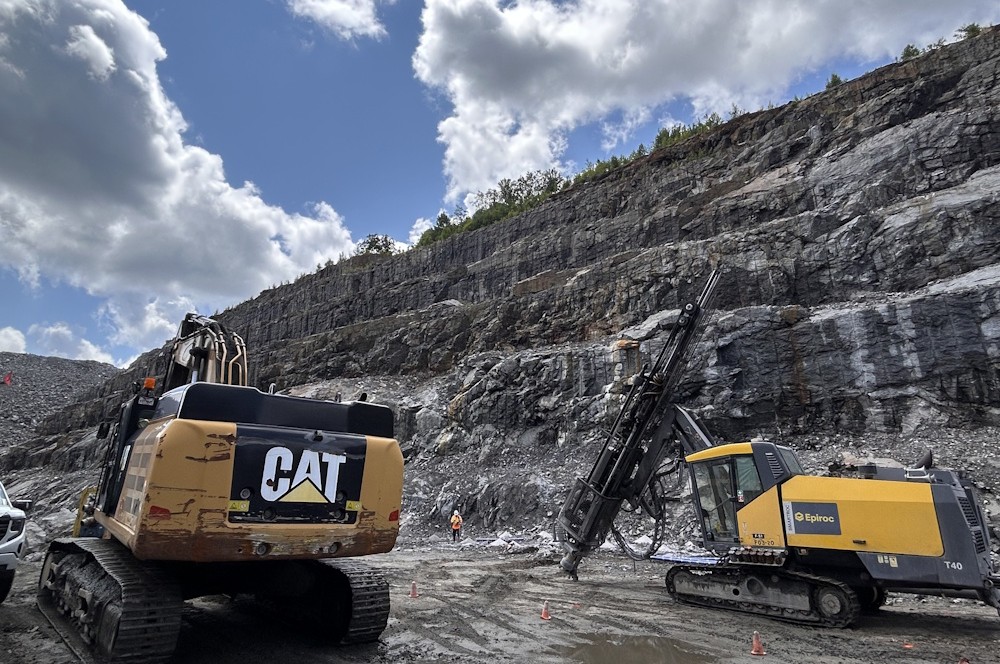
Graphite mines in the United States largely ceased operations seven decades ago. Extracting the widely used mineral, present in everything from nuclear reactors to pencils, appeared to lack rationale when it could be sourced at a low cost from other countries, particularly China. The perspective is evolving now. The demand for graphite, an essential component in lithium-ion batteries that energize devices ranging from smartphones to electric vehicles, is experiencing a significant increase amid ongoing trade tensions with China. Amid federal officials’ concerns regarding the consistent supply of various essential minerals, multiple companies are preparing to initiate graphite mining operations. Titan Mining Corp has extracted a limited quantity of ore from a deposit located in the snowy woods approximately 40 km from the Canadian border, with plans for commercial sales by 2028. Company officials assert that the geopolitical winds are favorable for selling graphite concentrate intended for high-tech, industrial, and military applications, including heat-resistant coatings in factories, anodes in large lithium-ion batteries linked to electrical grids, and lubricants for military vehicles.
“We believe there is a real opportunity here,” said Rita Adiani. We possess the capability to fulfill a substantial share of the United States’ requirements, primarily because China can no longer be viewed as a dependable supply-chain partner. Trade tensions with China escalated this year as President Donald Trump’s administration implemented higher tariffs, although these tensions eased somewhat after Trump met Chinese President Xi Jinping in October at a regional economic summit in South Korea. The northern New York deposit is situated in a rural area with a long history of graphite, iron ore, and garnet mining. The renowned yellow Ticonderoga pencil derives its name from a town located several hours east of this deposit, where graphite was extracted in the past. Joel Rheault recently showcased a rock from the newly mined area, an unremarkable flecked fragment of schist with a subtle glimmer in the sunlight that consisted of approximately 3% graphite.
“You can see how gray the rock is here,” said Rheault, noting that the coloration is due to the presence of graphite. Graphite possesses the ability to conduct electricity and endure high temperatures, rendering it valuable for various commercial and military uses. The Department of Energy has emphasized that demand for graphite is essential, while the Department of the Interior identifies it as one of 60 critical minerals. Forecasters anticipate that global graphite demand will keep rising dramatically over the next decade in tandem with the battery boom, encompassing both natural and synthetic graphite. China’s dominance in supplying both forms has concerned US policymakers for years, with anxiety intensifying after China imposed export controls on graphite and other minerals before easing them for a year. To strengthen supply chains, federal officials included a tax credit for critical mineral production in the 2022 Inflation Reduction Act and pursued international agreements and expedited reviews.
“What’s happening now needs to happen,” said Gregory Keoleian, noting a desire to avoid total dependence on other nations when domestic resources exist. By the 1950s, most US graphite mines had shut down, and currently none consistently produce a commercial product, according to the US Geological Survey. However, Titan’s project is among five active developments, alongside projects in Alabama, Montana, and Alaska. Graphite One Inc is developing what state officials describe as the largest known large-flake graphite deposit in the US, while Westwater Resources is advancing permitting in Alabama. Titan benefits from having discovered graphite at its existing zinc mine and has begun limited production under current permits. The federal government fast-tracked permitting for the New York mine and the US Export-Import Bank indicated it could lend up to $120 million while committing $5.5 million for feasibility studies. Titan expects annual production of about 40,000 metric tonnes, roughly half of current US natural graphite demand, with Adiani stating that effectively all output could be sold.