US Launches Blockade of Iranian Ports Starting Today
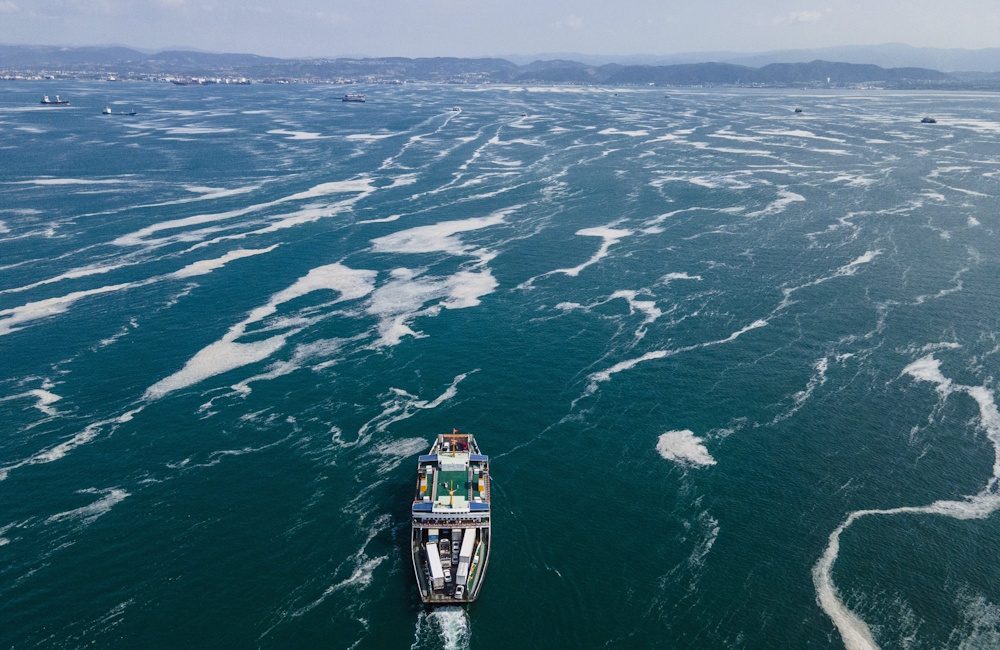
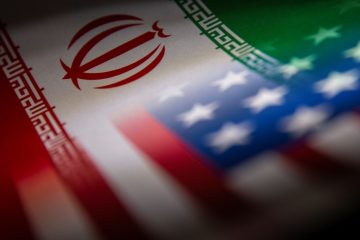
President Donald Trump stated that the US Navy would promptly initiate a blockade of vessels entering or departing the Strait of Hormuz, following the conclusion of US-Iran ceasefire discussions in Pakistan that did not result in an agreement. US Central Command has declared that it will impose a blockade on all Iranian ports starting Monday at 10 am, which corresponds to 5:30 pm in Iran. CENTCOM stated that the blockade will be “enforced impartially against vessels of all nations.” It stated that it would continue to permit ships traveling between non-Iranian ports to transit the Strait of Hormuz. Earlier in the day, the United States and Iran concluded 21 hours of direct discussions in Islamabad without arriving at an agreement, leaving the status of the delicate two-week ceasefire still uncertain. The conflict that has claimed thousands of lives and disrupted global markets has now reached its seventh week. Speaking to reporters outside Washington after flying back from Florida, Trump was asked about the timeline for Iranian officials to return to the negotiating table amid a fragile ceasefire. “I don’t care if they come back or not,” he replied. “If they don’t come back, I’m fine.”
Trump stated that during weekend negotiations led by US Vice President JD Vance, Iran expressed their desire to pursue a nuclear weapon. They continue to desire it, and they expressed that unequivocally the other night. “Iran will not have a nuclear weapon,” he said. Trump criticized Pope Leo XIV on social media Sunday, asserting that the first American pope should “stop catering to the Radical Left”. It was an extraordinary broadside against the global leader of the Catholic Church, intensifying a feud that originated over the war in Iran. A brief while later, addressing reporters following Air Force One’s arrival from Florida to Washington, Trump remarked, “We don’t like a pope who says it’s OK to have a nuclear weapon. I don’t think he’s doing a very good job,” Trump said, adding that “I’m not a fan of Pope Leo.” Trump’s remarks came after Leo condemned over the weekend the “delusion of omnipotence” that is driving the US-Israel war in Iran and urged political leaders to halt hostilities and pursue peace negotiations. However, Leo’s tone and message seemed aimed at Trump and US officials, who have proudly proclaimed US military superiority and rationalized the war through religious justifications.
As reported on Sunday that “all traffic” through the Strait of Hormuz ceased following President Donald Trump’s announcement on Truth Social regarding the US blockade of the waterway. It reported that two vessels departing the strait reversed course following the post. A trickle of traffic had returned to the strait in the days following the agreement between the US and Iran to pause the conflict. The US military’s logistical plans for blockading the Strait of Hormuz seem to have been reduced from the extensive measures that President Donald Trump had previously warned about. Trump initially stated on Truth Social that the US would impose a blockade on “any and all” ships entering or exiting the Strait of Hormuz. The military, however, asserts that it will continue to allow the passage of ships traveling between non-Iranian ports. Samir Madani, informed that the monitoring group utilized imagery from the European Space Agency’s Copernicus-2 satellite to ascertain the types of Iranian oil tankers located in the Strait of Hormuz over the weekend.
On Sunday, they identified 10 “Very Large Crude Carrier” supertankers, each capable of holding 2 million barrels of oil, along with 1 Suezmax tanker that holds 1 million barrels, totaling 21 million barrels in the Gulf of Oman. According to the group on X, Iran might be retaining oil in floating storage to “better regulate exports amid turbulence” or as a precaution against potential disruptions at Kharg Island. Kharg Island, targeted by the US during the war, hosts a terminal that facilitates the majority of Iran’s oil exports. In a statement on X, Foreign Minister Abbas Araghchi asserted that Iran had engaged in negotiations with the US in “good faith” to bring an end to the war. “But when just inches away from ‘Islamabad MoU’, we encountered maximalism, shifting goalposts, and blockade,” he wrote, using an acronym for “memorandum of understanding.” He subsequently reiterated previous threats made by Iranian officials. Good begets good. “Enmity begets enmity.” The Lebanese Red Cross reported on Sunday that another paramedic sustained minor injuries in the attack in the southern Lebanese town of Beit Yahoun. According to the country’s health ministry, at least 87 medical workers in Lebanon have lost their lives due to Israeli strikes since the onset of the conflict between Israel and the Hezbollah militant group. According to a West Asia security expert, “Trump has little leverage in Hormuz.” Andreas Krieg stated on Sunday that Trump’s proposal to deploy the US Navy to obstruct the Strait of Hormuz is impractical. “We should bear in mind that the Americans have a much lower threshold of pain than the Iranians,” Krieg said.
“The Iranians, whatever happens, can sustain this for far longer than the world economy, far longer than the Gulf states, far longer than the Americans.” Krieg stated that Trump lacks “any good options” and will need to concede on certain matters. “There isn’t any tool in the toolbox in terms of the military lever that he could use to get his way,” he said. Brent crude oil, recognized as the international standard, has surged from approximately $70 per barrel prior to the war in late February to exceeding $119 at certain points. Brent for June delivery decreased by 0.8% to $95.20 per barrel on Friday. Michael Lynch, a distinguished fellow at the Energy Policy Research Foundation, estimates that Trump’s threatened blockade could lead to an increase in oil prices by $5 to $10 when the market opens on Monday. The blockade is projected to remove approximately 2 million barrels of oil per day from the market, while the conflict in Iran has already resulted in a reduction of about 10 million barrels per day in supply, Lynch stated. “This is a pretty big insult to a pretty big injury, I guess, is the way to put it,” he stated. However, Lynch indicated that the blockade could be temporary, as Trump may face pressure to reverse it. “I wouldn’t be surprised to see him give it up by midweek, especially if oil prices keep going up,” he said.