US Job Market Outlook Blurs as Government Shutdown Halts Key Data
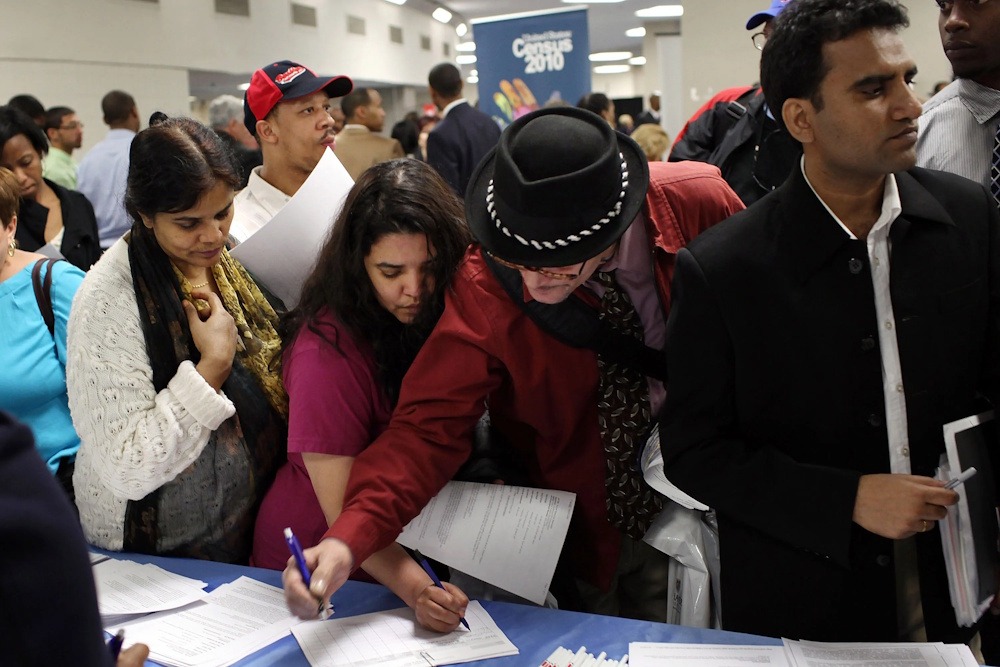
From trading floors to the Federal Reserve to economists sipping coffee in their home offices, the first Friday morning of the month typically brings a quiet hush around 8:30 am eastern as everyone awaits the Labor Department’s crucial monthly jobs report. However, due to the government shutdown, there was no information released on Friday regarding hiring in September. The disruption in the data has taken place during a notably precarious period, as policymakers at the Federal Reserve require additional economic information, not less. Hiring has come to a near standstill, posing a risk of dragging down the broader economy. At the same time, consumers, especially those with higher incomes, continue to spend, and certain businesses are increasing their investments in data centers to develop artificial intelligence models. It remains to be seen whether that is sufficient to revive hiring. This marks the first occasion since the government shutdown in 2013 that the jobs report has experienced a delay. Throughout the 2018-2019 partial government shutdown, the Labor Department stood out as one of the agencies that continued operations, thanks to Congressional funding agreements. The release of September’s jobs figures is pending, awaiting the conclusion of the shutdown.
If the shutdown persists for another week or longer, it may also delay the release of other significant data, including the upcoming inflation report, scheduled for October 15. The Trump administration has attributed the shutdown to Senate Democrats, while Democrats counter with similar accusations directed at the White House. “Businesses, families, policymakers, markets, and even the Federal Reserve are flying blind at a key juncture in America’s economic resurgence because the Democrats’ government shutdown has halted the release of key economic data,” said White House spokesman Kush Desai. Yet President Donald Trump himself has frequently criticized government jobs data when it has depicted an unfavorable view of the economy. In August, he dismissed the then-head of the Bureau of Labor Statistics following the agency’s report indicating that job gains in May and June were significantly lower than earlier estimates. Currently, economists are looking to alternative indicators of the job market offered by nonprofits and private-sector firms. The data primarily reflects a job market characterized by minimal hiring activity, yet it also indicates a lack of significant layoffs. Individuals currently employed seem to enjoy a sense of security, whereas those in search of employment are facing greater challenges. Payroll processor ADP stated on Wednesday that its estimate indicated the economy had unexpectedly lost 32,000 private-sector jobs last month. Companies across the construction, manufacturing, and financial services sectors have all implemented job cuts. Restaurants and hotels, along with professional services like accounting and engineering, also experienced a reduction in their workforce.
The sectors that saw an increase in employment were health care, private education, and information technology. “We’ve seen a significant decline in hiring momentum throughout the year,” said Nela Richardson. “This aligns with a low hire – even a no-hire and low fire economy.” Austan Goolsbee, was among the active economists on the first Friday morning of each month, frequently analyzing the data. He continues to review the data every Friday morning, supported by a team of research economists who analyze the report. “It’s still the best data — the BLS numbers are the best labour market numbers in the world,” Goolsbee said in an interview. In their absence, we endure hardship. Just last month, the Chicago Fed commenced the issuance of its own estimates regarding the unemployment rate and various job-market indicators. This initiative utilizes a blend of public and private-sector data, with updates provided every two weeks. On Thursday, the latest figures indicated that the unemployment rate in September stood at 4.3 per cent, unchanged from August and still historically low. Goolsbee stated that the Chicago Fed favors concentrating on rates like the unemployment figure, along with layoff and hiring rates, as indicators of recession risk. This approach is preferred because these rates are less influenced by fluctuations in immigration patterns and the aging of the US workforce compared to the total number of jobs. Nonetheless, although alternative measures of hiring and unemployment exist, there are limited sources of information regarding inflation, which is the responsibility of the Fed to maintain at stable and low levels.
Prices have increased in recent months for many imported goods, primarily due to tariffs. However, Goolsbee noted that he is closely monitoring inflation in services, which has shown signs of improvement in the past two months. Rising service prices may indicate that inflation is extending its reach beyond merely imported goods. Goolsbee is keenly anticipating the upcoming inflation report to determine whether the trend persists. “That makes the government shut down, lack of BLS data that much more concerning,” Goolsbee said. On Friday, the Institute for Supply Management, a trade group of purchasing managers, published its monthly report detailing economic activity in the services sector. This sector encompasses a wide range of industries, including banking, restaurants, retail stores, and warehousing, and represents approximately 90 percent of the economy. The index fell to 50, down from 52, with 50 serving as the threshold between contraction and growth. That indicates that services sector activity remained stable last month. However, survey revealed that services companies reduced hiring for the fourth consecutive month, indicating that job gains continued to be sluggish last month.