US Iran Conflict Shakes Global Markets
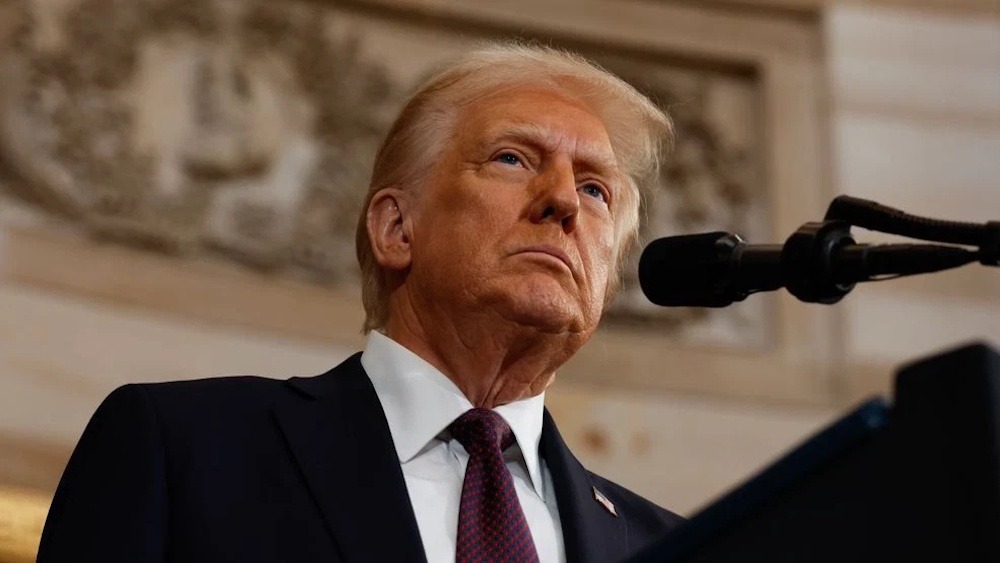
President Donald Trump often presents conflicting statements, occasionally within the same speech, social media post, or even sentence. In just a few hours on Friday, he delivered a flurry of conflicting messages regarding the Iran war, which prompts further inquiries into the trajectory of the conflict and the strategy of his administration. During this time, Trump said he was considering winding down the war, and his administration confirmed it was sending more troops to West Asia. In an effort to lessen the economic impact on global energy markets, the United States lifted sanctions on some Iranian oil for the first time in decades, relieving some of the pressure that Washington traditionally has used as leverage. The perplexing mix of actions intensifies the belief among Trump’s critics that there is an absence of a coherent, long-term strategy for the conflict initiated by the US and Israel against Iran. As the conflict enters its fourth week, it continues to follow an unpredictable trajectory, with a credible resolution remaining elusive, even as the global economy faces significant turmoil. Concluding the conflict Following yet another challenging day in the financial markets, Trump remarked on Friday afternoon via his social media platform: “We are getting very close to meeting our objectives as we consider winding down our great Military efforts in the West Asia.” Trump asserted that the US has sufficiently diminished Iranian naval, missile, and industrial capabilities, while also thwarting Tehran’s efforts to obtain a nuclear weapon. The Republican president subsequently indicated that the US might withdraw from the conflict without ensuring stability in the Strait of Hormuz, the route through which approximately one-fifth of the global oil supply is transported. The strait has suffered from Iranian missile, drone, and mine attacks throughout the course of the war.
“The Hormuz Strait will have to be guarded and policed, as necessary, by other Nations who use it – The United States does not!” Trump wrote. However, in a further contradiction, he stated that the US would assist if requested, “but it shouldn’t be necessary once Iran’s threat is eradicated.” Although oil passing through the strait typically heads towards Asia and other regions instead of North America, the turmoil continues to impact the United States. Oil is traded on a global scale, meaning that a shortage in oil for Asian nations results in increased prices for oil sold to companies in America as well. The combination of an Israeli strike on Iran’s gas fields and an Iranian retaliation that severely impacted a significant terminal for shipping liquefied natural gas from Qatar contributed to a decline in US equity markets on Friday, with the S&P falling by 1.5 percent. A notable rise in US fuel prices was also observed. Increased US military presence in West Asia Even as Trump stated that the US was nearing the conclusion of the war, the administration revealed it was dispatching three more warships to West Asia, accompanied by approximately 2,500 additional Marines. The administration announced for the second time this week that it was deploying additional forces to the conflict. The military reports that approximately 50,000 individuals are contributing to the war effort. Trump has dismissed the idea of deploying ground troops, although his administration has suggested the potential for sending in special forces or comparable units.
The Marines dispatched to the area are an expeditionary unit tailored for rapid amphibious landings; however, their presence does not guarantee that a ground invasion is imminent. Analysts have indicated that the presence of US forces on the ground may be necessary to ultimately secure the strait. The increase in troop numbers occurred merely a day following reports that the Pentagon was requesting an extra USD 200 billion from Congress to finance the war. The remarkably elevated figure does not imply that the war was being concluded. Sanctions imposed on Iranian oil sales The administration announced it would remove sanctions on the sale of Iranian oil, contingent upon the oil being already at sea as of Friday. The initiative aimed to alleviate soaring energy prices by permitting a more unrestricted sale of oil that Iran has allowed to transit through the strait. It also provides a financial lifeline to the Iranian government that Trump is aiming to target. His administration has explored various strategies to reduce oil prices. The US has utilized the strategic petroleum reserve and removed sanctions on certain Russian oil. Brent crude held steady at USD 112 per barrel on Friday, with analysts indicating that oil prices are expected to stay elevated for months, irrespective of the forthcoming developments in the war. The Iranian oil would have ultimately found its way to another nation, but now the United States and its allies have the opportunity to bid on it, Treasury Secretary Scott Bessent stated on X. ”
At present, sanctioned Iranian oil is being hoarded by China on the cheap,” Bessent wrote. By temporarily unlocking this existing supply for the world, the United States will swiftly introduce around 140 million barrels of oil to global markets, thereby increasing the overall energy availability and assisting in alleviating the short-term supply pressures attributed to Iran. Although 140 million barrels may appear substantial, it represents merely a few days’ supply of oil in the global market. Patrick De Haan stated, “I do not expect the temporary suspension to have a major impact on gas prices.” He said “The de facto closure of the strait has a much greater effect.” De Haan stated “Prices will likely still continue to rise so long as the Strait remains silent.” Contradictions in the position were evident in Bessent’s post announcing the move, which referred to Iran as “the head of the snake for global terrorism.” He stated that the administration would take measures to prevent Tehran from benefiting from the sales, yet it remained unclear how this would be achieved. Even among certain Republicans, the contradictions sparked uncommon public doubt. “Bombing Iran with one hand and buying Iran oil with the other,” Rep. Nancy Mace posted on X Saturday.