US Expands Mineral Supply Chain with 8 Nations in AI Battle Against China
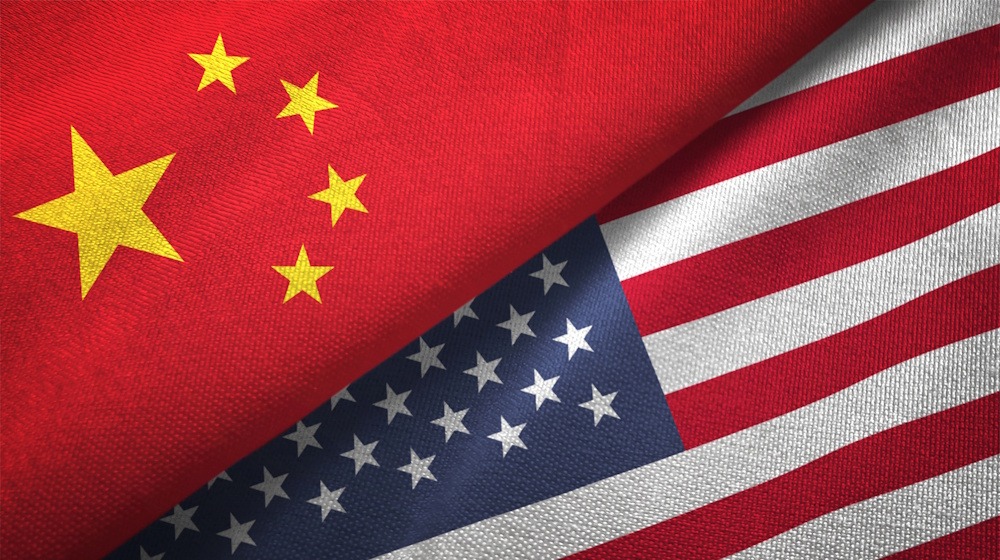
The US is set to pursue agreements with eight allied nations in a renewed initiative aimed at bolstering supply chains for the computer chips and essential minerals required for AI technology, as stated by the leading State Department official for economic affairs. The initiative, which builds on efforts dating back to the first Trump administration, unfolds as the United States seeks to reduce its reliance on China. A meeting is set to take place at the White House on Dec. 12, involving representatives from the US and their counterparts from Japan, South Korea, Singapore, the Netherlands, the UK, Israel, the United Arab Emirates, and Australia. In an interview, Jacob Helberg stated. Helberg stated that the summit will concentrate on achieving agreements in the fields of energy, critical minerals, advanced manufacturing, semiconductors, AI infrastructure, and transportation logistics. Helberg stated that the selection of countries was based on various factors, including their status as hosts to significant semiconductor companies and their vital mineral resources.
“It’s clear that right now in AI, it’s a two-horse race — it’s the US and China,” Helberg stated. We want to have a positive, stable relationship with China, but we’re also ready to compete, and we want to make sure that our companies can continue building transformative technologies without being subject to coercive dependencies.’ Helberg’s initiative builds upon years of efforts on critical minerals supply chains by prior administrations, largely aimed at helping reduce western dependence on China. The State Department during the initial Trump administration initiated the US Energy Resource Governance Initiative, focussing on the security of supply chains for essential minerals such as lithium and cobalt. The Biden administration initiated a Minerals Security Partnership designed to channel foreign investment and Western expertise into the mining sectors of developing nations. Despite efforts, the US and other nations have struggled to dismantle China’s dominance in the rare earth supply chain. According to a source, China possesses over 90 per cent of the world’s rare earths and permanent magnets refining capacity, while Malaysia holds a mere 4 per cent, placing it in second place.
In early October, China declared stricter export controls on rare earths, but subsequently consented to a one-year suspension following discussions between Trump and President Xi Jinping. Helberg stated that in contrast to the Biden-era initiative, which included over a dozen core countries, his emphasis is on producer countries. While the initial initiative of the Trump administration centred on critical minerals, it preceded the public unveiling of AI platforms such as ChatGPT. The new plan, as Helberg noted, encompasses all layers of the technology associated with AI, rather than concentrating on a single aspect. Helberg, 36, served as a senior adviser to Palantir Chief Executive Officer Alex Karp and co-founded the Hill and Valley Forum, which brings together tech leaders and US lawmakers to address national security challenges, particularly those concerning competition with China and the progression of AI and other technologies.
He characterised the effort with reliable partners for his AI initiative as a “America centric” strategy, instead of one that responds to China. “Countries who are participating understand the transformative impact of AI, both for the size of a country’s economy, as well as the strengths of a country’s military,” he stated. “They want to be a part of the AI boom.”