US-China Tensions Prompt Companies to Rethink Production Strategies
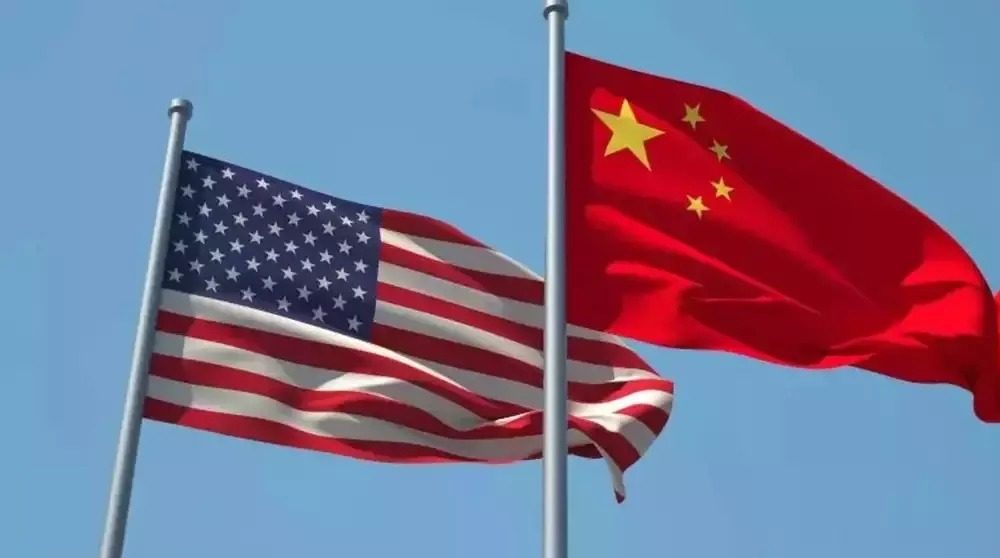
When President Trump initiated a trade war with China during his first term, Simon Lichtenberg chose to endure the situation. He has owned factories producing leather sofas in China since the 1990s and believed that the two parties would come to an agreement regarding the dispute. He no longer holds that belief. Mr. Lichtenberg allocated approximately $20 million to relocate his factory for American clients to Vietnam this year. Currently, the cease-fire Mr. Trump has negotiated with China has not shifted his perspective that the entrenched hostility between the nations has transformed the economics of his business. China’s vast scale and plentiful labor have transformed it into a manufacturing powerhouse for decades, positioning it squarely at the center of the global economy. However, Mr. Trump is dismantling the framework that enabled manufacturers to pursue the most efficient supply chains. Simultaneously, China has intensified its efforts to reduce dependence on the US economy. Mr. Trump’s recent agreement to reduce certain tariffs imposed on China has not altered those trends. The situation has highlighted the instability of the US-China relationship.
Executives such as Mr. Lichtenberg are choosing to withdraw from China for their US operations, driven by concerns about potentially finding themselves on the wrong side of what they anticipate will be an increasingly unpredictable bilateral relationship. What was once perceived as a mere alternative to having a factory outside China is now emerging as a crucial economic necessity. “Nobody trusts that there is stability between China and the US,” Mr. Lichtenberg stated. “It’s like they say: A burned child is scared of fire.” He stated that his company, Trayton Group, which produces Danish-style modular sofas and reclining chairs, has incurred millions of dollars in losses this year due to Mr. Trump’s sudden and significant new tariffs. For numerous industries that previously outsourced to China, relocating factories back to the United States is not feasible. The costs are excessively high, and there exists a shortage of workers. Companies that have exited China have already relocated to neighboring countries such as Vietnam, where labor costs are low and the movement of machinery and raw materials is straightforward.
Following a meeting with Xi Jinping, China’s foremost leader, in South Korea last month, Mr. Trump consented to reduce a 20 percent fentanyl-related tariff by half and prolong an existing suspension on reciprocal tariffs. This decision maintains the average tariff rate on Chinese goods at 47.6 percent, as per one estimate. Smaller businesses that have struggled to locate factories beyond China have expressed their approval of the news. However, for numerous individuals who have begun relocating from China, the truce has had minimal effect on their future strategy and planning. “The agreement doesn’t change the calculus that, over the long term, because of the US-China competitive relationship, it’s just going to present a lot more risk for companies to be manufacturing and sourcing things in China,” said Adam Sitkoff. China is beginning to lose its status as the primary manufacturing hub for Americans. Some of the world’s best-known companies, including Nike, Apple, and Intel, have swiftly taken action this year to reduce their production in China for the US market. The nation has ceased to be the sneaker capital for Americans. The designation now belongs to Vietnam.
The trend is evident in data from the US Census Bureau, even for products that have been granted tariff exemptions, including laptops and smartphones. The latest figures indicate that the majority of smartphones and laptops in the United States are now sourced from India and Vietnam. As the business landscape shifts, there is a growing consensus that China may no longer be the premier choice for manufacturing goods destined for the American market. However, the question of which countries will emerge as the most viable alternatives remains unanswered. However, Mr. Trump’s trade policy continues to be uncertain, particularly regarding his response should the Supreme Court invalidate the legal basis for numerous tariffs. For manufacturers in China contemplating future plans, uncertainty looms regarding how Mr. Trump will ultimately delineate products that incorporate raw materials or investments from China. Will products manufactured in factories in Vietnam with strong connections to China be classified as Vietnamese or Chinese? “In Trump’s first term, he made everybody run away from China, and a lot of business shifted to Vietnam,” said Gabriele Natale which produces furniture for retailers such as Walmart and Costco. In 2019, the company made the strategic decision to relocate to Vietnam, investing hundreds of millions of dollars in the construction of a 5.8-million-square-foot factory in proximity to Ho Chi Minh City. All products offered in North America are now sourced from that factory.
“In his second term, Mr. Trump is hitting everything everywhere,” Mr. Natale stated. “You can run, but you can’t hide.” His company currently operates 15 production facilities globally, with locations in Mexico and Eastern Europe. American retailers are increasingly insisting that their suppliers minimize their reliance on China. Fleming International, a candle manufacturer based in Vietnam, received requests from its largest American clients to relocate as much of its production as feasible to the United States. A new factory in Heber Springs, Ark. will soon begin producing vanilla-, elderberry-, and pumpkin-scented candles, with costs expected to be double or triple those in Vietnam. “As far as geopolitics, we feel like it’s a long-term strategy,” stated Lowell Newman. “We’re not expecting overnight success.” New tariffs may alter the company’s strategy once again, as it prepares to open a facility in El Salvador in the coming months. Mr. Trump’s readiness to impose tariffs indiscriminately, often as retribution for perceived slights, has complicated the process of making business decisions. “Just tell us the duties,” Mr. Newman stated. “Do not react with anger and withdraw from the situation like a child would in a game.” He is not the only one facing whiplash. Mr. Lichtenberg is currently in the process of recovering from the recent shock experienced on October 10, just a few weeks prior to the latest trade truce between the US and China. From his residence in Shanghai, Mr. Lichtenberg had just concluded a late-night call with his American clients when, as he checked the news before retiring for the night, he noticed Mr. Trump expressing his views on social media regarding Mr. Xi. He extinguished the lights, bracing for a new challenge at dawn. Upon waking, Mr. Trump had established a new tariff of 100 percent on China. Mr. Lichtenberg reflected on the events of six months prior, when Mr. Trump declared a 125 percent rate, a figure that the president subsequently specified would actually be elevated to 145 percent.
The distinction lay in the fact that in April, Mr. Lichtenberg had 350 containers prepared for shipment from China to the United States. This time, he had merely a few dozen. Currently, approximately fifty percent of his total output is generated from his new facility located in an industrial park in Ho Chi Minh City, situated in southern Vietnam. A dozen other factories and suppliers have also relocated from China to that location. In China, a newly constructed factory utilized by Mr. Lichtenberg for his American clientele on the outskirts of Shanghai remains largely unoccupied. Empty rows of blue and yellow metal shelves stand in stark contrast. A new robot designed to assemble the wood frames for his couches remains motionless. Approximately 500 Chinese workers, who previously occupied the factory lines, have been laid off this year and are no longer present. “The idea was that it would be full by next year,” Mr. Lichtenberg remarked while navigating the dim, silent, and expansive factory. “It’s more empty than ever.”