US and China compete for dominance in Latin America
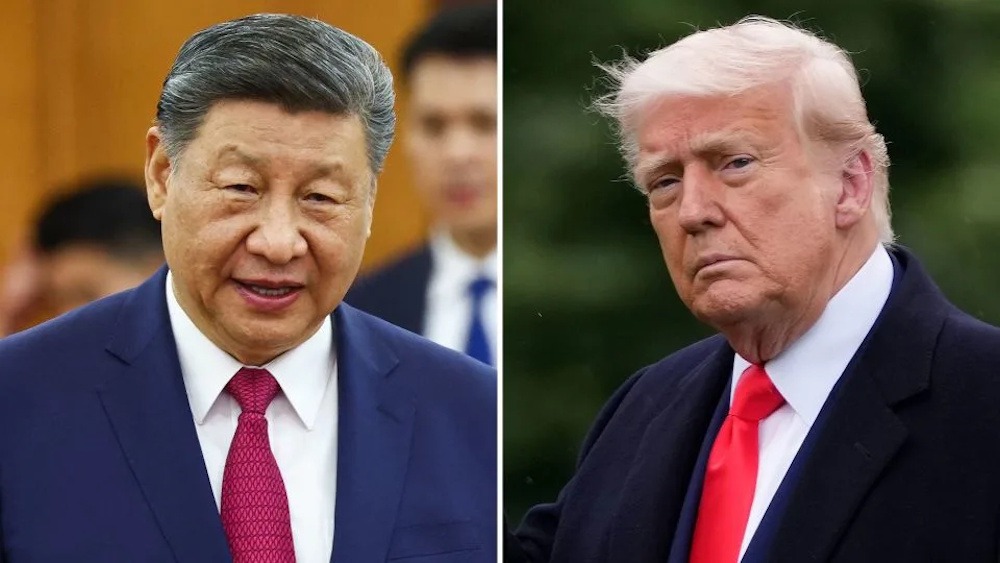
The competition between the United States and China is intensifying for influence in Latin American nations, as trade, infrastructure, and access to strategic resources in the region become increasingly prominent and carry greater geopolitical significance. The rivalry has intensified in recent months due to the Trump administration’s efforts to reaffirm US dominance in the Western Hemisphere and limit the influence of “non-Hemispheric competitors,” a term commonly interpreted as referring to China. Beijing has indicated its intention to enhance its involvement with Latin America, releasing its first official policy paper on the region in nearly a decade this past December. The relationship, which was primarily economic, is now being regarded as strategic by both parties, highlighting the significance of ports, energy assets, minerals, and political alignments in Latin America. China’s 6,700-word policy paper, released shortly after Trump’s new national security strategy, positioned its engagement with Latin America within the context of a larger shift in global power dynamics. A “significant shift is taking place in the international balance of power,” a phrase frequently used by Chinese president Xi Jinping to argue that US global dominance is fading.
In the policy paper, Beijing positioned itself as a longstanding ally of the Global South, encompassing Latin America and the Caribbean, and indicated its commitment to strengthening diplomatic, economic, and institutional connections. The document elaborated on China’s previous 2016 policy to encompass governance and security cooperation, signifying a broader range of engagement. Meanwhile, the US, in its security paper, characterized China’s expanding presence as a strategic challenge, especially where economic influence appears to intersect with critical infrastructure and security-sensitive assets. China’s growing influence in Latin America has primarily been driven by economic factors up to this point. The US has been displaced as the largest trading partner for several countries in the region, with a steady increase in its role as a source of finance and investment. It has emerged as the leading trading partner for nations including Brazil, Peru, and Chile, with trade surpassing $500 billion in 2024 and showing signs of ongoing growth. Beijing extends credit lines, including a $9 billion commitment at the 2025 China-CELAC Forum. These actions address voids created by a perceived withdrawal of the US, enhancing China’s influence in agriculture, ports, and digital systems. The Belt and Road Initiative stands as a significant cornerstone of this engagement, currently boasting 24 signatories in Latin America.
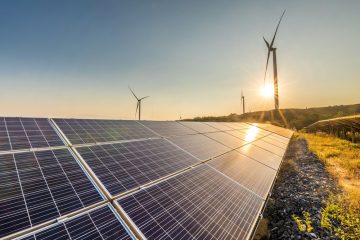
Strategic resources play a significant role in the rivalry between the two superpowers, with Latin America serving as a vital source of critical minerals like lithium and copper. These minerals are essential for electric vehicles, batteries, and clean energy technologies. China has made significant investments in the Lithium Triangle, which encompasses Argentina, Bolivia, and Chile, as well as in copper resources in Peru. Beijing also plays a significant role in mineral processing and refining. Metals, minerals, and mining continue to be the primary focus for Chinese outbound investment in the region, despite a decrease in their share from previous highs. In 2024, Chinese outbound foreign direct investment in the mining and minerals sector of Latin America and the Caribbean reached $8.53 billion. This investment is part of a larger total of $55.62 billion for the period from 2020 to 2024, with the mining sector accounting for 38.41 percent, or $21.37 billion. Energy investment holds considerable importance, as Chinese state-owned companies have constructed or obtained stakes in power generation and transmission assets, especially in Brazil, in line with Beijing’s wider initiative towards renewable and non-fossil energy projects. US policymakers are increasingly recognizing these trends as fostering long-term dependencies that may impact supply chains and strategic autonomy.
The rivalry between the two nations is apparent in Venezuela and Panama. China has condemned US sanctions and the use of military power against Nicolas Maduro’s administration, asserting that the US is demonstrating “unilateral bullying” tactics. Conversely, during a UN Security Council session last December, China’s deputy permanent representative Sun Lei remarked that the Beijing administration opposed actions that encroach upon the sovereignty of nations. Some experts emphasize that China’s support has primarily been verbal, lacking any indication of direct military involvement. Meanwhile, Panama has become a more significant flashpoint. Trump has consistently asserted that China exerts undue influence over the Panama Canal, a crucial chokepoint for international trade. Following pressure from the United States, Panama withdrew from the Belt and Road Initiative last year and reduced its high-level interactions with Beijing. In March of the previous year, a consortium supported by BlackRock revealed an agreement to take over control of container ports at both ends of the canal from a Hong Kong-based operator that had overseen them since 1996. The action was broadly perceived as a measure to alleviate US apprehensions. Chinese authorities have since advocated for modifications that would transfer control to Cosco, underscoring the intertwining of commercial assets with strategic rivalry. The Trump administration has employed a combination of tariffs, diplomatic pressure, and security arguments to address China’s influence, all while maintaining open trade flows in sectors like agriculture and rare-earth minerals. The White House has stated that it is taking action to restore American strength both domestically and internationally in response to inquiries regarding China’s regional posture.