Trump’s trade battle showed China may now challenge America
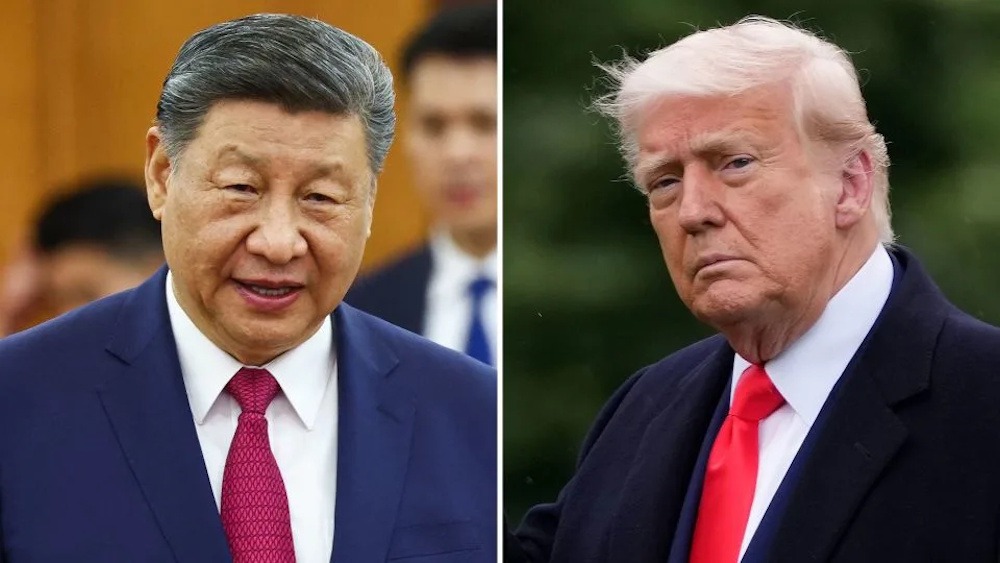
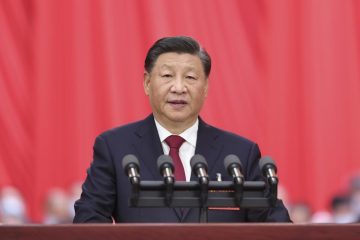
There are moments in great-power politics when the tectonic plates appear to shift noticeably beneath us. The recent summit between President Trump and President Xi Jinping of China marked a significant turning point. The two leaders reached an agreement during their meeting on Oct. 30 to pause the trade war initiated by Mr. Trump this year. However, the most significant narrative to arise from the event was not the ambiguous truce established in the South Korean city of Busan, but rather the clear indication that China is now positioned to confront America as an equal. China withstood the entirety of American economic pressure and responded effectively with its own intensified measures, leveraging its control over global supply chains that the United States depends on, especially in the realms of rare earth minerals and magnets. Following decades of deindustrialization, the United States found itself ill-equipped to respond — whether by choice or by circumstance. We find ourselves at the midpoint of a decade that strategists from both US political parties regard as crucial in deciding whether America can prevent itself from lagging behind China in economic, technological, and military spheres.
Mr. Trump’s team is acting swiftly to restore manufacturing in the United States, recalibrate trade, and revitalize the defense industrial base. The results of the recent summit may undermine those significant initiatives. Mr. Trump characterized the meeting as a US-China “G2,” downplaying the significance of allies whose support is essential for America to reindustrialize domestically and counterbalance China internationally. By demonstrating to Beijing that its coercive tools are effective, Mr. Trump risks inviting increased pressure, which could potentially grant China veto power over his “America First” agenda. None of this needed to occur. The journey to Busan commenced with unwarranted provocation from Mr. Trump. In February, he reignited the trade war that he initiated during his first term, imposing tariffs on Chinese goods that ultimately exceeded 140 percent. However, he did not initially evaluate America’s own vulnerabilities or strengthen its supply chains. In contrast, Beijing had utilized the years since 2018, when Mr. Trump first began imposing tariffs, to prepare for precisely this moment. Cornered, Mr. Xi resorted to his break-glass tool. In April, he suspended exports to the United States of rare earth minerals and magnets — essential materials for a wide range of applications, from automobiles to missiles — marking a significant escalation beyond any previous threats made during President Joe Biden’s administration. It was a measured gamble considering the likelihood of increased American retaliation. But Mr. Xi took a risk, believing that Mr. Trump would back down. He was correct. In May, Mr. Trump significantly lowered tariffs and sought to de-escalate tensions.
In October, China confidently utilized its rare earths once more, significantly escalating the situation. In response to the new US export controls, Beijing implemented a comprehensive licensing regime that mandates companies globally to secure China’s approval not only for purchasing the country’s rare earths but also for selling any product containing even trace amounts of these materials. It represented an unprecedented escalation, surpassing any previous actions taken by Washington, and posed a significant threat to both US and global manufacturing. Mr. Trump’s team prepared significant countermeasures — including new chip controls and financial sanctions — that could have compelled Beijing to reconsider its coercive tactics. Instead, Mr. Trump hesitated, setting aside those options and returning to the familiar comfort of tariffs — now an empty threat since he had lifted them in the spring after Beijing halted rare earths exports. By the time the leaders convened in Busan, Mr. Trump’s earlier bravado had vanished completely. He opted to de-escalate and further reduced tariffs, along with other concessions. As the situation has now stabilized, Mr. Trump has not only exposed the boundaries of America’s determination against its foremost competitor, but has also positioned the United States in a more precarious situation than it was at the outset of this conflict. Beijing has restarted imports of US soybeans — a significant export from America to China — albeit at reduced volumes compared to previous levels. China has delayed the implementation of its new licensing regime on rare earths for a year. However, concerns that China may activate this regime in the future have prompted the Trump administration to halt export restrictions that were intended to impose stricter controls on firms associated with China. China was granted a ten percent tariff reduction in exchange for its commitment to address the production of fentanyl precursors. However, this adjustment aligns its tariff rate more closely with that of American allies and partners, thereby diminishing the incentives for American businesses to seek out suppliers in countries beyond China. The consequences of Mr. Trump’s approach to China will resonate well beyond the realm of trade. US allies may now have reason to question America’s capacity to support them when it struggles to advocate for its own interests.
Beijing might be inclined to challenge US determination regarding Taiwan and various other matters. China possesses additional chokepoints it can leverage, notably its control over the production of pharmaceutical ingredients essential for numerous critical medications, including antibiotics. Many generals have learned an old lesson too late: It is unwise to invade Russia in the winter. The economic corollary should now be equally evident. Starting a trade war with the primary supplier of your most essential imports is unwise until you have addressed your vulnerabilities. Mr. Trump, who confused political theater with strategy, lost ground against China not only because he misjudged Mr. Xi but also because he underestimated America’s reliance on the supply chains it no longer controls and the allies he too frequently overlooks. Constructing and exercising national power is a matter of grave importance. It requires more than mere bravado. It requires patience, endurance, careful planning, and the discipline to discern when to engage and when to refrain. China recognized that during its weaker phases, it needed to gradually build its strength over decades while steering clear of hasty displays of power. Mr. Trump, who carelessly assumed American primacy, is only now coming to understand that lesson. Identifying when a nation has succumbed to military dictatorship is typically straightforward. Tanks occupy the streets, uniforms adorn gilded palaces, and the political class faces mass internment. At times, though, the takeover manifests in a more subtle and insidious manner. That is what has transpired in Pakistan over the past few years, culminating in a constitutional amendment last week that granted its army chief, Asim Munir, additional powers and lifelong immunity from prosecution.
The “establishment” — a term used by Pakistanis to refer to their influential military and the various industries and organizations it oversees — has maintained a significant degree of power since the early years of the country’s independence. However, democratic politicians have typically positioned themselves in opposition, stepping in when it faltered, as seen after the nation lost its eastern half, now known as Bangladesh, in 1971. That is not the situation at present. Prime Minister Shehbaz Sharif is acutely aware that his position is at the pleasure of Munir, rather than the National Assembly’s. As is his rival-turned-coalition partner in the Pakistan People’s Party, President Asif Zardari. In recent years, they have relinquished civilians’ hard-won privileges back to the army, and to Munir in particular. Initially, the general was bestowed with economic decision-making powers, co-chairing a special investment council alongside Sharif, tasked with overseeing strategically significant projects. He was subsequently promoted to the rank of Field Marshal, becoming only the second individual in Pakistan’s history to achieve this distinction — alongside the nation’s first military dictator, Ayub Khan. The army chief has now been elevated above the leaders of the other two forces and placed in exclusive command of the nation’s nuclear weapons systems. As Chief of Defence Forces, Munir’s tenure has been renewed; rather than retiring, he will fulfill a new five-year term in his position. If, at the conclusion of that period, he expresses to the prime minister and president his desire for re-appointment, will they refuse him? Considering the authority they have already bestowed upon Munir, it is difficult to envision that they will. And that is the issue at hand. While Munir may have sought power, it is the civilian leaders who have bestowed it upon him.