Trump pushes back Iran ultimatum, calls early talks ‘productive’
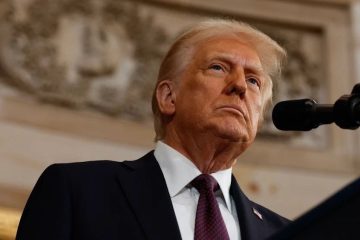
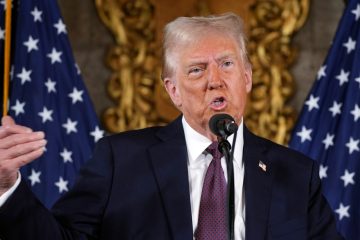
President Trump capitalized on initial contacts between Iranian and American officials to retract his threat to target power plants in Iran on Monday, stating that the countries had commenced “productive conversations” for the first time since the war began more than three weeks ago. Iranian officials have categorically denied that any discussions regarding terms to conclude the war are taking place, while American officials have indicated that the contacts are in a preliminary phase and lack substance. However, Mr. Trump utilized the initiation of even a preliminary conversation as a means to step back from the warning he delivered on Saturday regarding potential strikes on Iran’s power facilities in response to the blockade of the Strait of Hormuz. Iran had pledged not to yield, and the 48-hour deadline set by Mr. Trump was set to expire on Monday. Mr. Trump stated that he would extend his deadline to Friday to allow the discussions to continue, prompting a surge of diplomatic efforts from various nations aiming to support the negotiations. It was not clear how seriously the White House was considering the possibility of a breakthrough in a conflict that has seen both sides escalate for weeks. “We’re doing a five-day period,” Mr. Trump told on Monday regarding his pause on targeting Iranian power plants, actions that are prohibited under most circumstances according to the Geneva Conventions. “We’ll see how that goes, and if it goes well, we’re going to end up with settling this. Otherwise, we’ll just keep bombing our little hearts out.”
Even as Mr. Trump stepped back from one military option, U.S. and Israeli officials indicated that they were persisting with other strikes against Iran, and additional American military assets were being deployed to the region. Officials indicated that Mr. Trump was still considering more assertive actions, including a plan to capture Kharg Island, Iran’s primary oil export hub, as well as a strategy to deploy ground forces into Iran to secure highly enriched uranium. On Monday, Mr. Trump offered limited information regarding the discussions with Iran, merely stating that negotiations were being led by Jared Kushner, his son-in-law, and Steve Witkoff, his special envoy. He stated that they were in direct communication with one of Iran’s leaders, though he did not disclose the individual’s identity. Officials from the United States and Iran, who requested to remain anonymous due to the sensitive nature of the discussions, indicated that Mr. Witkoff has engaged in direct communication with Iran’s foreign minister, Abbas Araghchi, in the past few days. The president stated that the United States continued to insist on the cessation of Iranian nuclear enrichment and the removal of all uranium stockpiles that could potentially be utilized to create a bomb, conditions that Iran had previously dismissed. The collapse of diplomatic talks involving Mr. Kushner, Mr. Witkoff, and Mr. Araghchi resulted in the United States and Israel initiating strikes against Iran at the end of February.
On Monday, Iranian officials refuted claims of negotiations with the United States. Mohammad Bagher Ghalibaf, the speaker of Iran’s Parliament, took to social media to assert that Mr. Trump’s remarks were an effort to “escape the quagmire in which the US and Israel are trapped.” In interviews, four Iranian officials stated that the messages exchanged in recent days, both through intermediaries and in direct discussions with the Americans, were fundamentally inquiries aimed at de-escalating the conflict, with the intention of preventing a spiraling escalation, including assaults on vital energy infrastructure. The officials reported that Mr. Araghchi conveyed to Mr. Witkoff that Iran was not seeking a temporary cease-fire but rather a sustainable peace agreement, with assurances that the United States and Israel would refrain from future attacks. The officials indicated that the Iranians were also pursuing specific economic sanctions relief from Washington, a subject that, during negotiations prior to the war, American officials stated would only occur after Iran fulfilled its nuclear and other obligations in any agreement. However, Mr. Trump’s description of these as “productive conversations” appeared to exaggerate the actual progress of the discussions. Ali Vaez, the Iran project director at the International Crisis Group, stated that the Iranians would not participate in a high-level meeting until they were assured that the United States was moving away from its “maximalist” demands. “Not attacking energy infrastructure is a low bar,” he stated. “The terms of a cease-fire, or an agreement that would resolve the longer-term problems including the fate of the stockpile or reopening of the strait — none of those things are anywhere close to the finish line right now.” Prime Minister Benjamin Netanyahu of Israel stated that he had a conversation with Mr. Trump on Monday, during which Mr. Trump expressed the view that it was feasible to “leverage” their military accomplishments against Iran to “realize the objectives of the war in an agreement.”
However, Mr. Netanyahu, whose strategy has occasionally diverged from Mr. Trump’s in recent weeks, made it clear that he had no intention of easing his approach. “We are dismantling the missile program and the nuclear program, and we persist in delivering significant setbacks to Hezbollah.” He disclosed that Israel has “eliminated two more nuclear scientists” in Iran. Arab countries in the Persian Gulf have chosen not to act as mediators while Iran persists in its attacks on their nations. However, several other countries, including Pakistan, Turkey, and Egypt, have extended offers of assistance, though it remains uncertain whether any mediating partners are engaged in the situation. Turkey and Pakistan have proposed the possibility of in-person meetings between U.S. and Iranian officials. One proposal suggests a meeting involving Mr. Araghchi, Mr. Witkoff, and Mr. Kushner, while another recommends that Vice President JD Vance convenes with Mr. Ghalibaf. Officials stated that none of the meetings have been scheduled. “These are sensitive diplomatic discussions and the U.S. will not negotiate through the press,” stated Karoline Leavitt. “This is a fluid situation, and speculation about meetings should not be deemed as final until they are formally announced by the White House.” For Mr. Trump, the possibility of negotiations presents an opportunity to gain time to attempt to reopen the Strait of Hormuz and to free himself from a predicament of his own making.
On Saturday night, Mr. Trump stated that if Iran did not open the strait within 48 hours, the United States would “obliterate” Iran’s power plants. Following his threat, it was evident that any attack on Iran’s electrical infrastructure would result in retaliation against Gulf allies, who are already working to prevent the war from escalating. However, if he retreated from his threat, certain officials in his circle were concerned that it would signal weakness to the Iranians. On Monday, Iranian officials stated that Mr. Trump’s announcement was indicative of the United States capitulating. “Trump, out of fear of Iran’s response, backed down from his 48-hour ultimatum,” stated the Iranian state broadcaster, IRIB. Mr. Trump is encountering mounting domestic and economic pressure to reopen the Strait of Hormuz. The war’s global fallout has resulted in a staggering increase in the price of oil and gas, soaring by as much as 40 percent since late February. This crisis has now surpassed the oil shocks of 1973 and 1979 combined, as stated by the head of the International Energy Agency. Mr Trump’s statement regarding discussions with Iran led to a slight decrease in energy prices; however, it remained uncertain how long this effect would endure without concrete advancements in resolving the conflict. The president has consistently provided optimistic evaluations that have momentarily alleviated market concerns, yet prices have subsequently surged once more. Mr. Trump on Monday assured that the Strait of Hormuz would be open “very soon” and would be “jointly controlled. Perhaps I could be the one?” he said “Maybe me,” when asked who would control the key waterway. “I and the ayatollah. Whoever the ayatollah is.”