Trump is failing to earn Americans backing over Iran
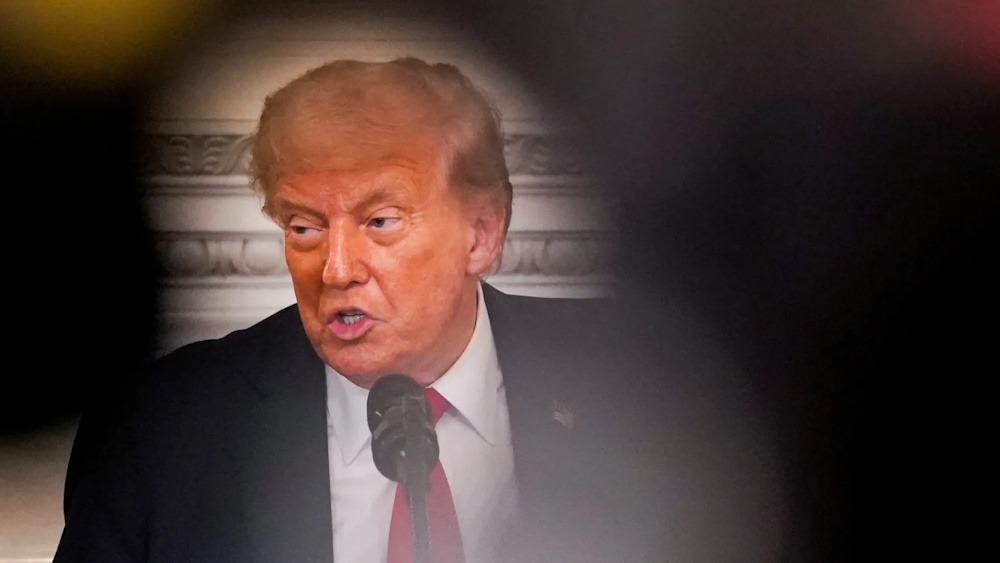
No US president in recent history has engaged in war with as little public backing as Donald Trump has for the conflict in Iran. Even Barack Obama’s often-criticized Libyan intervention commenced with 60 percent of Americans backing it in 2011. No poll indicates that a majority of Americans are in favor of the Iran war, while several polls reveal significant majorities opposed to it. As conflicts progress, they often experience a decline in public support. Trump did not advocate for the war publicly prior to its onset, as he favored swift, unexpected attacks that were accompanied by dramatic tension. He characterized the extensive military buildup in the Persian Gulf as a high-pressure negotiating tactic during the brief bargaining sessions concerning Iran’s nuclear enrichment. Trump was undoubtedly emboldened by the tactical success of his removal of Venezuelan President Nicolas Maduro; however, that action was not particularly well-received by the American public. Wars do not inherently improve when the US government expends significant effort to justify them. The rationale for the catastrophic Iraq War, ultimately, was founded on misperceptions, distortions, and falsehoods. However, by entirely ignoring US public sentiment prior to the war, Trump currently faces numerous challenges as he attempts to navigate the situation. Americans prefer not to view themselves as aggressors. Political scientist Bruce Jentleson stated that public support for war in the United States relies not only on the progress of the conflict but also on the public’s comprehension of the war’s objectives. The American public shows a stronger inclination to back military interventions that seek to impose limitations on aggressive nations rather than those intended to instigate political transformations abroad.
The theory elucidates the reasons behind the Bush administration’s vigorous assertions regarding Iraq’s possession of weapons of mass destruction and its connections to the September 11 terrorist attacks, despite the fact that “regime change” was the primary objective of the Iraq war. The objective of the Iran war is, without a doubt, regime change. Trump has been discussing it for months and continues to do so. It was only after the bombs began to fall on Iran that Trump and his administration started to assert that Iran posed a “imminent threat” to the US. It lacked persuasiveness. Until recently, Trump had been asserting that he had “completely obliterated” Iran’s nuclear program the year prior. In a video released shortly after the attacks, Trump expressed his grievances regarding the 1979 Tehran hostage crisis, the 1983 Hezbollah attack on US marines in Beirut, and the 2000 bombing of the USS Cole, which he stated Iran was “probably involved in.” Secretary of State Marco Rubio was tasked with articulating the complex rationale that the US was engaging in preemptive self-defense, based on the assertion that it anticipated Israel’s impending strike on Iran, which would lead to Iranian retaliation against Americans in the Middle East.
That did not resonate positively in a nation growing more cautious of Israel. A Gallup poll released just before the war began indicated that, for the first time this century, a greater number of Americans expressed their sympathies towards Palestinians rather than Israelis. Recently, there has been a notable decline in support for Israel, particularly among political Independents, whose perspectives have changed markedly during the Gaza War. Tucker Carlson promptly referred to it as “Israel’s war.” Joe Rogan expressed that they felt “betrayed” by the war. Meanwhile, Secretary of Defense Pete Hegseth has sought to persuade Americans of the war’s necessity by boasting about the death, destruction, and fear being imposed on Iran. Despite investigations revealing that the US military was accountable for the bombing of a school that resulted in the deaths of over a hundred children, he refers to the rules of military engagement as “stupid.” The latest Quinnipiac Poll revealed that Hegseth’s approval rating stands at 37 percent. Despite facing high-profile opponents such as Carlson and Marjorie Taylor Greene, Trump continues to maintain the support of the majority of the MAGA base for the time being. They were never truly against foreign wars. What they despised was the defeat in foreign conflicts, and Trump is assuring them of a rapid triumph in Iran.
However, Trump has not adequately prepared them or anyone else, including his own cabinet, for the costs that this war will entail. Particularly the upheaval in global oil markets, which the International Energy Agency describes as the largest in history, and which will increase the cost of everything from travel to food. Trump’s rhetoric regarding the cost of war has been far from Churchillian. One night he shared on social media that a short-term increase in oil prices is “a very small price to pay for U.S.A., and World, Safety and Peace. ONLY FOOLS WOULD THINK DIFFERENTLY!” However, the following day he was compelled to reassure the markets by asserting that the war was almost concluded. The Iranian regime, focused on its own survival, is acutely aware of the political and economic weaknesses of the US and its allies in the Middle East, and these vulnerabilities seem to be its primary targets. At the onset of the war, Iran’s seemingly disjointed assaults on infrastructure, embassies, and hotels in Gulf states elicited amusement from certain American commentators.
However, these measures ultimately succeeded in halting significant portions of energy production and shipping, causing more disruption than Trump or his supporters had anticipated. Trump was already confronting the same domestic issue that Joe Biden encountered. Regardless of the positive GDP, stock market, and employment figures presented to Americans, if they are grappling with the cost of living, their perception of the economy and the President will remain grim. Trump’s casual dismissals of the price of oil echo his lighthearted reassurances at the onset of the pandemic. Only a handful of Republicans in Congress have shown readiness to confront Trump regarding the war. However, with the midterm elections on the horizon, numerous individuals will be quietly hoping he discovers a reason to conclude it at the earliest opportunity.