Trump imposes tariffs on lumber and wood goods to support US industry
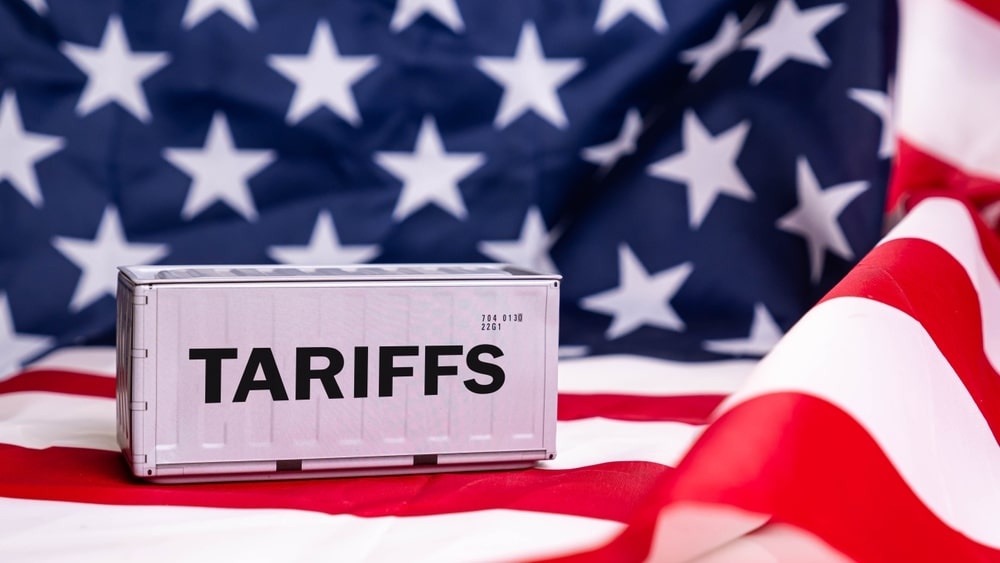
President Donald Trump ordered 10 percent tariffs on imports of softwood timber and lumber, as well as 25 percent levies on kitchen cabinets, vanities, and upholstered wood products. This action represents his latest effort to utilize import taxes to bolster domestic manufacturing. The tariffs are scheduled to take effect on October 14, with certain increases aimed to begin on January 1, as stated in a proclamation signed on Monday. The investigation by the Commerce Department into imports of lumber, timber, and derivative products was initiated in March. Trump stated that the intended measures will “strengthen supply chains, bolster industrial resilience, create high-quality jobs and increase domestic capacity utilization for wood products.” However, home builders have cautioned that this could also discourage investments in new houses and renovations. That could undermine the effectiveness of Trump’s prominent campaign to stimulate homebuying by urging the Fed to reduce interest rates.
Canada is poised to face significant repercussions from the order, as it is the largest wood supplier to the US and is already burdened with 35.2 percent duties aimed at addressing claims of subsidies and unfair pricing. Despite Trump’s assertion that the US does not require Canadian lumber, it is important to note that Canadian supplies account for approximately one-fifth of the US market. The levies are being imposed under Section 232 of the Trade Expansion Act, which grants the president the authority to impose tariffs on goods for the sake of national security. They are different from the so-called reciprocal, or country-specific, tariffs that Trump has implemented to generate revenue and address trade imbalances. Trump’s growing collection of sectoral tariffs encompasses a broad range of consumer products. The US has imposed tariffs on imported steel and aluminum, and numerous other Section 232 investigations are ongoing into foreign-made solar panels, commercial aircraft, semiconductors, and critical minerals. Trump previously declared intentions for a complete tariff on brand-name pharmaceuticals, while allowing exceptions for companies that are developing manufacturing capabilities within the United States. The sectoral levies may also possess greater legal durability, an essential consideration as the Supreme Court reviews a challenge to the reciprocal tariffs — and as administration officials strive to establish a strong alternative framework should those tariffs be invalidated.
According to Trump’s directive, major economies that have established separate trade deals with him will benefit from lower rates. For instance, tariffs on wood products from the UK will not surpass 10 percent, while those for the European Union and Japan will be effectively limited to 15 percent. Some rates would increase on January 1, under Trump’s order, with certain upholstered wood products subject to a higher 30 percent levy, while kitchen cabinets and vanities would then face a 50 percent import tax. That reflects the rates Trump communicated in a social media post on Thursday, although the president had initially suggested those levies would be implemented as early as Wednesday. US homebuilders have expressed their opposition to additional tariffs and cautioned about potential price increases, with certain stakeholders asserting that the levies could lead to the closure of sawmills in Canada as well. In June, one of Canada’s largest lumber producers revealed plans to temporarily lay off over 1,000 workers, which constitutes half of its workforce, due to increasing US duties and a decline in demand. Among the prominent Canadian lumber companies are West Fraser Timber Co Ltd, Canfor Corp, and Interfor Corp. “Our housing crisis is a bigger threat to national security than imported lumber or timber,” the National Association of Home Builders stated to the government earlier this year. With the majority of lumber and timber sourced from longstanding allies like Canada, Germany, Sweden, and Brazil — and considering that lumber is a renewable resource that has little impact on contemporary warfare — “the threat to national security comes from our nation’s housing crisis, not imported lumber.”
Despite this, Trump faced pressure from certain congressional Republicans to impose tariffs on furniture, cabinets, and other wood products to support their home-state industries, with some advocating for levies as steep as 100 percent. Trump has expressed his support for furniture makers in North Carolina — a region that was once renowned as a southern US center for the domestic industry — where manufacturers report facing growing competition from subsidized foreign rivals. “The furniture industry has been wiped out by unfair foreign trade practices,” said Edwin Underwood. “We must not allow history to repeat itself with domestic cabinet manufacturing.” Although new levies on cabinets and furniture may enhance the competitiveness of domestic manufacturers, retailers have cautioned that tariffs would incur costs for their businesses. Furniture retailers potentially impacted by the decision encompass Wayfair Inc., Arhaus Inc., Williams-Sonoma Inc., and RH, which runs the chain previously recognized as Restoration Hardware. Meanwhile, companies with more substantial domestic supply chains may find advantages in the decision, including Ethan Allen and La-Z-Boy Inc. The home furnishings sector has faced a prolonged recession, and tariffs aimed at timber and wood “would put it on its knees,” cautioned Dovetail Furniture and Designs, a California-based furniture retailer, in a warning to the Commerce Department earlier this year.
Furniture for America, a coalition of companies led by the American Home Furnishings Alliance, stated that new duties on wood products would reduce the US workforce, as American furniture companies depend on a complex global supply chain that has developed over the past twenty-five years — and is not easily substituted domestically. “Tariffs cannot unravel and reverse the global trends that shaped the home furnishings industry over those two and a half decades,” the group stated in comments submitted to the Commerce Department. “Tariffs cannot reopen factories that no longer exist, bring back thousands of workers who retired or moved on to other industries, nor reverse the interests and inclinations of today’s younger workers, who are attracted to higher-paying trades and the burgeoning tech industry.”