Trump Hikes Global Tariffs to 15%
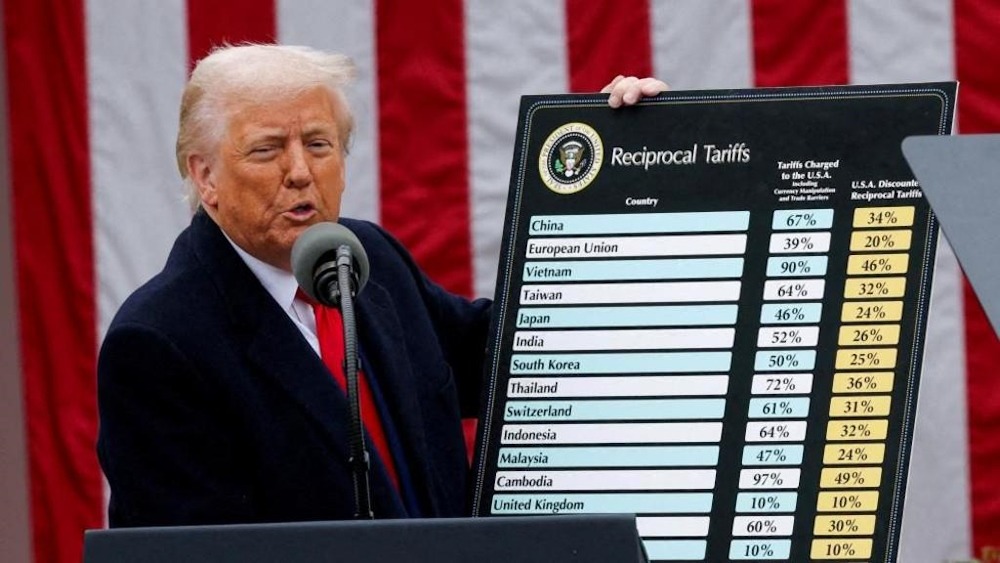
A day following a significant legal setback to his tariff policy, US President Donald Trump declared that he would raise the global baseline tariff rate to 15 percent from the current 10 percent. The decision followed closely on the heels of a ruling by the United States Supreme Court that restricted his ability to utilize emergency powers for the imposition of trade duties. On Saturday, Trump stated in a post on Truth Social that the increased tariff would be implemented immediately and was legally justified following a thorough examination of the court’s ruling. “…I, as President of the United States of America, will be, effective immediately, raising the 10 per cent worldwide tariff on countries to the fully allowed and legally tested 15 per cent level,” Trump stated. The announcement came after a 6-3 Supreme Court ruling on Friday, which determined that Trump had acted unlawfully by invoking the International Emergency Economic Powers Act of 1977 to support his “reciprocal” tariffs.
Following the ruling, he pursued an alternative legal avenue by establishing a new baseline tariff in accordance with Section 122 of the Trade Act of 1974. Trump also stated that a 10 percent global tariff under Section 122 would be implemented alongside existing tariffs. He also stated that tariffs imposed for national security reasons under Section 232 and those enacted to counter unfair trade practices under Section 301 would remain fully effective. Previously, Trump had referenced multiple statutes to implement and modify tariffs, including the emergency powers law, the National Emergencies Act, Section 232 of the Trade Expansion Act of 1962, Section 604 of the Trade Act of 1974, and Section 301 of US trade law. Section 122 of the Trade Act of 1974 empowers the US President to take action in response to significant balance-of-payments issues facing the nation. Under this provision, the President has the authority to temporarily impose an import surcharge of up to 15 percent or to introduce import quotas. These measures may be maintained for a maximum of 150 days unless Congress grants an extension. Section 232 of the Trade Expansion Act of 1962 is centered on safeguarding national security.
The President is granted the authority to limit imports if the US Department of Commerce concludes, following an investigation, that specific imports pose a threat to national security. The US Department of Commerce is required to submit its report within a nine-month timeframe. Following this, the President has a period of 90 days to determine the appropriate course of action, with an additional 15 days allocated for implementation. In contrast to Section 122, Section 232 imposes no limit on tariff levels and lacks a predetermined expiration date. Congressional approval is not necessary; however, lawmakers are required to obtain a written explanation. Congress is limited to directly blocking actions taken under this law solely in relation to oil and petroleum imports. Section 301 of the Trade Act of 1974 aims to address unfair trade practices employed by other nations.
Under this law, the Office of the United States Trade Representative conducts investigations to determine if foreign policies are discriminatory or detrimental to US commerce. If such practices are identified, the US has the authority to impose tariffs or other penalties. There is no limit on the size of tariffs under Section 301. These responsibilities typically persist for a duration of four years, though they may be extended following a review. During his first term, Trump utilized this law to implement extensive tariffs on imports from China, as reported by the Associated Press, amid ongoing disputes over trade and technology. The US has recently employed similar powers to tackle issues related to China’s shipbuilding industry.